


Tomb of Merneptah – Luxor, Egypt
The Tomb of Merneptah stands as an extraordinary historical site which dates back to ancient Egyptian times and exists in the remote desert hills of Luxor. The burial site provides a strong window into the New Kingdom period which shows both their religious beliefs and their artistic excellence and their architectural skills.
Who Was Merneptah?
Merneptah served as a pharaoh for Egypt's 19th Dynasty while being the son of the famous Ramesses II. Merneptah began his rule at an advanced age after reaching 60 while his father continued to govern Egypt for many years.
Merneptah ruled Egypt for a short time yet his achievements produced important impacts on Egyptian historical development. He is especially known for the famous “Israel Stele,” which contains one of the earliest known references to Israel. The period of his rule holds great importance for Egyptology and for the entire ancient Near East historical record.
Location and Historical Significance
The tomb of Merneptah is located in the renowned Valley of the Kings, the royal burial ground of Egypt’s New Kingdom pharaohs. The valley was chosen because its remote desert area provided natural security that protected against tomb robbers.
The tomb which is designated as KV8 features both extensive size dimensions and complex structural elements. The structure shows how royal tomb design developed during 19th Dynasty times while it also shows how people performed burial rituals during that period.
Architectural Design
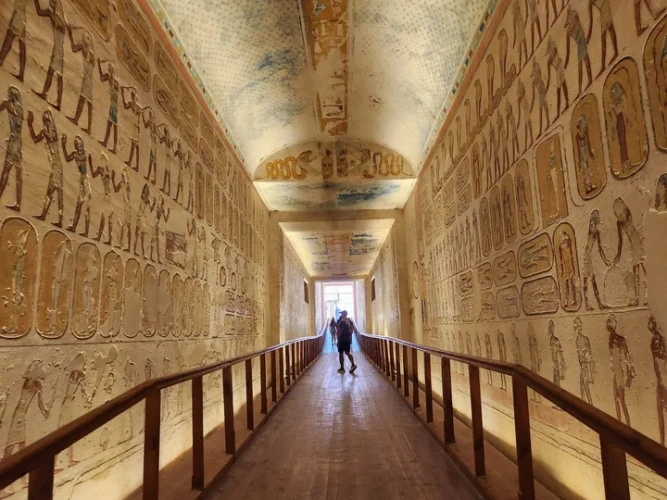
The tomb of Merneptah follows a traditional yet sophisticated layout. The structure includes descending corridors and chambers that builders carved into the limestone bedrock. The linear path design of the building leads visitors to advance deeper into the mountain, which represents their progression toward the afterlife.
The tomb contains multiple halls and passageways that serve different ritual functions and symbolic meanings. The burial chamber serves as the final destination because it contained the king's sarcophagus.
The tomb's most remarkable aspect is its enormous size. The corridors create an effect of majestic importance that matches royal status through their wide and tall dimensions.
Decorations and Religious Texts
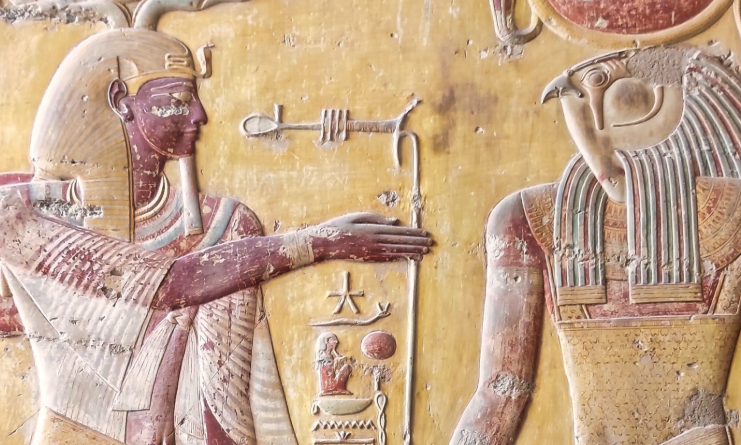
The tomb walls display elaborate religious inscriptions together with detailed sculptural work. The decorative elements of the structure served as essential elements which helped the pharaoh navigate his afterlife journey.
The tomb contains scenes from major funerary texts which include the "Book of Gates" and the "Book of the Dead." These texts describe the journey of the sun god through the underworld and the challenges he faced during his travels.
The artwork shows both symbolic meaning and narrative storytelling through the depiction of gods and demons and protective deities. The colors of the painting which remain intact in several parts demonstrate the advanced artistic methods that ancient Egyptian artists employed.
The Royal Sarcophagus
The tomb of Merneptah contains multiple nested stone sarcophagi which stand as one of its most remarkable archaeological findings. The archaeologists discovered four large stone sarcophagi which they found stacked inside each other at the site which represents an exceptional and rare archaeological discovery.
The king's massive stone coffins demonstrate the vital need to safeguard his body throughout eternity. Visitors to the Egyptian Museum in Cairo can view many historical artifacts which have been relocated there from their original locations.
The tomb of Merneptah does not contain the mummy of the Pharaoh. The royal mummy went through ancient relocations to safeguard it from looters until it finally appeared in a Deir el-Bahari cache.
Discovery and Excavation
Archaeological evidence shows that the tomb existed throughout ancient history and became hidden until its discovery in the 19th century when Egyptology experienced its greatest expansion. The Valley of the Kings tomb had been robbed during ancient times which resulted in the loss of most of its valuable items before modern archaeologists began their exploration.
The tomb maintains its historical significance because it contains important historical artifacts. The structure and inscriptions together with existing artifacts, reveal complete information about ancient Egyptian burial practices and their associated beliefs.
Tourism and Visitor Experience
Visitors to Luxor today visit the tomb of Merneptah, which has become a popular tourist site. The site forms part of Valley of the Kings tours, which include other famous tombs like the Tutankhamun tomb.
The tomb provides visitors with an experience that combines both special and complete immersion. The dimly lit hallways, silent passageways and historic stone inscriptions create an intense ambiance which enables visitors to experience a time travel to ancient times.
Tourists should arrive at the site during morning hours because the summer months bring high temperatures. Visitors need to wear comfortable clothing while bringing adequate water supplies to their site.
Preservation Efforts
The preservation of this ancient site presents significant difficulties because of its fragile nature. Egyptian authorities have implemented various measures to protect the tomb from environmental damage and human impact.
The measures involve two main elements which include visitor restrictions and humidity control and restoration activities which take place at regular intervals. These efforts protect the site for future generations to conduct their studies and educational activities at the remarkable location.
Why It Matters
The tomb of Merneptah serves as a burial ground which demonstrates the religious beliefs and artistic talents and construction abilities of ancient Egyptian civilization. The afterlife According to the people of this civilization they believed that people could attain eternal life through their methods of organizing their death ceremonies.
The tomb provides historians and archaeologists and travelers with a valuable experience which contains deep historical significance. The connection establishes a link to ancient times while it shows how people throughout history have tried to comprehend existence and death and afterlife.
Tomb of Merneptah
The Tomb of Merneptah in Luxor provides visitors with an experience that takes them back to ancient times. The tomb's architectural design and its intricate inscriptions reveal stories about power and belief and eternal life.
This site provides an extraordinary experience which allows both history enthusiasts and curious travelers to explore one of the world's most important ancient civilizations.



-webp.webp "Hilton")
-webp.webp "dusit")
-webp.webp "Marriott Hotels")
-webp.webp "Azimut Hotel")
-webp.webp "Golden Tulip")
-webp.webp "sheraton")
-webp.webp "westin hotel")
-webp.webp "Movenpick")