
 English
 Italy
Italy
Exploring the Ancient City of El Kab: Egypt’s Forgotten Gem
Exploring El Kab: Egypt’s Forgotten Ancient Gem
The ancient city of El Kab exists on the east bank of the Nile opposite the present-day city of Edfu. The hidden gem of Upper Egypt known as El Kab remains unknown to people who travel between Luxor and Aswan. The city which used to be called Nekheb in ancient times served as a religious center and administrative capital. Presently, the site offers visitors a time machine experience which allows them to walk through ancient history in a place that has not been affected by modern tourist activities.
The Ancient Roots of El Kab
El Kab's history extends back to ancient Egypt. The archaeological findings demonstrate that people occupied the site from prehistoric times onward. The site first gained importance between the Early Dynastic Period and the New Kingdom period.
The city of El Kab functioned as both the administrative center and religious hub for Upper Egypt's third nome. The city maintained strong ties to Nekhbet who served as the vulture-headed deity protecting Upper Egypt. She functioned as the protector of kingship while safeguarding the pharaoh. The temple in El Kab attracted pilgrims from all nearby regions who came to pay their respects and receive blessings.
Strategic Importance and City Life
The Nile River route from El Kab to its current position became the city’s permanent location. The city developed its agricultural system because of its fertile lands, which allowed for continuous farming operations. The city protected itself through strong mudbrick walls, which have survived to modern times. The New Kingdom walls stand as a testament to the city’s past strength and structural organization.
The people of El Kab experienced a vibrant social atmosphere. The community functioned as a structured society because its members included priests and soldiers and farmers and artisans. The Nile provided the city with water and fertile soil, which created a vital trade route that connected people and products.
Temples and Sacred Spaces
The temple of Nekhbet existed as the central building of the city yet only its remaining sections still exist today. The temple can still demonstrate its former majesty through its present damaged condition. The temple received expansions and renovations from multiple pharaohs who included Thutmose III and Amenhotep II together with their architectural work and inscriptional evidence.
The main temple area contained numerous smaller shrines and chapels which formed a network of holy places that worshippers used for their religious ceremonies. The buildings show how religious beliefs played a crucial role in daily activities and demonstrate El Kab's status as a spiritual center that endured for many centuries.
The Rock-Cut Tombs: Windows into the Past
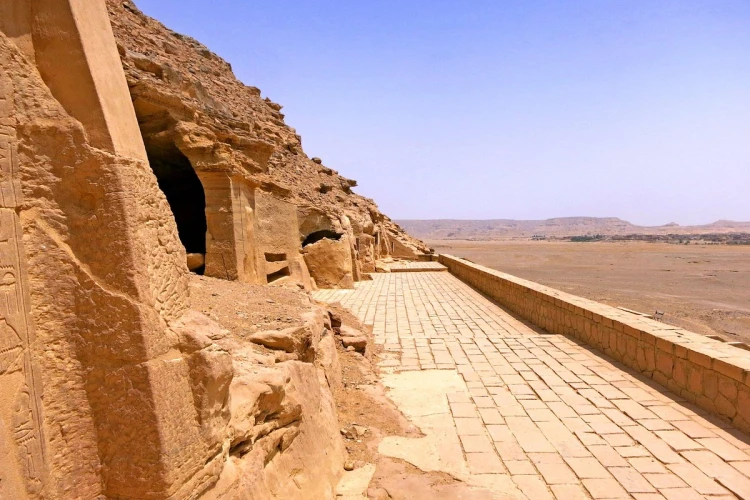
The rock-cut tombs which were carved into the city cliffs stand as one of El Kab's most impressive attractions. The New Kingdom tombs served as burial sites for high-ranking officials and military leaders. Ancient Egyptians used the interior space to create wall paintings which display their life activities and professional achievements and their religious practices.
The Ahmose son of Ebana tomb stands as one of the most renowned burial sites. His tomb contains an autobiographical inscription which details his military operations during which he fought in battles against the Hyksos. The personal account serves as a significant primary source document from ancient Egypt which provides details about the political and military situation from that historical period.
The tombs show how people in that time period lived their daily lives through their work in farming and their participation in religious events and social gatherings. Visitors can see the city as a religious center which also functions as an active residential neighborhood through these scenes.
Daily Life in Ancient El Kab
The site shows both its temple and tomb components while showing how common people lived in El Kab. The excavation work has revealed architectural remnants of residential buildings and storage structures and street networks, which demonstrate that the city functioned as a structured urban center where residents would engage in agricultural activities and commercial exchanges and religious practices. The collection of artifacts which includes pottery and tools and jewelry provides insights into the daily activities and artistic skills and cultural practices of the people.
The Nile River worked as the main economic engine for the city because it provided water resources for agriculture and animal husbandry and facilitated commercial activities. The city achieved its economic success through its religious and administrative activities which required priests and scribes and officials to perform essential duties.
A Site Preserved in Time
The site maintains its authentic character because it has not experienced extensive restoration work which attracts large groups of visitors. The site enables visitors to experience an ancient city which remains unchanged through time as they walk between the mudbrick walls and the scattered temple ruins and the tombs built into the cliffs.
The site produces an exceptional atmosphere through its combination of silence and expansive space. The cliffs provide a vantage point from which you can view the Nile while visualizing the city filled with activity during ancient times, which remains a rare experience at most archaeological sites.
Why Visit El Kab Today
The site needs to be visited by anyone who wants to learn about ancient Egypt because it contains three essential elements which include its religious significance and its historical value together with its intact burial sites.
Visiting El Kab provides:
Upper Egypt
Visitors are able to see real ancient sites which remain untouched by visitor traffic.
The tombs on the cliffs provide breathtaking views of the Nile River.
The process allows people to learn about Egyptian religious beliefs and cultural traditions.
El Kab functions as a secret treasure for travelers who want to discover authentic Egyptian culture because it requires both exploration and time to discover its hidden value.
Practical Tips for Visitors
Visitors should schedule their trips during winter months or choose early morning hours to avoid the extreme temperatures.
Visitors should bring water and sunscreen and a hat because the site lacks any shaded areas.
Visitors should wear shoes which provide comfort because they need to walk through areas with irregular ground surfaces.
The inscriptions and historical background of the site need a local guide who can provide complete understanding.
Visitors to Upper Egypt should visit Edfu Temple together with other nearby attractions to create a complete experience.
El Kab
El Kab provides visitors the chance to experience historical sites which maintain their original authentic character and historical significance and their deep connection to ancient times. The temples and tombs and city ruins of the site reveal the ancient civilization which once flourished in Upper Egypt their religious practices and government operations and their everyday activities.
The experience of visiting El Kab takes people to an ancient Egyptian historical period that has remained hidden from public knowledge. The walls and carvings and tombs of the site reveal information about an ancient civilization which existed for centuries along the Nile River. The site attracts visitors who wish to take their time while discovering the area and who want to experience the authentic and peaceful yet remarkable aspects of Egyptian culture.
El Kab functions as a secret treasure which remains undiscovered by most people because it serves as one of the top historical sites which Egypt keeps hidden from visitors who appreciate history and archaeology and the enchantment of ancient civilizations.




-webp.webp "Hilton")
-webp.webp "dusit")
-webp.webp "Marriott Hotels")
-webp.webp "Azimut Hotel")
-webp.webp "Golden Tulip")
-webp.webp "sheraton")
-webp.webp "westin hotel")
-webp.webp "Movenpick")