


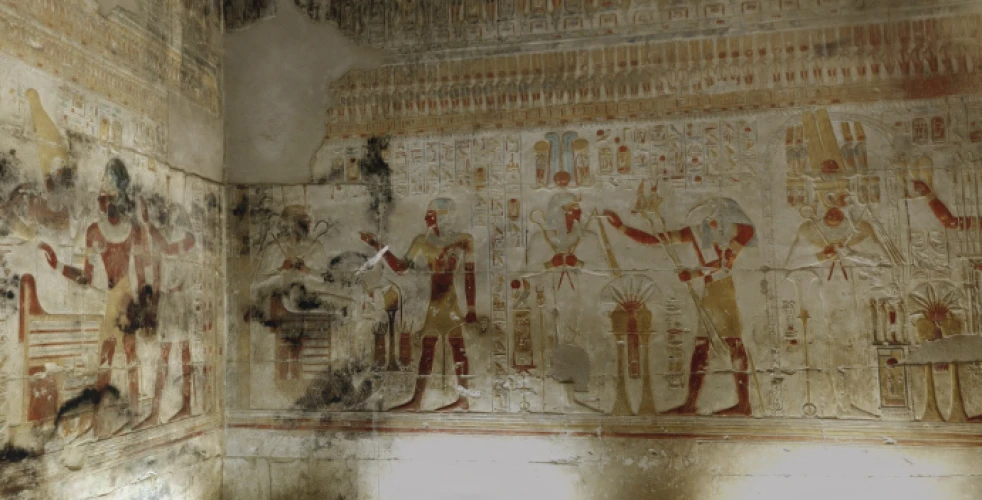
Temple of Seti I at Abydos: A Scientific and Historical Guide to One of Egypt’s Most Remarkable Monuments
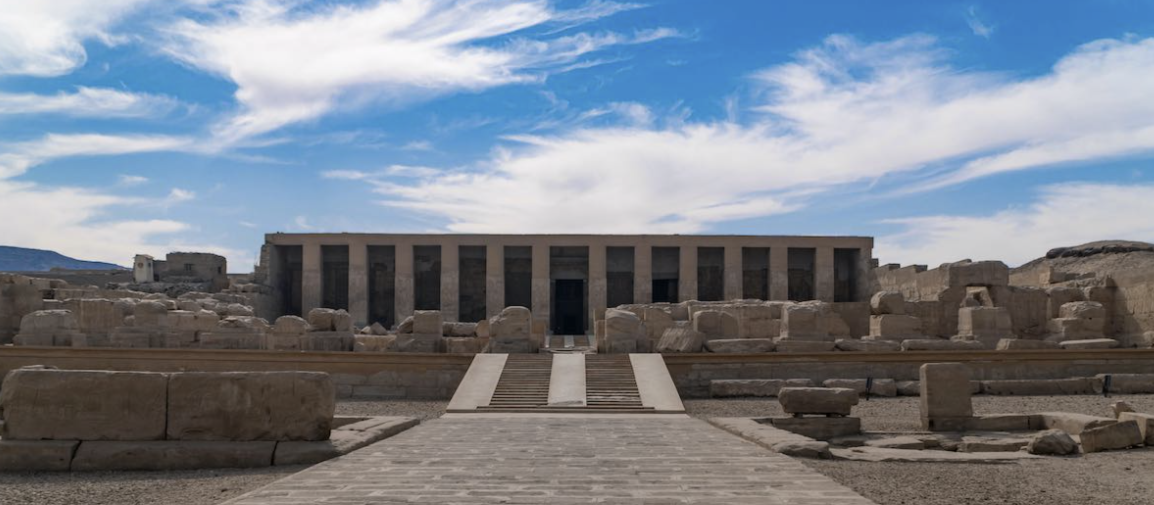
Temple of Seti I at Abydos: A Scientific and Historical Guide to One of Egypt’s Most Remarkable Monuments
The Temple of Seti I at Abydos stands as one of the most intellectually fascinating and artistically refined monuments of ancient Egypt. The site serves as a fundamental resource for studying ancient Egyptian religious practices and royal authority because it combines architectural creativity with its sacred space and its historical records.
The temple exists at Upper Egypt in proximity to present-day Abydos because Seti I built it during his reign from 1290 to 1279 BCE as a 19th Dynasty ruler. The site itself, however, predates Seti I by millennia, as Abydos was already a major religious center associated with the cult of Osiris, the god of the afterlife.
Historical Context: Abydos as a Sacred Landscape
Abydos served as a sacred site for Egyptians who considered it their most holy location. The site operated for several hundred years as a pilgrimage destination which Egyptians used to reach Osiris and obtain a positive afterlife result.
The Temple of Seti I was strategically built in this spiritually charged environment. The construction of his temple established Seti I as an Osiris follower which confirmed his status as a god and established his memory throughout time.
His son Ramesses II finished the temple after Seti I created most of its beautiful designs.
Architectural Design and Layout
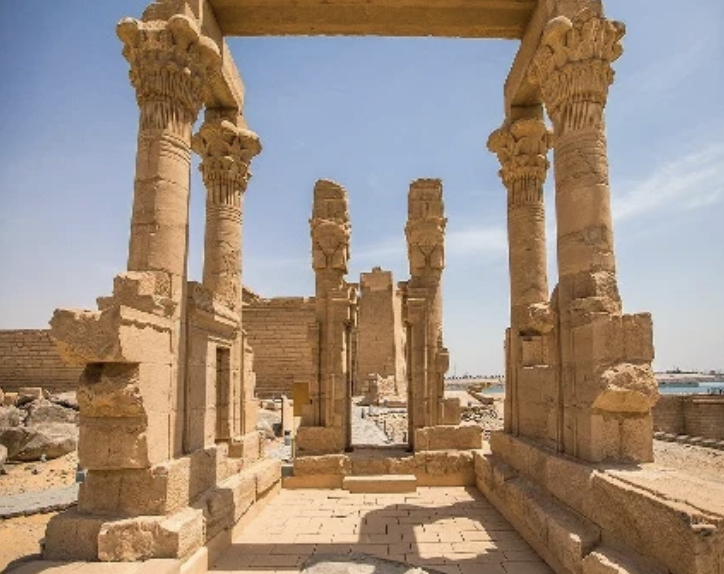
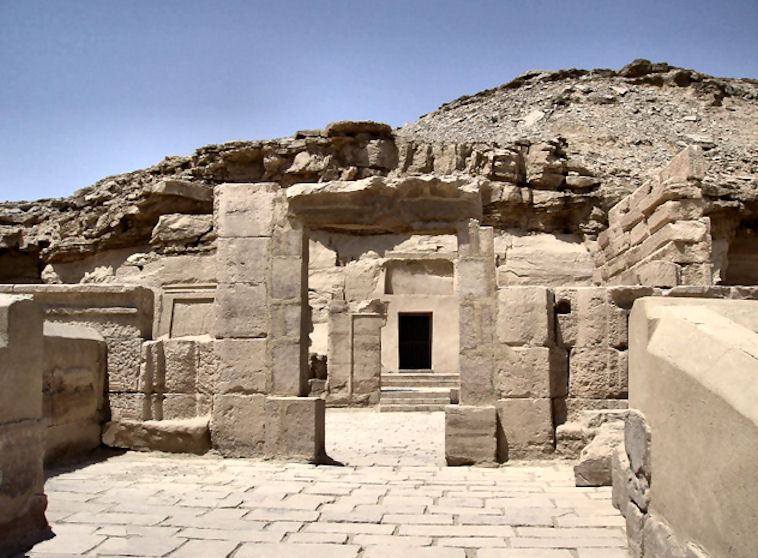
The Temple of Seti I displays its most unique feature through its distinctive building design. The structure consists of two L-shaped sections which follow both natural landforms and existing holy sites found at the site.
Key Architectural Elements:
First and Second Hypostyle Halls
The halls receive support from columns that showcase detailed carving work. The reliefs here are among the finest in Egypt because they display precise carving techniques and their pigments have been preserved in well-maintained condition.
Seven Sanctuaries
The temple contains seven chapels dedicated to major deities:
Osiris
Isis
Horus
Amun
Ra-Horakhty
Ptah
Seti I himself (as a deified king)
The multi-sanctuary design creates a worship area which allows simultaneous adoration of multiple deities through a single sacred space.
The Abydos King List: A Historical Record
The temple contains its most important element which is the Abydos King List that displays pharaohs in a chronological sequence. The list starts with Narmer who historians believe unified Egypt and ends with Seti I.
Scientific Importance:
Provides a structured sequence of rulers
The list excludes all kings who have been deemed either disputed or non-legitimate
Egyptologists use this list as an essential source to establish historical timelines
The King List exists as both an artistic element and a foundational historical record which ongoing research still depends on today.
Artistic Excellence and Relief Techniques
The carvings within the Temple of Seti I are widely regarded as some of the highest-quality reliefs in ancient Egyptian art. Unlike later temples where carving became more standardized, the reliefs here exhibit:
-
Deep, precise incisions
-
Balanced proportions
-
Exceptional preservation of detail
Scenes depict ritual offerings, divine interactions, and royal ceremonies. The artistic style reflects a peak in craftsmanship during the New Kingdom.
The Osireion: A Mysterious Subterranean Structure
The Osireion stands as an exceptional architectural monument which extends beyond the primary temple boundaries. The underground facility serves as a representation of Osiris's burial site.
Key Characteristics:
The structure uses gigantic granite stones for its construction
The building features water channels which encircle it to create a design that symbolizes the original waters of creation
The structure displays a different architectural style which separates it from the central temple
Researchers study the Osireion's design because it contains elements that connect to creation myths and afterlife soul journeys as part of their symbolic cosmology investigation.
Religious Symbolism and Theology
The Temple of Seti I functions as a religious site which presents a complete theological declaration through its stone carvings. The building's design and its ornamental features display fundamental aspects of ancient Egyptian religious beliefs. Divine Kingship The pharaoh serves as a link between the gods and human beings. Afterlife Doctrine The resurrection through Osiris receives strong emphasis in the belief system. The Cosmic Order (Ma'at) rituals function to show the maintenance of universal equilibrium. The design of the temple which houses multiple deities demonstrates an advanced religious system that welcomes all worshippers instead of following strict hierarchical rules.
Archaeological Significance
The temple serves as an essential resource for scientific research in various fields of study. The temple provides Egyptologists with valuable information about New Kingdom religious practices.
The site contains intact inscriptions which researchers can use to study linguistic development.
The archaeological site showcases building methods from ancient times which displayed advanced skills to create complex structures.
The site displays all architectural elements which built sacred spaces in ancient times.
The artistic work reaches its highest point through relief carving and temple decoration which exists in the artwork.
Research activities at present times discover new information about construction procedures and the materials used for colors and the ways people performed their religious ceremonies.
The “Helicopter Hieroglyphs” Debate
The temple has become controversial because it contains carvings that show modern artifacts like helicopters and submarines. The sites which contain these inscriptions show their locations in two different areas.
Scientific Explanation:
Experts have demonstrated that these shapes are the result of:
Re-carving over earlier inscriptions
Erosion and damage over time
Optical illusion caused by overlapping hieroglyphs
Visual misinterpretation functions as a mechanism that produces false scientific evidence.
Tourism and Visitor Experience
For modern visitors, the Temple of Seti I offers a unique experience distinct from more crowded sites like Karnak or Luxor.
Why Visit?
-
Exceptional preservation of carvings
-
Lower tourist density
-
Deep historical and intellectual value
Travel Tips:
-
Visit early morning for optimal lighting
-
Hire a knowledgeable guide for detailed interpretation
-
Combine with other Abydos sites for a comprehensive experience
Temple of Seti I at Abydos
The Temple of Seti I at Abydos functions as an architectural work and a historical religious artistic scientific monument. The temple provides essential knowledge about ancient Egyptian civilization through its precise carvings and the scholarly value of the Abydos King List.
Abydos provides visitors and researchers and history fans with a special chance to study Egypt's historical past through advanced research methods. The site serves as more than a tourist spot because it provides visitors with entrance to the core philosophical and cultural elements that define one of the most important civilizations in world history.



-webp.webp "Hilton")
-webp.webp "dusit")
-webp.webp "Marriott Hotels")
-webp.webp "Azimut Hotel")
-webp.webp "Golden Tulip")
-webp.webp "sheraton")
-webp.webp "westin hotel")
-webp.webp "Movenpick")