


The New Kingdom of Egypt
The New Kingdom of Egypt: Complete Historical and Travel Guide
The New Kingdom of Egypt (c. 1550–1070 BCE) stands as one of the most remarkable eras in ancient Egyptian history. This period marked Egypt’s peak in political power and military expansion, cultural achievement, and monumental architectural development. The New Kingdom functions as an imperial power and an era of artistic excellence, which continues to define ancient Egyptian heritage for students, historians, and global travelers.
This comprehensive guide explores the history of the New Kingdom of Egypt, its major pharaohs, its iconic monuments, its religious transformations, its cultural developments, and the reasons this period remains the main attraction for Valley of the Kings, Egypt travel packages, and worldwide archaeological research.
What Was the New Kingdom of Egypt?
The New Kingdom of Egypt refers to the period between around 1550 and 1070 BCE when Egypt became an imperial state that controlled vast territories while possessing unending riches and great power. The period which followed the Second Intermediate Period brought to Egypt an era of established power and central government rule after the time of divided rule and Hyksos domination.
Egyptian control during the New Kingdom reached territories that extended beyond the Nile Valley to establish dominion over Nubia to the south and Canaan and Syria to the northeast. The pharaohs of this era built monumental temples and royal tombs and lavish palaces, which created a historical legacy that continues to attract researchers and tourists from all parts of the world.
Important Pharaohs of the New Empire in history
The New Kingdom was governed by powerful pharaohs such as Hatshepsut, Tuthmose III, Amenhotep III, Akhnaton, and Ramesses II, the majority of whose military, architectural, and religious endeavors fashioned the golden age of Egypt and bequeathed an everlasting heritage.
King Ahmose: the new empire's founder
Ahmose I reunited Egypt and expelled the Hyksos, laying the foundation for the epoch. The valor that strived to bring about Egypt's good fortune once more made possible the establishment of the dynasty, the greatest in the history of Egypt. Ahmose I inclusively built for the Egyptian government an organizational framework that enabled it to lead major construction projects and military campaigns abroad.
Hatshepsut: Egypt’s Most Successful Female Ruler
The period of Hatshepsut's reign during the New Kingdom stands out as the most interesting time because she ruled as a female pharaoh before she became the sole female ruler of Egypt. The period of her rule brought about a time of peace and economic growth, which she used to construct major buildings and develop new trade routes.
The Mortuary Temple at Deir el‑Bahari constitutes her most important monument, which displays both architectural balance and artistic excellence. Egyptian cultural tours and guides that study women in ancient Egypt both highlight Hatshepsut's reign as their main focus.
Thutmose III: The Warrior King
Thutmose III, known as the "Napoleon of Egypt," led numerous military campaigns that resulted in the largest territorial expansion of the Egyptian empire. He conducted several military operations in the Levant and Nubia, which resulted in the acquisition of enormous riches for Egypt.
His leadership established Egypt as the foremost power in the ancient Near East, while his accomplishments brought valuable resources, which future pharaohs buried in the Valley of the Kings.
Amenhotep III: The Diplomat and Builder
The period between 1391 and 1353 B.C.E. marked the time when Amenhotep III ruled Egypt. His reign saw major construction projects, including the expansion of Karnak Temple and the erection of colossal statues such as the Colossi of Memnon.
Diplomatic letters from Amenhotep III to foreign powers indicated the control that Egypt had over international relations during his reign, thus making him an important figure for research covering both cultural exchange and Egyptian diplomatic practices.
Akhenaten: Religious Revolution
Akhenaten goes down as a contentious historical figure whose radical religious innovation, promoting the cult of sun-God Aten, substantially altered the religious activities of Egypt. Akhenaten then went on to create a new capital by establishing Akhetaten, which is Akhenaten's modern Amarna. The change in art and religious belief resulted from this decision.
The main part of his reforms disappeared after his passing, but his reign remains a significant subject for research about ancient Egyptian religious beliefs and artistic practices.
Ramses II: Ramses the Great
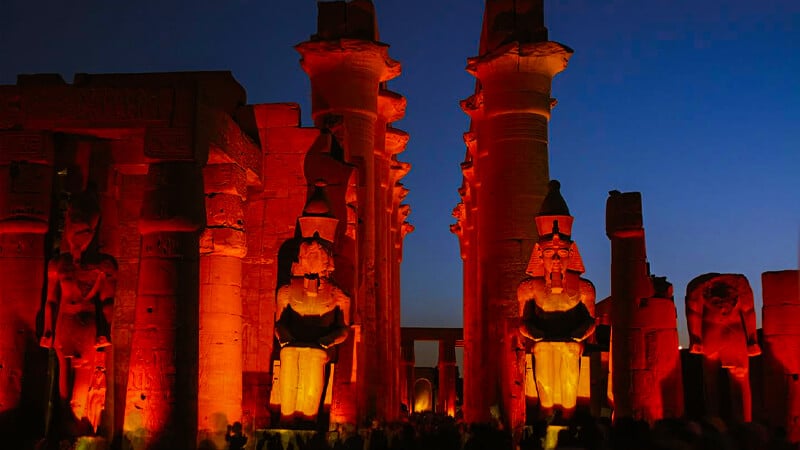
Ramses II, who became known as Ramses the Great, established himself as one of the most significant New Kingdom pharaohs through his 60-year reign, which produced his extensive architectural work and his creation of enormous monuments. His main building work included the Abu Simbel Temples, the Ramesseum, which served as his mortuary temple, and the expanded Luxor and Karnak Temples.
Monumental Architecture of the New Kingdom
The New Kingdom period built its reputation through its construction projects, which included massive temples and enormous statues, and its grand burial sites. The buildings of Karnak, Luxor, and the Valley of the Kings demonstrate Egypt's religious dedication and artistic excellence and its imperial political strength during its highest period.
Karnak Temple Complex
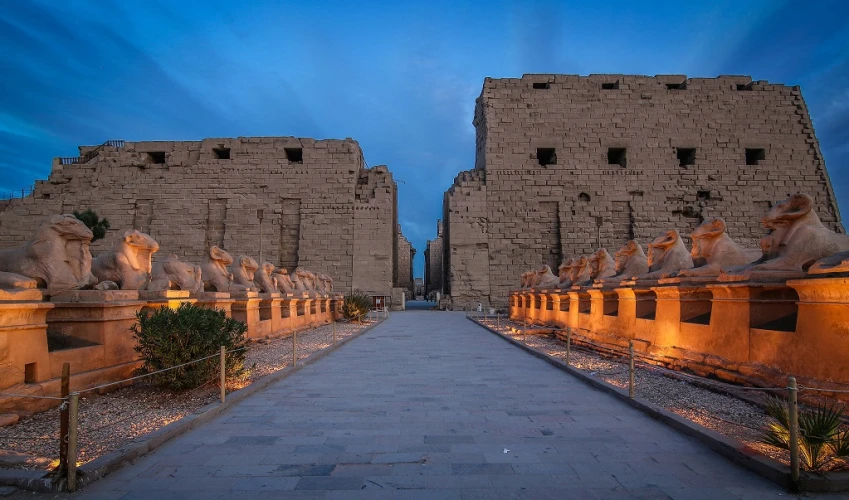
The Karnak Temple Complex near Luxor stands as one of the most extensive religious sites that humanity has ever built. The complex contains extensive Hypostyle Halls together with tall obelisks and holy lakes, which the builders constructed through multiple generations. Karnak serves as the main attraction for New Kingdom tours throughout Egypt because it demonstrates the religious beliefs of ancient Egyptian pharaohs.
Luxor Temple and Royal Processions
The Luxor Temple served as an annual religious celebration site, which operated its Opet Festival together with its other sacred events. The sphinx avenue, which leads to Karnak, functions as a ceremonial pathway to connect both temples.
Mortuary Temples
New Kingdom pharaohs constructed mortuary temples for their posthumous worship, which differed from the burial practices established by earlier pyramid builders. Hatshepsut's temple at Deir el-Bahari and Ramses II's Ramesseum demonstrate the architectural innovation of these structures.
Valley of the Kings
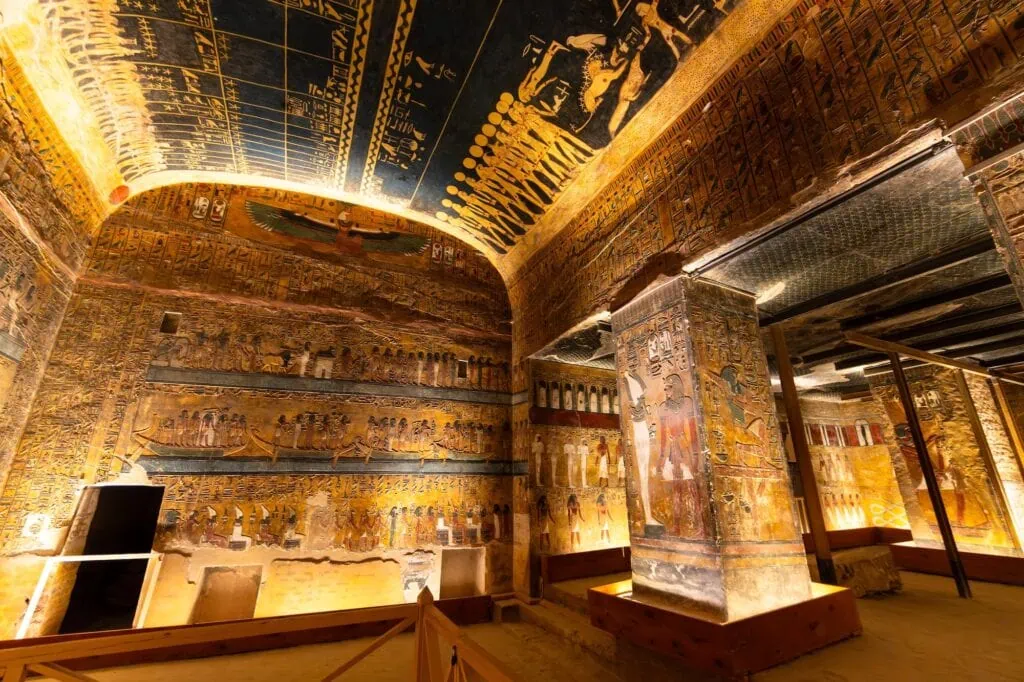
The Valley of the Kings emerged as the main burial site for New Kingdom pharaohs after pyramid complexes lost their status as the primary burial site. The Theban hills conceal tombs that contain vibrant wall paintings, hieroglyphic inscriptions, and religious symbols which were created to help the pharaoh reach his afterlife destination.
The site serves as the main attraction for Valley of the Kings tours while also maintaining its status as one of Egypt's most frequented archaeological sites.
Religion and Society in the New Kingdom
The New Kingdom period saw religious beliefs control all elements of daily existence. The Egyptian god Amun-Ra reached his highest level of worship during the 18th and 19th Dynasties. Temple estates accumulated wealth and political power, which they used to control both religious practices and governmental operations.
The short-lived monotheistic practice by Akhenaten cut off access to traditional worship, but it strengthened the deep cultural ties that Egyptians maintained with their gods.
Thematic elements of these works appear in Egypt travel guides, which tour guides use to explain temple reliefs and religious artifacts
The New Kingdom of Egypt represents one of the most exceptional historical periods that researchers have studied throughout human history. The period is renowned for its strong pharaohs and its giant temples, and its major cultural accomplishments, which created a lasting impact on Egypt and the entire world. The period attracts both researchers and tourists because it features outstanding buildings and developments in faith and new artistic creations. The New Kingdom period brought Egypt both military power and economic success and territorial growth, which enabled the country to achieve prosperity at home and abroad. The period provides travelers with exceptional experiences through its well-planned tours and expert guides who lead them to visit famous archaeological sites such as Luxor and Karnak temples and Valley of the Kings tombs, and royal monuments. The archaeological sites offer visitors a chance to discover the deep traditions of ancient Egyptian society, which remain influential today.




-webp.webp "Hilton")
-webp.webp "dusit")
-webp.webp "Marriott Hotels")
-webp.webp "Azimut Hotel")
-webp.webp "Golden Tulip")
-webp.webp "sheraton")
-webp.webp "westin hotel")
-webp.webp "Movenpick")