
 English
 Italy
Italy
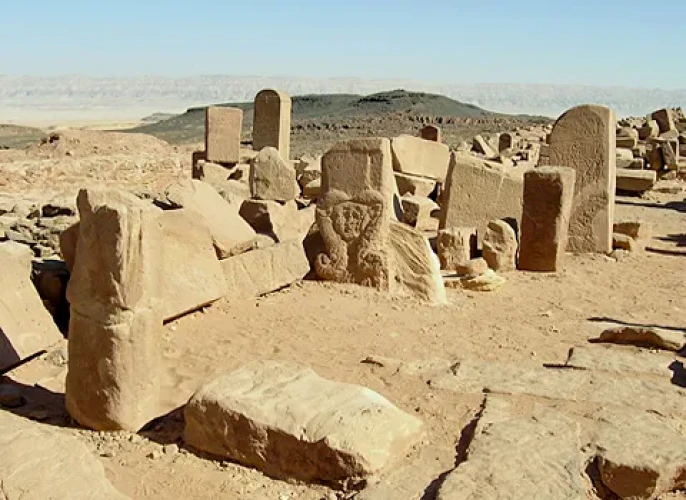
Serabit el-Khadim: Egypt’s Hidden Pharaonic Treasure in the Heart of Sinai
Serabit el-Khadim stands as an extraordinary archaeological site which Egyptians consider to be their most captivating yet least known site, located within the remote wild areas of the Sinai Peninsula. The remote site, situated away from Luxor's busy temples and Giza's famous pyramids, presents a different perspective on ancient Egyptian history through its depiction of mining activities and desert survival and religious practices which occurred in extreme desert conditions.
A Strategic Location in the Sinai Desert
The location of Serabit el-Khadim in southwestern Sinai rests on a high plateau which provides views of extensive desert areas. The site selection occurred because of its remote position which contained valuable turquoise mines that ancient Egyptians considered highly valuable.
Turquoise represented three things to ancient Egyptians: happiness, safety and God's approval. The area became a major mining site because of its important value during organized mining operations which took place throughout the Middle Kingdom and New Kingdom time periods.
The Land of Turquoise
The ancient Egyptians referred to Sinai by the name "Land of Turquoise." The main location for this identity was Serabit el-Khadim. The Nile Valley dispatched expeditions which included miners and soldiers and administrators and priests who worked together under state supervision.
The missions conducted these operations for economic purposes at the same time they pursued their essential mission of spiritual work. The workers conducted their rituals before starting work to make prayers which would protect them from danger and bring about their successful results.
The Temple of Hathor: Lady of Turquoise
A temple dedicated to the goddess Hathor stands at the center of the site which locals refer to as the "Lady of Turquoise." Hathor, who people associated with love and music and joy, also served as a guardian to miners and travelers who worked in distant territories.
The Temple of Hathor at Serabit el-Khadim displays an authentic desert aesthetic while the Nile temples show their proximity to urban development. Construction of the temple began during the Middle Kingdom and continued through the New Kingdom expansion.
The site contains inscriptions which include the names of multiple pharaohs, such as Senusret I and Thutmose III, which demonstrate the site's historic significance throughout many centuries.
Proto-Sinaitic Inscriptions: The Birth of Alphabetic Writing
The site of Serabit el-Khadim contains one of its greatest archaeological treasures, which consists of Proto-Sinaitic script inscriptions. The markings that workers left behind serve as one of the oldest examples of human writing systems that use alphabetic characters.
The system used these symbols to represent individual sounds instead of showing complete words or concepts which created a major advancement toward modern alphabets. The site provides essential value to linguists and historians because its archaeological value comes together with its cultural and intellectual significance.
Daily Life in an Ancient Mining Camp
Life at Serabit el-Khadim presented numerous challenges to its inhabitants. Workers faced extreme heat conditions together with limited access to water and total separation from the productive Nile Valley area. The workers maintained their presence at this location throughout extended time periods despite the various difficulties they encountered.
The team established basic camps which depended on materials that needed to be delivered through extensive desert transportation. Their faith functioned as an essential element for their everyday activities since it brought them both comfort and security. Workers performed their prayers to Hathor before entering the mines to request her divine blessing.
Engineering and Organization
The mining operations at Serabit el-Khadim demonstrate a high level of organization and planning. The process of extracting turquoise from hard rock required skilled workers who used specific tools to achieve their goals. The presence of administrative inscriptions suggests that these expeditions were carefully managed by the country.
Ancient Egyptian governance achieved its highest efficiency when it operated in distant locations that presented difficult challenges.
Rediscovery and Modern Archaeology
Serabit el-Khadim remained unknown to people for many centuries after its discovery in ancient times. European explorers and archaeologists discovered the site again during the 19th century, which led to renewed research about the ancient history of Sinai.
Excavations that followed the initial dig discovered mining tools and statues and inscription artifacts and parts of the mining system. The researchers used these discoveries to recreate the daily activities of workers at the facility and to understand its importance.
Why Serabit el-Khadim Matters Today
Serabit el-Khadim provides an uncommon viewpoint in a nation that includes multiple world-famous landmarks. The study shows how common people who worked as miners laborers and priests helped to create the ancient economy instead of focusing on royal figures and their monumental building projects.
The writing system development at ancient Egyptian civilization represents a significant historical milestone which later led to the creation of modern alphabet systems used throughout the world.
Visiting the Site: A Unique Adventure
A visit to Serabit el-Khadim is not your typical tourist experience. The journey requires planning, local guidance, and a willingness to embrace the challenges of desert travel.
The trip provides travelers with an authentic experience because they can enjoy peace in an isolated environment. The site’s untouched atmosphere allows visitors to connect deeply with its history.
Travel Tips
-
Always travel with an experienced local guide
-
Bring sufficient water and supplies
-
Wear appropriate clothing for desert conditions
-
Respect the site and avoid damaging any mounments.
Serabit el-Khadim
Serabit el-Khadim stands as one of Egypt's hidden treasures because it serves as a site where three elements history, language, and human endurance meet. The site demonstrates that ancient Egyptian civilization extended beyond its famous temples and royal tombs to include exploration and work and human persistence.
The remarkable site provides visitors with an exceptional experience which allows them to explore both the Egyptian desert and the fundamental origins of human civilization.




-webp.webp "Hilton")
-webp.webp "dusit")
-webp.webp "Marriott Hotels")
-webp.webp "Azimut Hotel")
-webp.webp "Golden Tulip")
-webp.webp "sheraton")
-webp.webp "westin hotel")
-webp.webp "Movenpick")