
 English
 Italy
Italy
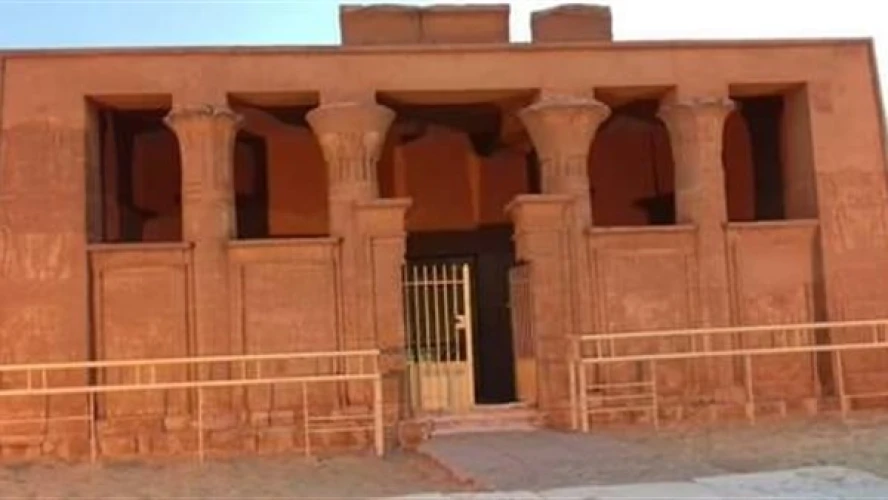
Petosiris: The Sage of Tuna el-Gebel
Petosiris: The Sage of Tuna el-Gebel and His Timeless Legacy
The ancient site Tuna el-Gebol which exists beyond all modern urban development exists in Upper Egypt as a site which contains both ancient artifacts and hidden secrets. The Petosiris tomb sits between rocky hills and ancient burial sites because he was one of the most compelling people who lived in Egypt during the Ptolemaic and Roman time periods. The tomb serves as a burial site for the deceased but it also provides insight into the life of a man who lived between two different eras through his quest for knowledge during a period of worldwide transformation.
Although Petosiris did not rule as a pharaoh or lead military forces he fulfilled his duties as a priest who also served as a teacher and a sage. His name which means "Given by Osiris" shows his strong bond with Egyptian religious traditions. The Thoth priesthood required him to execute religious rituals as a duty which also included safeguarding knowledge through his work in astronomy and ritual interpretation and life-after-death existence validation.
The Life of Petosiris
Petosiris lived during a period when his society experienced major transformations. Ptolemaic rule controlled Egypt which allowed Greek cultural elements to permeate all aspects of Egyptian society. Nevertheless Petosiris kept his Egyptian heritage intact. He pursued research in ancient scientific disciplines while studying the Greek philosophical teachings that became popular throughout Egypt.
As a priest he participated in religious rituals while managing temple activities. However his curiosity extended beyond the boundaries of ceremonial practices. He studied astronomy and natural cycles while seeking to comprehend the fundamental secrets of existence. People in his era believed that religious belief and knowledge formed a single entity which required priests to function as scholars and astronomers and instructors.
His Tomb at Tuna el-Gebel
The tomb of Petosiris is one of the most beautiful and important in Tuna el-Gebel. The structure presents itself as a small space which contains multiple symbolic elements that convey hidden meanings. The walls display inscriptions together with images that show his life story and his religious beliefs and the path which the soul takes after death.
Visitors who enter the tomb experience a sensation which makes them feel as if they travel through different periods of history. The content of the text and the carvings which appear throughout the work hold important messages. The sun and moon together with Thoth create images of celestial bodies which represent wisdom. The tomb serves as more than a burial site because it functions as a life story which shows the philosophical beliefs of a man who dedicated his life to pursuing knowledge and spiritual matters.
Wisdom and Philosophy
Petosiris studied both rituals and he studied the deeper existential question of what life actually means. The soul relationship to death and the eternal existence of humans in cosmic balance are the questions which his tomb decorations display through their symbols and inscriptions.
He saw time as a continuous cycle — the sun rises and sets, stars move, life changes, yet balance remains. He regarded death as a process which transforms a person into another state of existence. Through his tomb, he invited visitors to see death as a passage into eternity and life as part of a greater cosmic order.
Blending Egyptian and Greek Culture
The most impressive element of Petosiris' life shows how he existed between two different cultural worlds. He maintained strong ties to Egyptian religious practices while living under the authority of Greek rulers. The Greek settlers and Egyptian natives who inhabited the area interacted with each other by exchanging their cultural beliefs and spoken languages.
His burial place shows this cultural combination. The tomb contains Egyptian inscriptions and symbols but also Hellenistic elements which show different ways of representing cosmic order and the soul. The burial site demonstrates how different cultures can merge together through time because it shows how different ideas and identities intermingled during ancient periods.
Discovery and Significance Today
Archaeologists discovered Petosiris's tomb in the 19th century and it became a key site for understanding the Ptolemaic period which followed. The tomb shows its historical value but it also demonstrates how priests and scholars practiced their daily lives while they combined their religious beliefs with their philosophical and scientific studies.
The tomb functions as a research center while it serves as an attraction for tourists. The visitors at the site become aware of an ancient mind who lived more than two thousand years ago through their interaction with the walls. The connection to the past provides a special experience which enables us to envision the thoughts and questions that a person from that distant time would have had.
The Message of Petosiris
Petosiris's story extends beyond his death because it shows how he spent his life. The story shows his dedication to spending his life studying and thinking and learning new things. The tomb shows that people can achieve everlasting existence through their physical presence and their intellectual achievements and their capacity to impact others.
The statement shows that knowledge and wisdom will last longer than power and wealth. Petosiris may not have been a king but his legacy continues to exist. The visitors experience a bond with his intellectual and spiritual presence which helps them comprehend existence and mortality and the universe.
Visiting Tuna el-Gebel Today
Visitors to Tuna el-Gebel experience more than tomb tours because they encounter historical sites that reveal ancient secrets through their walls. The tomb of Petosiris presents a personal experience. The space allows visitors to connect with a historical figure who dedicated his life to sharing both his religious beliefs and his intellectual ideas which he believed would live on after his death.
The tomb asks visitors to think about three different subjects: their own existence, the concept of eternal life, and the legacy they will leave behind in the world. The display demonstrates how philosophical concepts can endure throughout history because they exist in physical form through walls and through their decorative and written elements.
Tuna el-Gebel
The burial site of Petosiris, which contains his priestly duties, serves as a burial site for all his philosophical teachings, which he used to connect two different realms of existence. The burial site of the scientist who dedicated his life to studying both the universe and human nature exists as a modest structure which contains vast intellectual depth.
Petosiris's tomb, which differs from the large pharaoh tombs that display royal authority, demonstrates his intellectual achievements and his capacity for self-reflection and his dedication to meditation. The arrangement of his work invites deep thought and critical investigation and establishes a connection to everlasting existence. His legacy exists through his enduring concepts which explore human existence and mortality and cosmic phenomena and the perpetual nature of human existence, which he established through his work.





-webp.webp "Hilton")
-webp.webp "dusit")
-webp.webp "Marriott Hotels")
-webp.webp "Azimut Hotel")
-webp.webp "Golden Tulip")
-webp.webp "sheraton")
-webp.webp "westin hotel")
-webp.webp "Movenpick")