


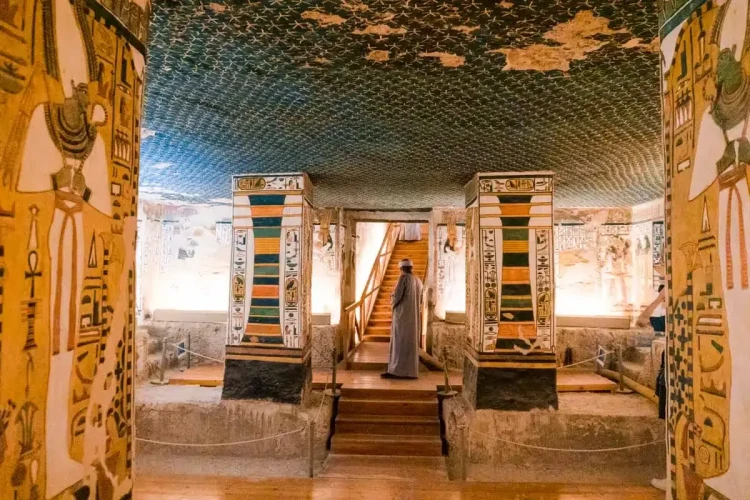
Valley of the queens
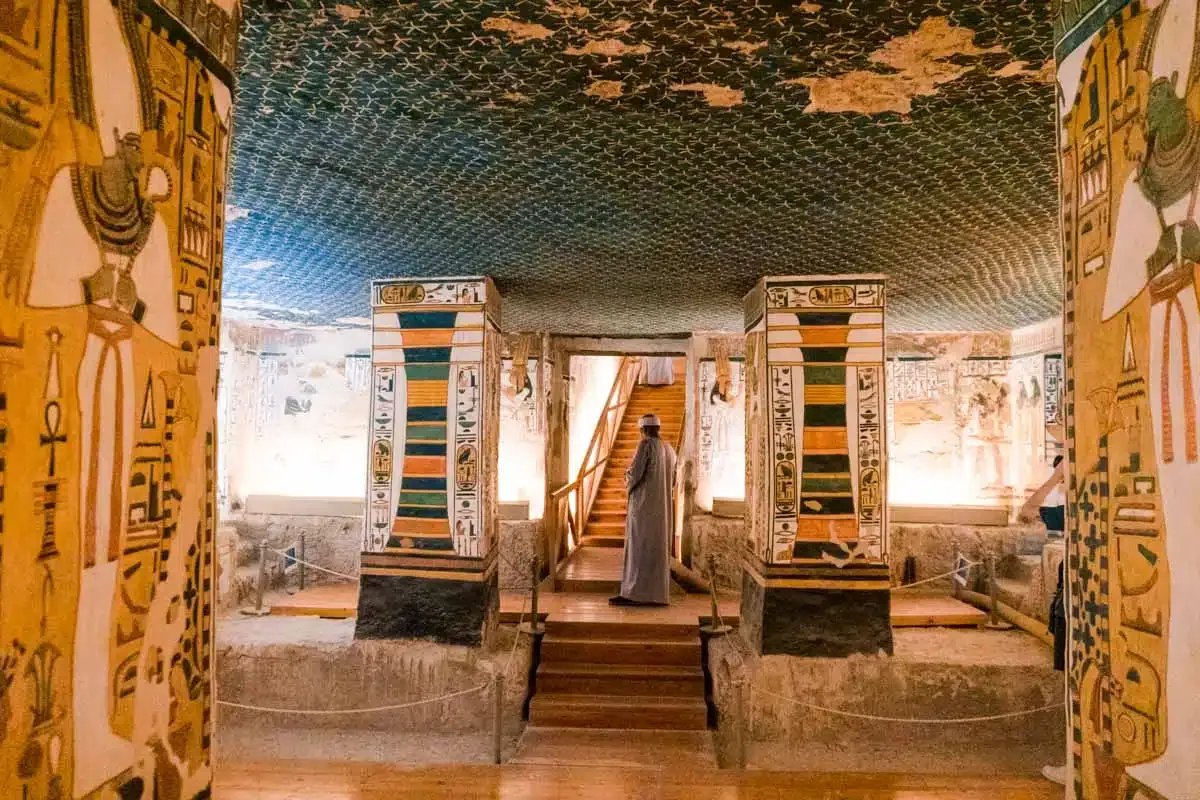
VALLEY OF THE QUEENS.
the road reaches a junction after passing through the ruined Temple of Merneptah. To the southwest from this location Madinat Habii can be found (see below). The western road leads to the Valley of the Queens which is known in Arabic as Biban al-I:Iarim or Biban al-Malikat: of the Ladies or of the Queens. Toilets to the left of car park. The burial sites of high officials began to use this valley during the mid-point of the 18 Dynasties. The 18 Dynasties rulers preferred to share their tombs with their wives until the 19 Dynasties opened this area for royal family women and children. The dynasty called it 'Place of Beauty' which people used until the next dynasty but afterward it became obsolete. The earliest royal tomb appears to belong to Queen Sit Re>u32< who was married to Ramesses I while the most important tomb belongs to Queen Nefertari who was married to Ramesses II. The shallow valleys contain approximately 80 tombs which include both unnamed and uninscribed tombs and tombs that include cartouches with missing inscriptions. These small tombs contain bright wall paintings which visitors can access from their entrance points unlike the Valley of the Kings tombs. The plan usually consists of a small antechamber, long narrow corridor, several side chambers, many of which are undecorated, and at the end the tomb-chapel. Schiaparelli the Italian Egyptologist began clearing most tombs before World War I. Visitors usually explore three tombs which include Queen Tyti (No. 52), Prince Amun-hir-Khopshef (No. 55) and Prince Kha'emweset (No. 44).
The first tomb of note is on the N side some distance up the hill. This is the Tomb of Queen Tent-Opet (No. 74), wife of Ramesses IV . A little higher on the same side is.the Tomb of Queen Bant Anta (No. 71),
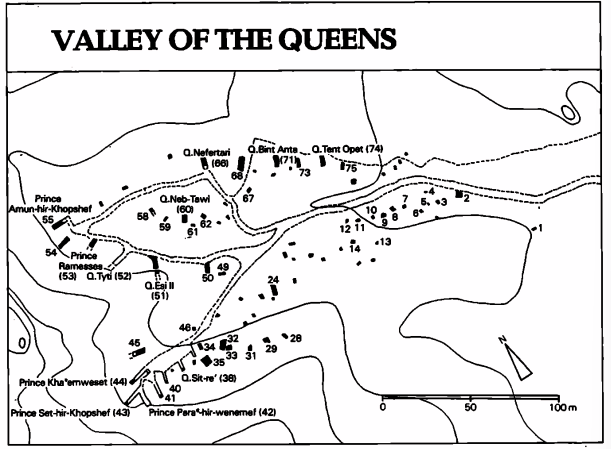
Tombs of valley of queens
-
Tomb of Nefertari (QV66)
The Great Royal Wife of Ramesses II.
It is considered one of the most beautiful tombs in ancient Egypt because of its vivid colors and well-preserved wall paintings. -
Tomb of Prince Amun-her-khepeshef (QV55)
Son of Ramesses III. -
Tomb of Queen Tausret (QV52 attributed)
Associated with the late 19th Dynasty (some attributions vary among scholars).



-webp.webp "Hilton")
-webp.webp "dusit")
-webp.webp "Marriott Hotels")
-webp.webp "Azimut Hotel")
-webp.webp "Golden Tulip")
-webp.webp "sheraton")
-webp.webp "westin hotel")
-webp.webp "Movenpick")
