


East Bank vs West Bank in Luxor
East Bank Mounmnts :
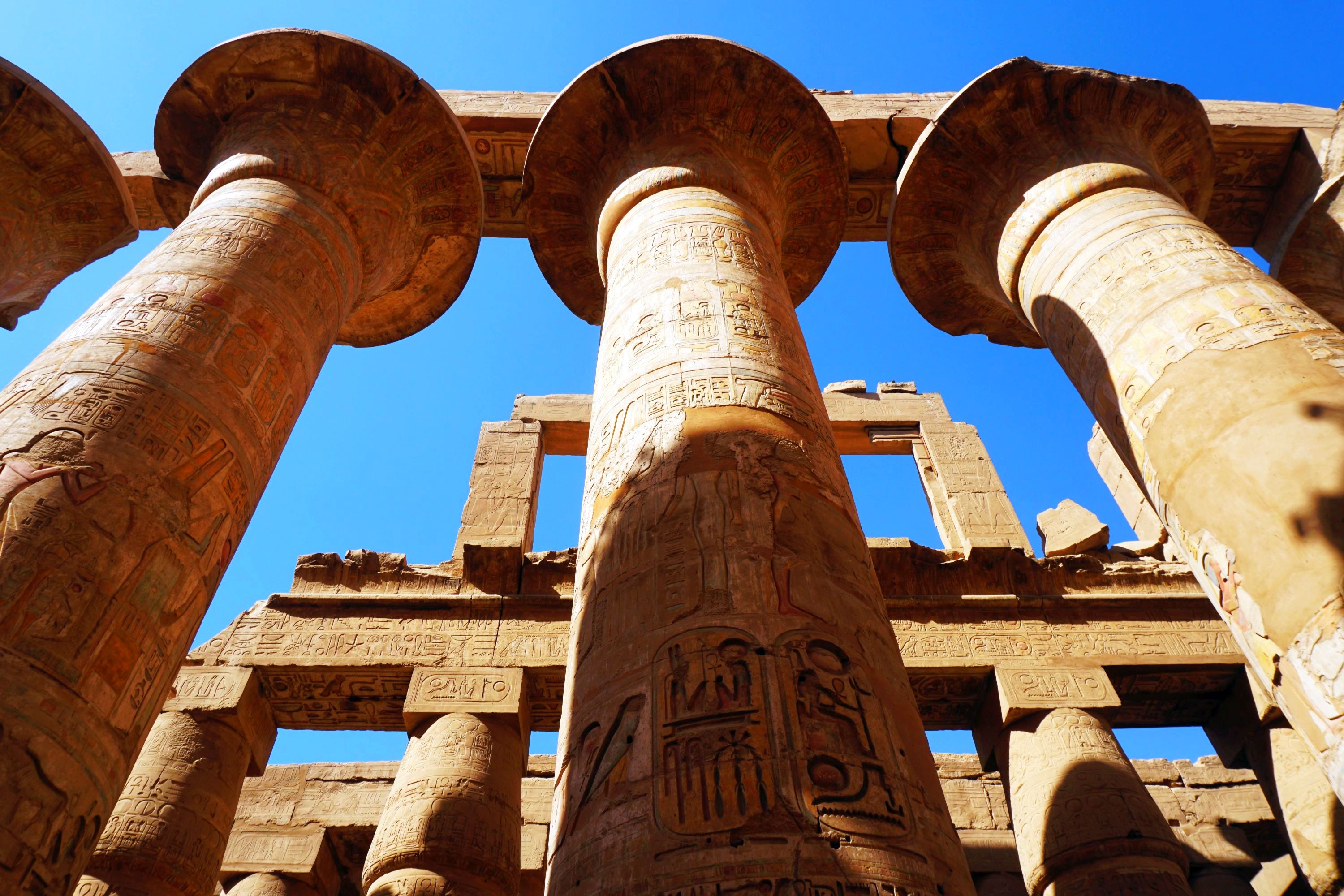
1. the temple of karnak.
Karnak consists in substance of the same rudiments as are generally set up in a state tabernacle a pylon, colonnaded court, hypostyle hall, entranceway, sanctum and lockers, but the abecedarian plan has been overlaid by redundant pylons, added yards and colonnades and indeed attachment sanctuaries, the whole time the tabernacle moving further W, presumably following the retreating bank of the Nile. Structures were added by each king who came to the throne so that this extended structure period has assured that the concinnity present in the mortuary tabernacles erected at a single time for a single purpose is missing.
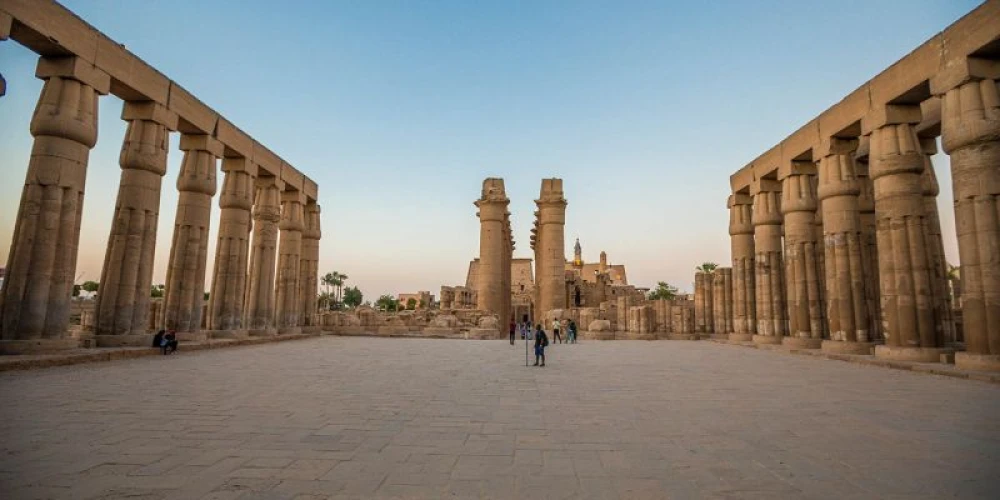
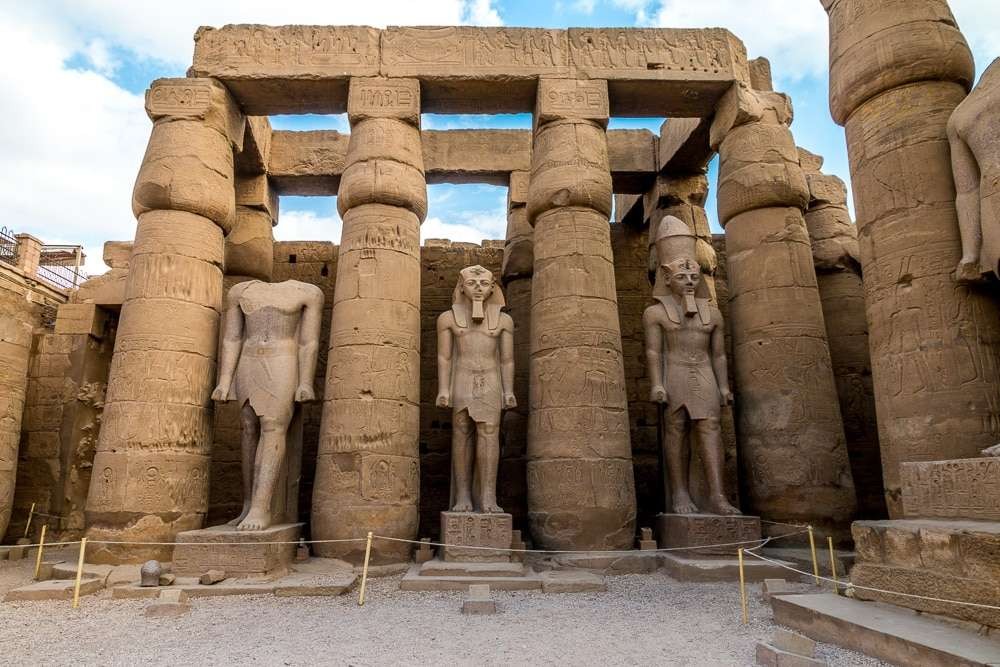
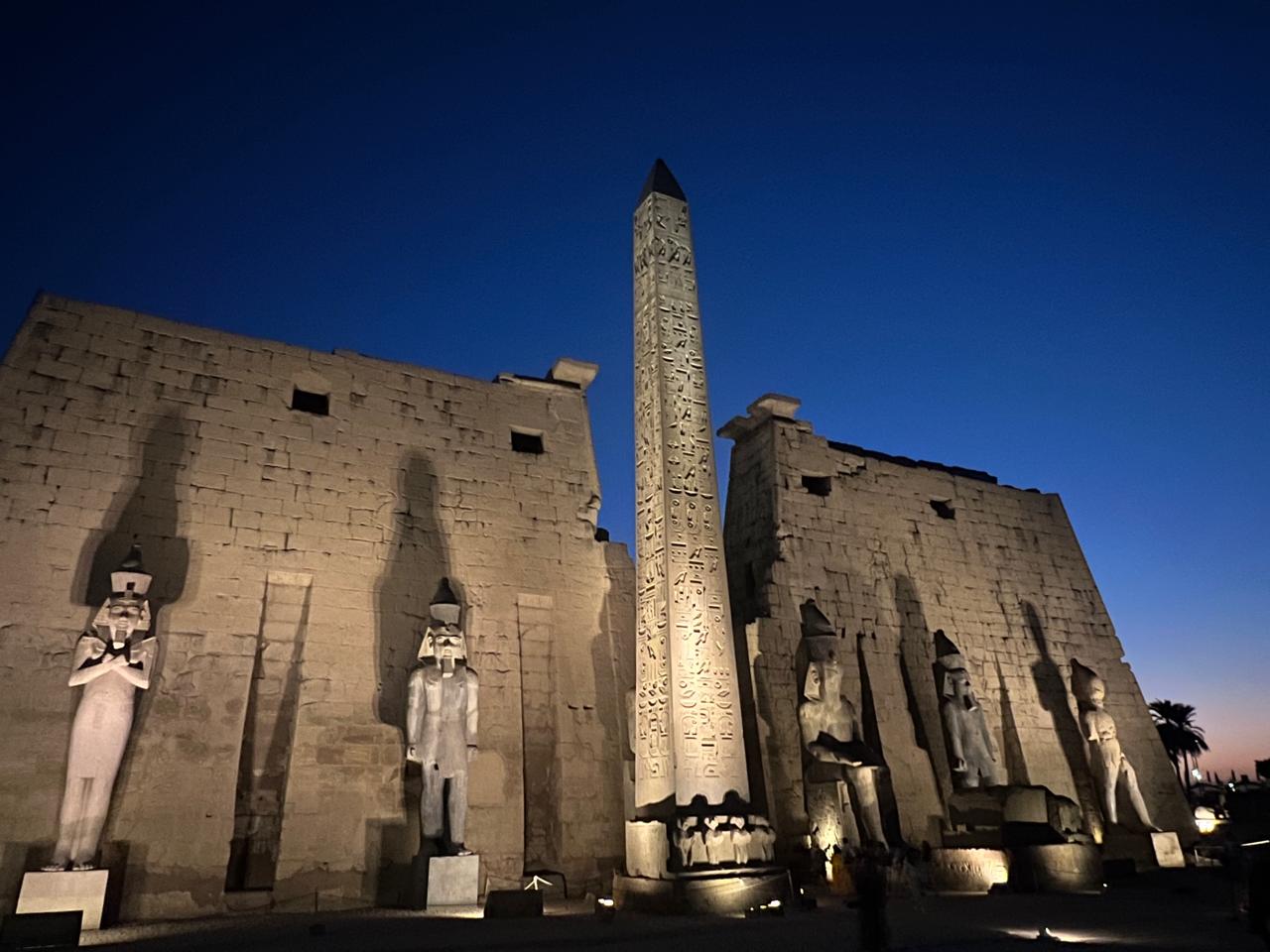
2. temple of luxor
the Southern Apt or Opet. Then Amun • Min, the fertility aspect of Amun, was worshipped with Mut and Khons, who formed the Triad of Thebes. The tabernacle runs resemblant to the.river and is thus aligned N
S, notE-W. also, the pylon and first court are slightly angled to the axis of the main tabernacle.
3. Avenue of Sphinxes
The Avenue of Sphinxes leading to this complex from the E was discovered by Mariette in 1850. He set up that the sphinxes led to a dromos containing Greek statues of creatures connected with the solemnities of Dionysius- peacocks, leopards and mythological brutes and also a element of Greek proponents and muses that stands before a Temple of Nectanebo II( largely ruined).
3. Avenue of Sphinxes
The Avenue of Sphinxes leading to this complex from the E was discovered by Mariette in 1850. He found that the sphinxes led to a dromos containing Greek statues of animals connected with the rites of Dionysius-peacocks, leopards and mythological creatures-and also a semicircle of Greek philosophers and poets that stands before a Temple of Nectanebo II (largely ruined).
4. Luxor Museum
Luxor Museum of Ancient Art( open 17.0
2000; figure), set in a small theater with several statues, the nexus of a projected open- air display.
West Bank mounmts :
1. Valley of the Kings
The road to the NW is the SIKKAT AL- WADA YN( Track of the Two denes). It passes on the SW a track to the S monuments and to the N Howard Carter's House on the barranca incontinently above.
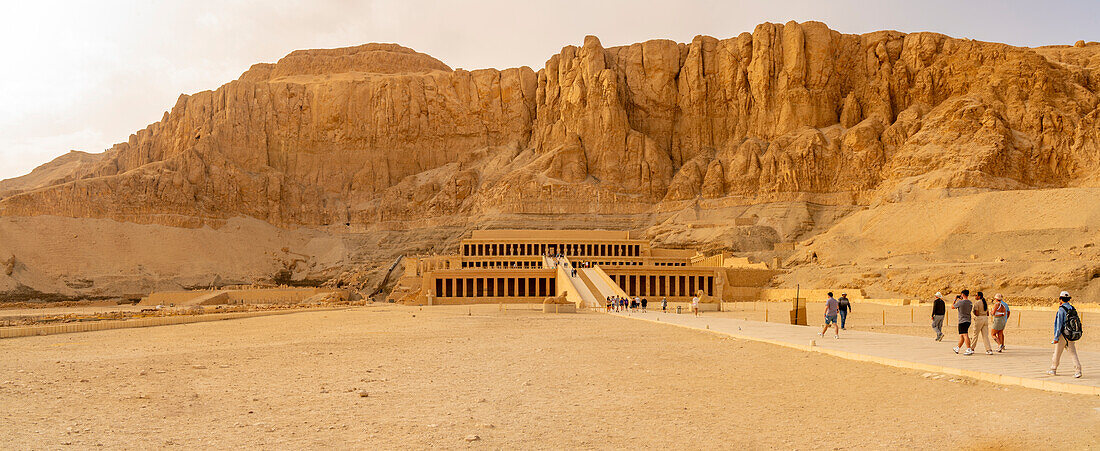
2. The Temple of Hatshepsut
This tabernacle is one of the most remarkable structures in Egypt. It's said to have been inspired by the grave- sanctuaries of some of the Middle Kingdom patricians at Qaw al- Kabir( Middle Egypt), but whatever the ant
cedents the result is veritably striking. lately the walls erected by Senenmut to hold back the brickle gemstone have been uncovered and stoked. Long after the tabernacle was abandoned it was used as a Coptic friary, thei> eir al- Bal_iri, the name of which is now used for the whole area. First examined by Napoleon's pundits, it was incompletely cleared by Wilkinson, but it was Lepsius who realised the connection between this point and Hatshepsut's work at Karnak.
2.The Temple of Hatshepsut
This temple is one of the most remarkable structures in Egypt. It is said to have been inspired by the tomb-chapels of some of the Middle Kingdom nobles at Qaw al-Kabir (Middle Egypt), but whatever the ant~cedents the result is very striking. Recently the walls built by Senenmut to hold back the friable rock have been uncovered and augmented. Long after the temple was abandoned it was used as a Coptic monastery, thei>eir al-Bal_iri, the name of which is now used for the whole area. First examined by Napoleon's savants, it was partly cleared by Wilkinson, but it was Lepsius who realised the connection between this site and Hatshepsut's work at Karnak.
3. Colossi of Memnon
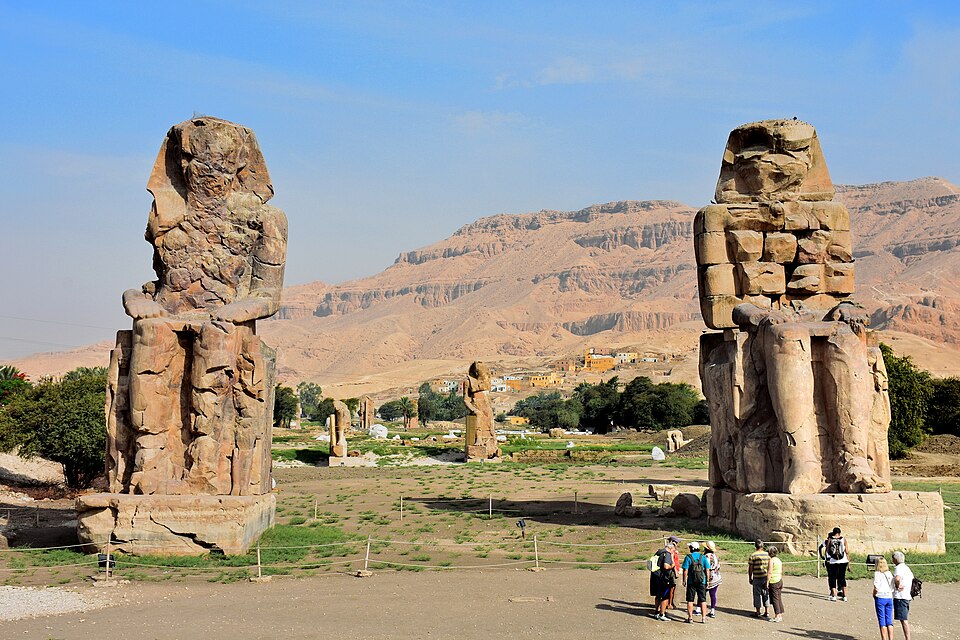
Tum down the road to the S.E. with a conduit to the right. This road ultimately leads back to the ferry. After 600m on the N stand the Colossi of Memnon. These two immense · numbers of Amenhotep III sat in front of the mortuary tabernacle of the king.
4. Valley of the Queens
Last resting place of the royal women and children. position of the plushly decorated Tomb of Queen Nefertari.5. Deir el-Medina
Residence vill of the crafters who erected the royal sepultures. Provides sapience into diurnal life and business in the New Kingdom.
6. Medinet Habu
Temple of Ramses III, a funerary tabernacle. Not as crowded but as well saved.
East bank:
The East Bank was the center of the day- to- day life, politics, and religion of ancient Thebes. It's then that the ancient Egyptians erected majestic tabernacles for the deification of gods and where the megacity of Luxor exists moment.
West Bank:
More peaceful and country- suchlike. Beautiful desert and mountain views. Ideal for history suckers and shutterbugs. Transport Around Luxor. By Ferry or Motorboat The Nile River separates the two banks. Ferries and bitsy boats can transport you between them with ease. Private hack or motorist Ideal for West Bank disquisition. Bike or Scooter Reimbursement Excellent to view both banks for fearless trippers . Guided tenures similar tabernacles and sepultures come to life with the guidance of an expert companion or Egyptologist.



-webp.webp "Hilton")
-webp.webp "dusit")
-webp.webp "Marriott Hotels")
-webp.webp "Azimut Hotel")
-webp.webp "Golden Tulip")
-webp.webp "sheraton")
-webp.webp "westin hotel")
-webp.webp "Movenpick")
