


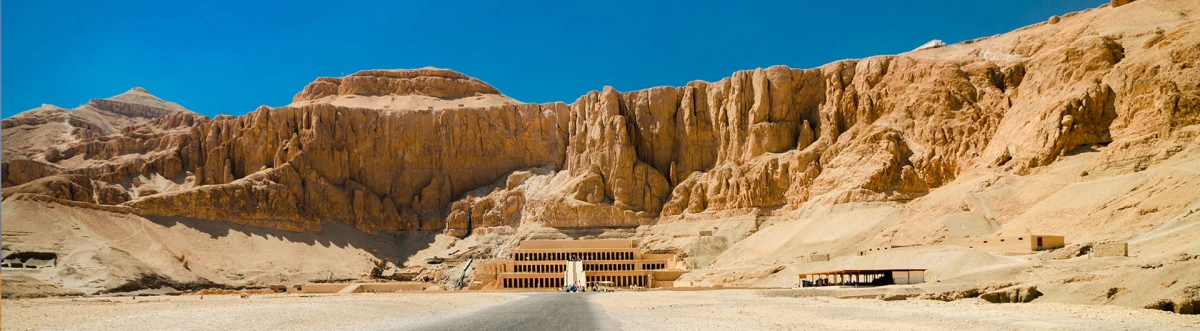
Explore Hatshepsut’s Temple in Luxor
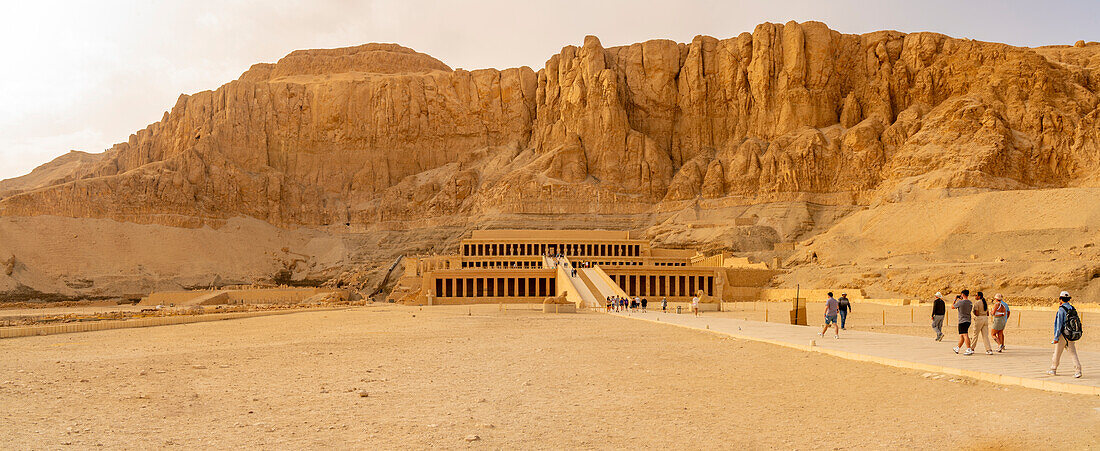
The Temple of Hatshepsut, located at Deir el-Bahari on the western Nile bank of Luxor, represents one of Egypt's most exceptional architectural accomplishments. The temple presents an extraordinary display of ancient engineering and design, and artistic expression that exists beyond the massive Karnak and Valley of the Kings complex. Hatshepsut constructed her mortuary temple with different design principles than previous pharaohs, who built temples, because her temple design matched the natural features of the area.
The terraces, colonnades, and ramps of the temple essentially set the stage for the temple's peaceful environment, which bears witness to Hatshepsut's developed modes of architecture during her reign. The wall carvings and reliefs convey her story from her divine birth through ascent to power to a successful reign. The symmetrical design and elegance of the temple leave striking images in the minds of visitors, which also manifest her advanced planning and forward-thinking qualities as a female Pharaoh. The Temple of Hatshepsut stands to symbolize her power and grace and the legacy she left behind for the ancient history of Egypt.
The Temple of Hatshepsut: Egypt's Queen in Stone
Hatshepsut, one of the most remarkable sovereigns of Egypt, was a personage whose memory still enthralls both historians and modern people alike. Erected as a funerary temple in her honor-and that of her cult and the god God Amun-the temple also served a variety of political and religious functions. What makes the temple unique amidst all is that it was built by an ingenious dog-queen who declared herself pharaoh in the most dispensational society, proving her authority with unparalleled audacity.
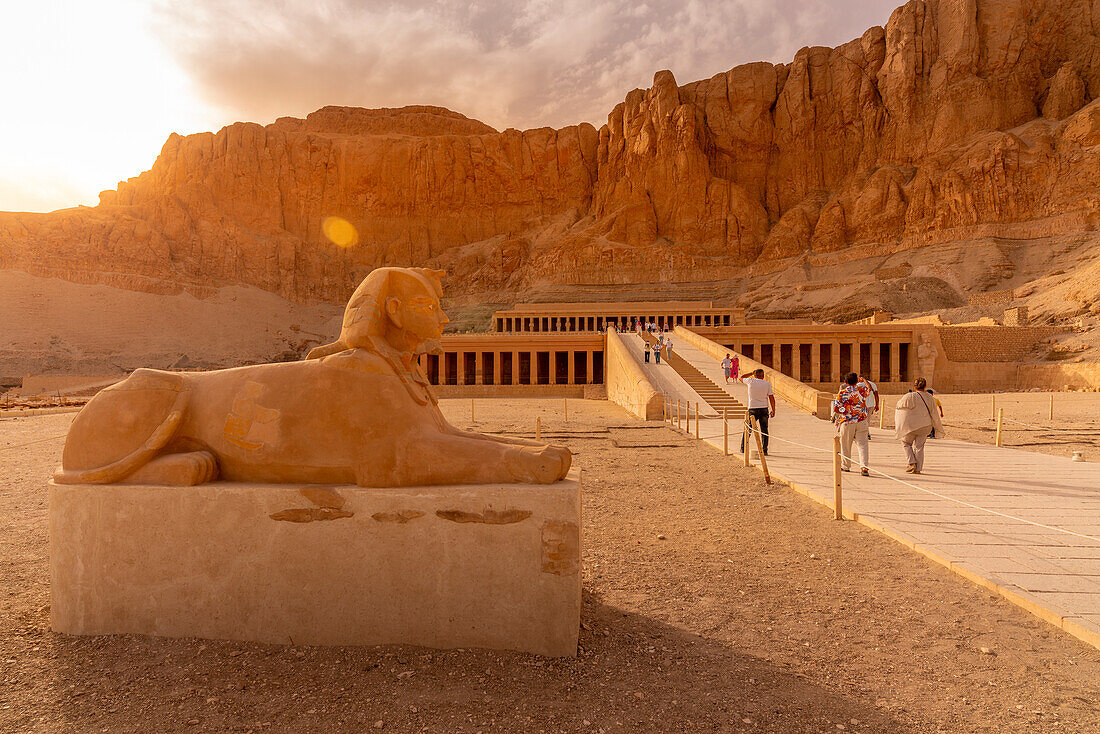
With the terraces, one can visualize three large steps constructed, described with open ramps and supporting columns, embellished with fluted reliefs [done in the historic Egyptian-Syrian style. Such reliefs articulate the weeks of Hatshepsut's life; it shows her sea voyage to Punt, where she returned with riches and various animals. Considering its historical context, this temple is an emblematic structure. Sculptors made her likeness in the male Pharaoh style but with some femininity. This site is appreciated by tourists and scholars because it combines art with politics.
Who Was Queen Hatshepsut? Discover Her Legacy in Luxor
The temple requires knowledge about the exceptional woman who created it. Queen Hatshepsut ruled Egypt for over two decades during the 18th Dynasty, which historians consider a time of economic success and impressive building projects. Hatshepsut began her role as regent for her stepson Thutmose III, but she eventually became pharaoh who ruled Egypt while dressed in male attire to establish her authority.
Hatshepsut's reign brought about economic development and peaceful times through her extensive construction work throughout Egypt. She established new trade routes for her major building endeavors while maintaining the religious practices of her people. The Deir el-Bahari temple stands as her most permanent structure, which represents her religious devotion and royal power. Today, visitors to Luxor can walk through the terraces, gaze at the carvings, and get a sense of the grandeur that characterized her reign. Hatshepsut’s legacy is not only preserved in stone but also in the story of a queen who defied norms and left an indelible mark on Egyptian history.
Explore the Secrets and Wonders of Hatshepsut Temple in Luxor
Visitors to the Temple of Hatshepsut discover hidden historical elements that reveal interesting mysteries. The temple design uses multiple levels to create distinct spaces, which provide an understanding of how ancient Egyptians practiced their religious and governmental activities.
The Terraces and Their Purpose
The temple construction consists of three primary terraces, each serve different operational needs.
Lower Terrace: This lower area of the desert holds a terrace, where the chapels of the goddess of love and joy, Hathor, are located.
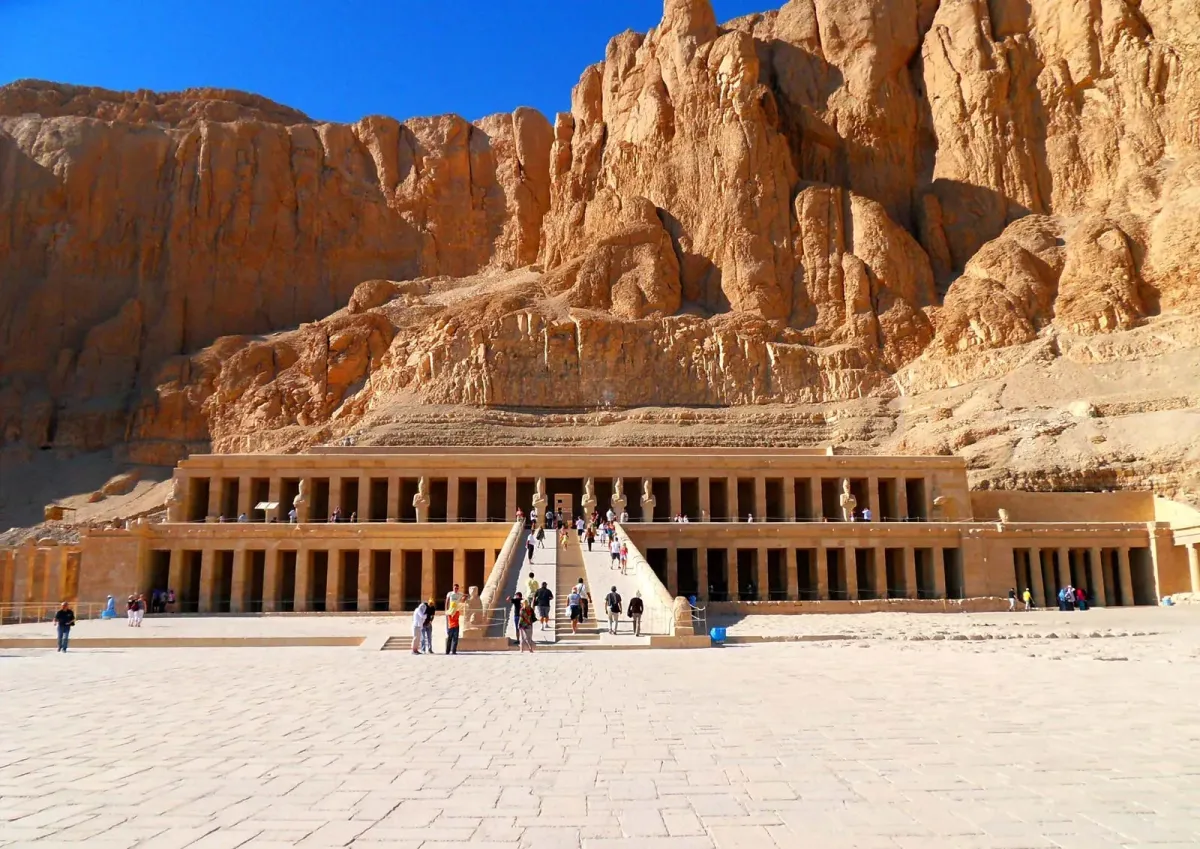
Middle Terrace: The other side of the terrace has chapels dedicated to her divine father, Amun, with whom Hatshepsut affirmed her own sacred legitimacy.
Upper Terrace: The queen's sanctuary and some chapels are on this level, with priests officiating in exercises aimed at honoring the queen.
This terraced style set forth both spiritual and Hatshepsut's, adding to an extraordinary architectural definition in which the temple is built right into the great cliffs around it.
Art and Politics of Representation
1-Naturally, though, the temple speaks of Hatshepsut's political and diplomatic achievements.
2-The walls display reliefs and carvings that show her divine status and her achievements.
3- The expedition to Punt brought back exotic goods, which served as proof of her successful reign.
4-The intricate carvings, which have lasted through more than thirty centuries of desert conditions, create an artistic experience that visitors find impressive.
The features of this site maintain their archaeological value for study because they reveal details about construction methods and the symbolic meanings used at the site, and about daily activities that occurred during Hatshepsut's reign.
A Must-See Attraction in Luxor
The Temple of Hatshepsut functions as Luxor's primary tourist destination. The site attracts visitors because its natural beauty and historical importance, and architectural design excellence combine to create a unique experience.
The temple provides visitors with an opportunity to experience Hatshepsut's historical period while learning about her lasting impact, which will draw both history enthusiasts, art lovers, and people interested in studying ancient Egyptian culture. The building's terraces and halls enable visitors to experience the royal presence of Egypt's most powerful ruler.
Hatshepsut's Temple extends beyond its continuous terraces and colonnades because it embodies the courage and power of Egypt's greatest queen. The building displays multiple stories through its architectural design, which enables visitors to view, contemplate, and appreciate the stone inscriptions that exist. The people who travel to Luxor because of their interest in Hatshepsut's captivating life will discover the ancient site's hidden treasures and its significant historical value. People who want to learn about ancient Egyptian knowledge and see the greatness of a queen who broke societal norms will definitely choose to visit the Hatshepsut Temple as their top destination.








-webp.webp "Hilton")
-webp.webp "dusit")
-webp.webp "Marriott Hotels")
-webp.webp "Azimut Hotel")
-webp.webp "Golden Tulip")
-webp.webp "sheraton")
-webp.webp "westin hotel")
-webp.webp "Movenpick")
