


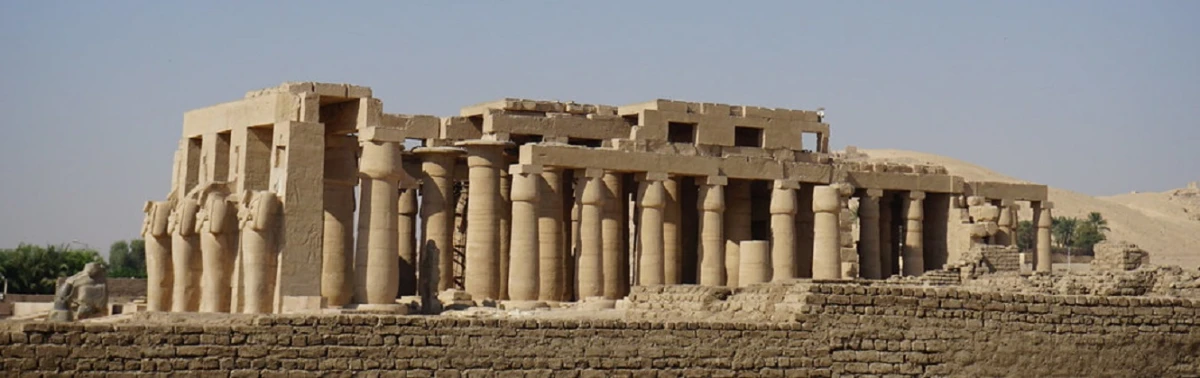
Medinet Habu
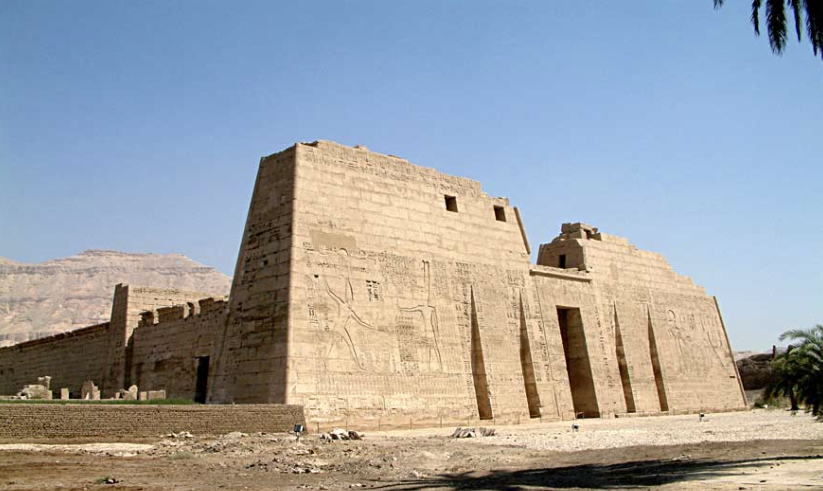
Medinet Habu
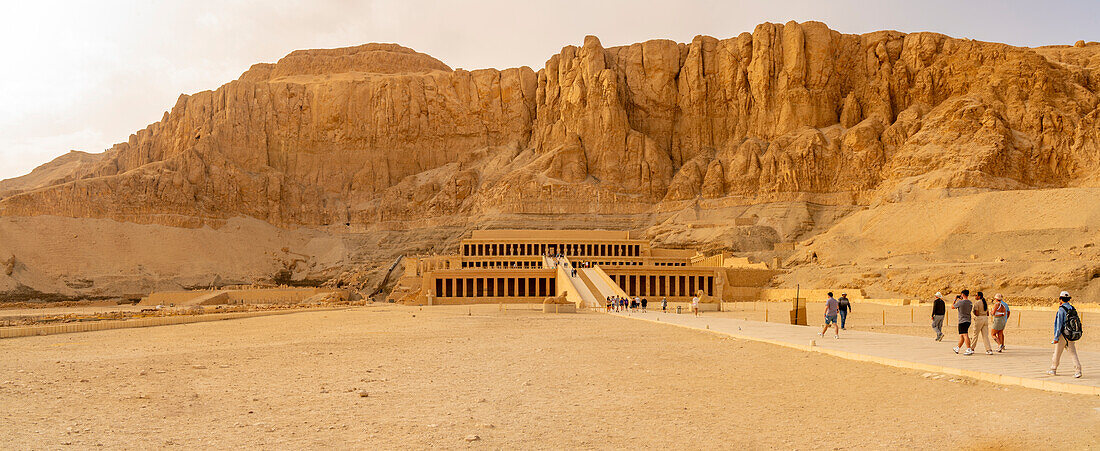
Medinet Habu is the name which has been given to the ancient Mortuary Temple of Ramesses III which is located on the West Bank in Luxor. The area where it stands is also called Medinet Habu, and for this reason, many people refer to the temple as Medinat Habu. The temple dates back to the New Kingdom period, and its most famous for its vast amount of well preserved reliefs and massive statues of Ramesses III.
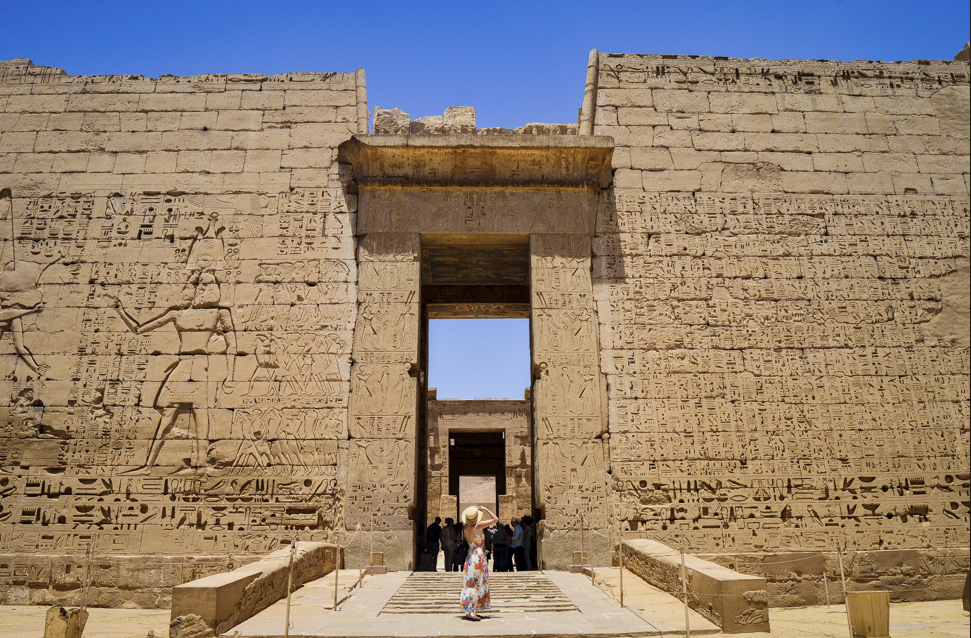
Architectural Features
The main entrance is designed to resemble a fortified Syrian-style stronghold, reflecting Egypt’s military interactions with the Levant.
On one tower, Ramesses III appears wearing the Red Crown of Lower Egypt, accompanied by his ka, or spiritual double, while presenting captured foes before the solar deity Re-Horakhty. On the opposite side, he is shown striking down enemies before Amun-Ra. These images emphasize both royal authority and divine support.
The Temple Complex
The temple precinct measures approximately 210 by 300 meters and preserves thousands of square meters of decorated walls. Among the most important reliefs are those depicting the defeat of the Sea Peoples, one of the defining military events of Ramesses III’s reign.
the main temple are the remains of the royal palace, which once formed part of the ceremonial complex. Their presence highlights the close relationship between kingship, religion, and state power during the New Kingdom.
Later modifications were made during subsequent dynasties and continued into the Ptolemaic era. In late antiquity, the complex was reused as a Christian settlement, and traces of mud-brick dwellings from this period remain visible today.
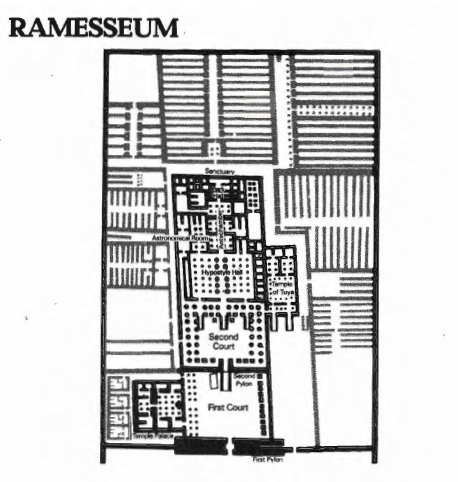
Ramesseum
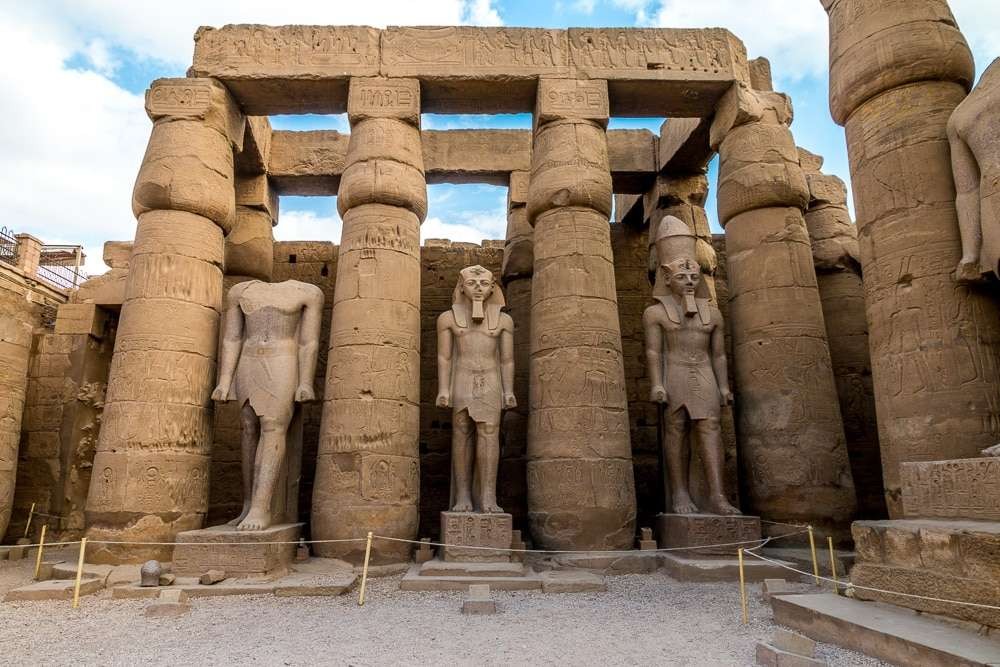
Located to the southwest of Medinet Habu, the Ramesseum is the mortuary temple of Ramesses II. The temple was dedicated to the king as well as to Amun in his eternal aspect. Classical writers referred to it as the Memnonium or the Tomb of Ozymandias, a Greek rendering of one of Ramesses II’s royal names. The modern name Ramesseum was introduced by the French scholar Jean-François Champollion and has remained in use.



-webp.webp "Hilton")
-webp.webp "dusit")
-webp.webp "Marriott Hotels")
-webp.webp "Azimut Hotel")
-webp.webp "Golden Tulip")
-webp.webp "sheraton")
-webp.webp "westin hotel")
-webp.webp "Movenpick")
