


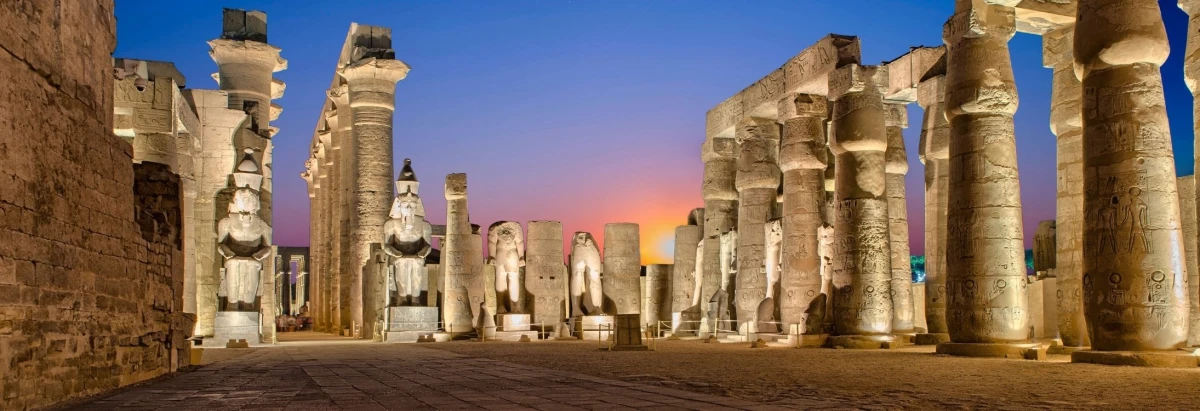
Luxor Temple: Egypt’s Ancient Marvel
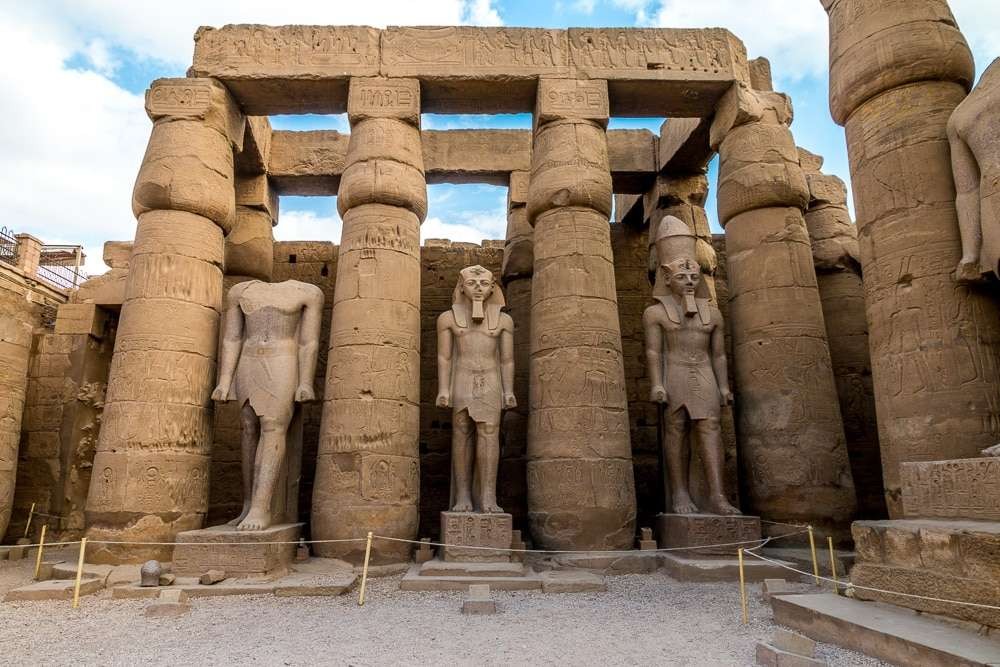
The Luxor Temple is located on the east bank of the Nile in Luxor and is one of the historical landmarks with superior renown in Egypt. Unlike most of Egypt's other temples, Luxor was instead built to celebrate kingship and princely luxury, rather than the worship of a particular deity. The building was begun with Amenhotep III and was expanded by Tutankhamun and Rameses II over the centuries. This activity of expansion resulted in the inclusion of various extensions of architecture that change from layers of colossal statues and giant pylons to elaborate hieroglyphic carvings that lace the mighty walls. The temple played an important spiritual role in the ancient Egyptian religious sphere, with activities there during festivals such as celebrating divine connections between the gods and the pharaohs through participating in the Opet Festival. It is still one of the symbols of Egypt's glorious past and attracts millions of tourists each year due to its historical, cultural, and architectural richness.
The Historical Significance of Luxor Temple
Luxor Temple, built around 1400 BCE during the reign of Pharaoh Amenhotep III of the 18th Dynasty, is one of ancient Egypt’s most important religious and cultural sites. Over time, it was expanded by rulers such as Tutankhamun, Horemheb, and Ramses II, each leaving inscriptions and reliefs that recorded their accomplishments. The temple was central to the religious life of Egypt, particularly during the annual Opet Festival, which celebrated the sacred union of the god Amun with the pharaoh.
Luxor Temple represented political power with its spiritual role further boasted and hence deserved the renown of being the guardian of divine power. It served as a site for the coronation of kings, royal celebrations, and public festivals, making it both a religious and political landmark. From its permanent arts and architecture, the temple is a true reflection of the glory and heritage of the pharaohs and reveals the grandeur of ancient Egyptian civilization to our time.
Articles on the Temple of Luxor
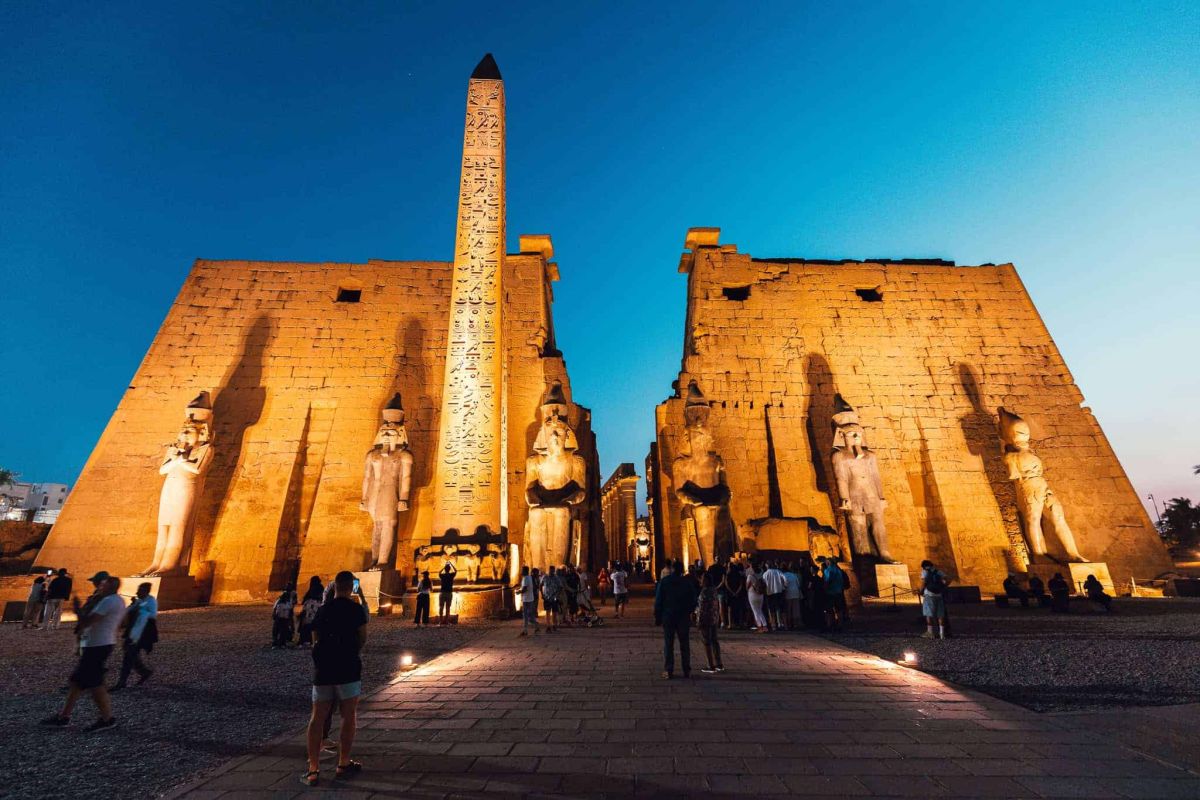
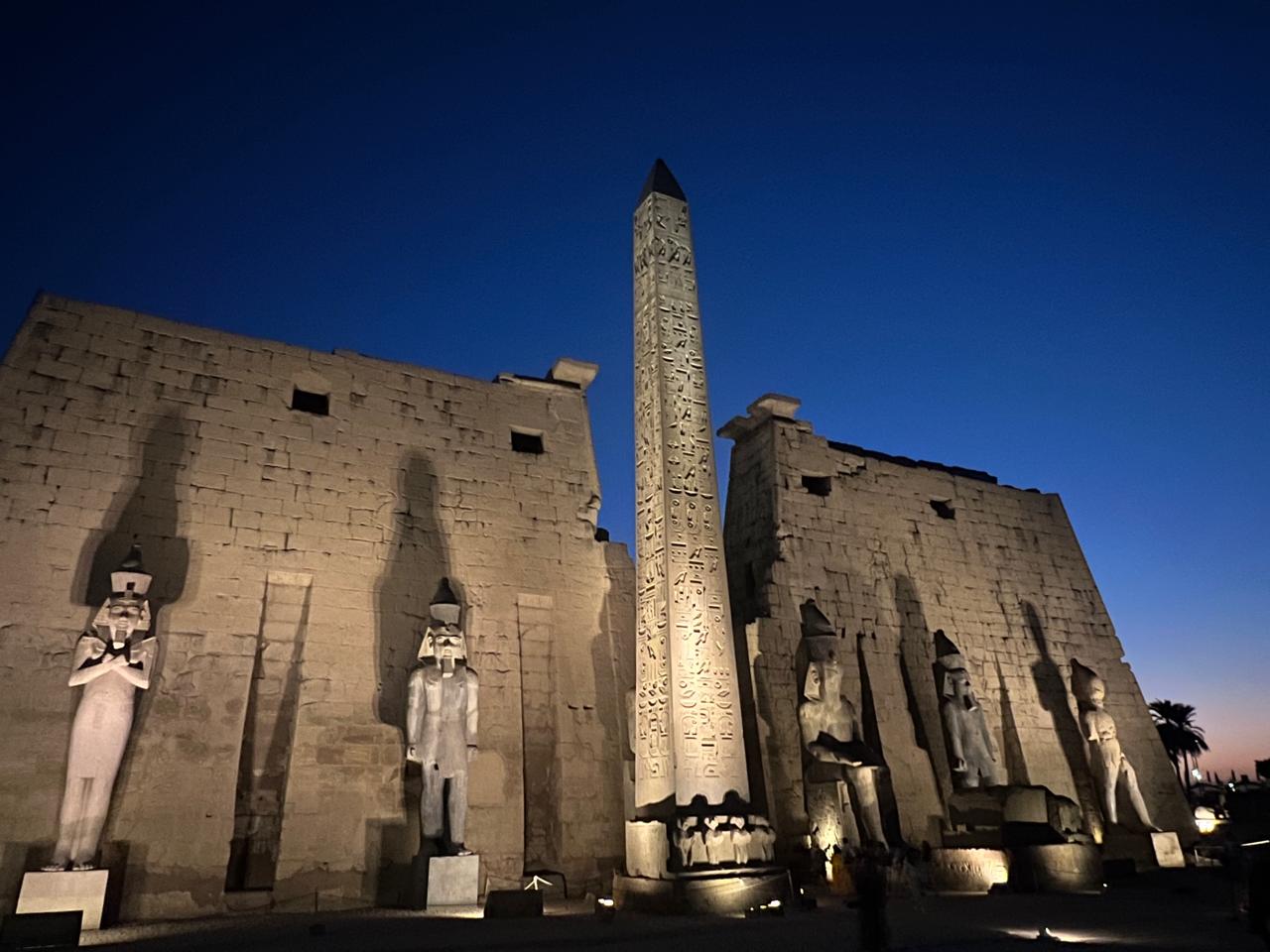
The Luxor Temple is one of the wonders of the ancient Egyptian world, displaying a vivid imagination and an overwhelming detail through massive pylons, statues, and carvings that cover the entire temple complex. The foremost pylon hearkens back to a world it has defended since its completion, punctuated by massive statues of Ramesses II that dwarf visitors with their massive scale and fine artistry.
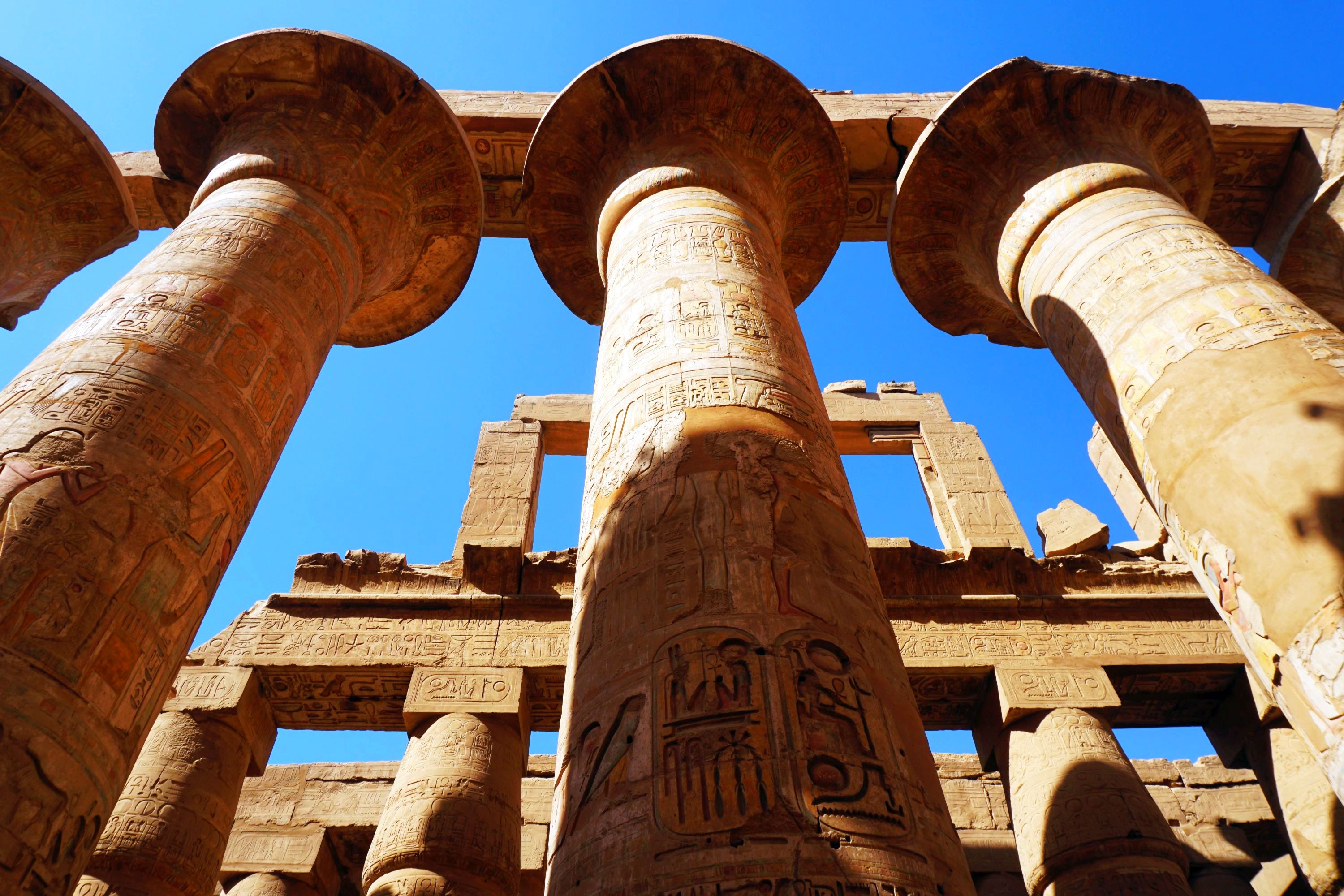
Inside consists of a variety of halls and chambers, all of them adorned in a unique style and decoration. For example, the Hypostyle Hall featured a ceiling covered with thirty-two monumental columns, those in the form of overgrown papyrus-figures with hieroglyphic explanations inscribed about their reliefs. The relief work offers an invaluable window into ancient Egyptian culture.
The innermost sanctum was considered the most sacred space and contained certain statues of gods, and this was the focus of many ritual actions. Around it were small chapels and shrines devoted to various beings or, collectively, all the deities, their arrangement constituting an elaborate scheme of spaces that emphasized the comprehensive importance of religion in life.
Luxor Temple Through the Ages
The Luxor Temple site experienced multiple changes throughout its history. The temple area became a military base and a church during the Roman period. The Islamic period brought the construction of a mosque inside the temple area, which still exists today. The Abu el-Haggag Mosque stands on the temple property as proof that Luxor Temple continued to function as a worship site during different historical periods.
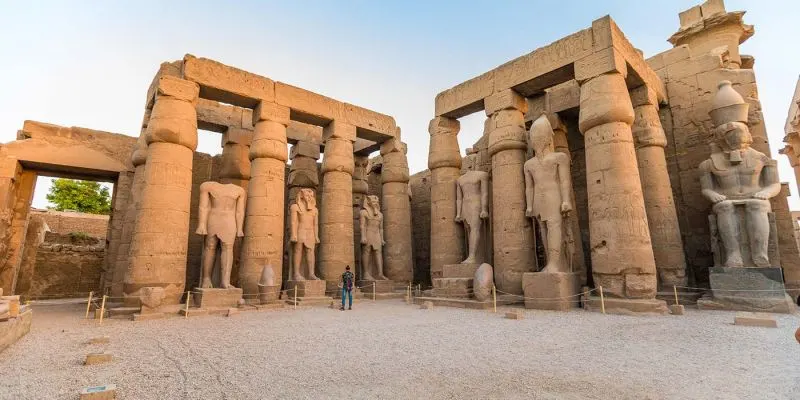
The temple maintained continuous religious activities, which resulted in its preservation because visitors today can see both its original design and its later historical changes. The 19th and 20th-century restoration projects, which protected the building, turned it into one of Egypt's best-preserved ancient monuments.
Visiting Luxor Temple Today
Today, Luxor Temple stands as an essential site that all travelers must experience when they explore the Nile Valley. The temple area allows visitors to explore its massive entrance gates and see the pharaoh statues and study the detailed hieroglyphic writing which appears on most of the temple walls. The temple reaches its most enchanting state during the nighttime when its lights create an impressive visual effect that shows both the golden stones and the night sky.
The tour guides provide explanations about the temple's past and its religious importance while showing visitors its architectural features to help them understand the meaning of each carving. People who take photographs at the temple site need to understand that the historical atmosphere and the temple's enormous size create a more powerful experience.
The Religious and Cultural Importance
The Luxor Temple served as a religious site because it represented the permanent connection between the divine and the pharaohs. The annual Opet Festival, in particular, highlighted this connection. The festival included a procession that brought Amun and his wife Mut and their son Khonsu from Karnak Temple to Luxor Temple. The rituals confirmed the pharaoh’s divine entitlement to rulership while they strengthened the monarch’s spiritual authority.
The Luxor Temple had a big impact on Egyptian artistic and architectural development. The temple's large statues and high columns, together with its intricate stonework, established a design pattern that future architects would follow while demonstrating the enduring abilities and creative talents of ancient Egyptian construction workers.
Luxor Temple serves as an archaeological site that documents Egypt's complete historical record, together with its religious practices and architectural achievements. The temple complex provides visitors with an exceptional opportunity to understand ancient Egyptian culture through its enormous pylons and intricate wall designs, and its multiple historical periods, which remain intact throughout the structure. A visit to Luxor Temple enables visitors to experience the historical period when magnificent structures, spiritual expressions, and artistic creations reached their highest point, which has fascinated people throughout history. All visitors to Luxor Temple, regardless of their background as history enthusiasts or architecture lovers or curious travelers, will experience an exceptional path that takes them through Egypt's historical heritage.







-webp.webp "Hilton")
-webp.webp "dusit")
-webp.webp "Marriott Hotels")
-webp.webp "Azimut Hotel")
-webp.webp "Golden Tulip")
-webp.webp "sheraton")
-webp.webp "westin hotel")
-webp.webp "Movenpick")
