


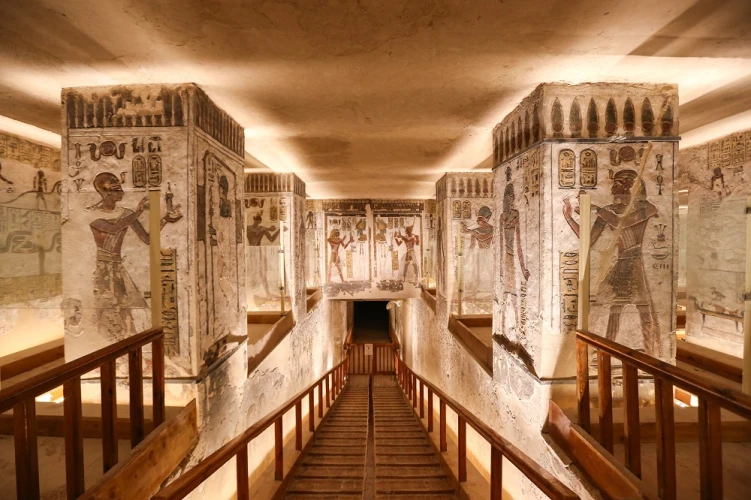
Valley of the Kings
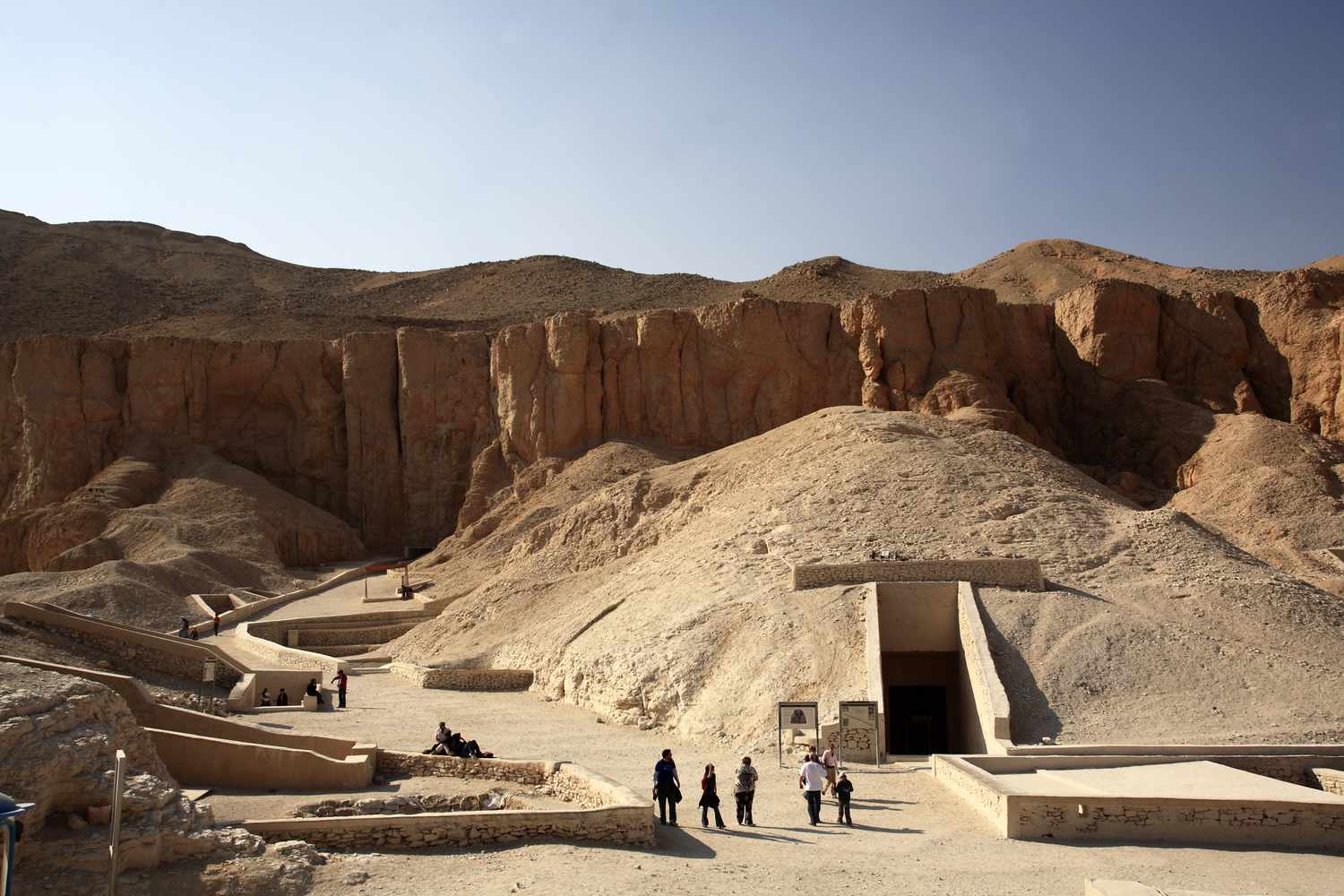
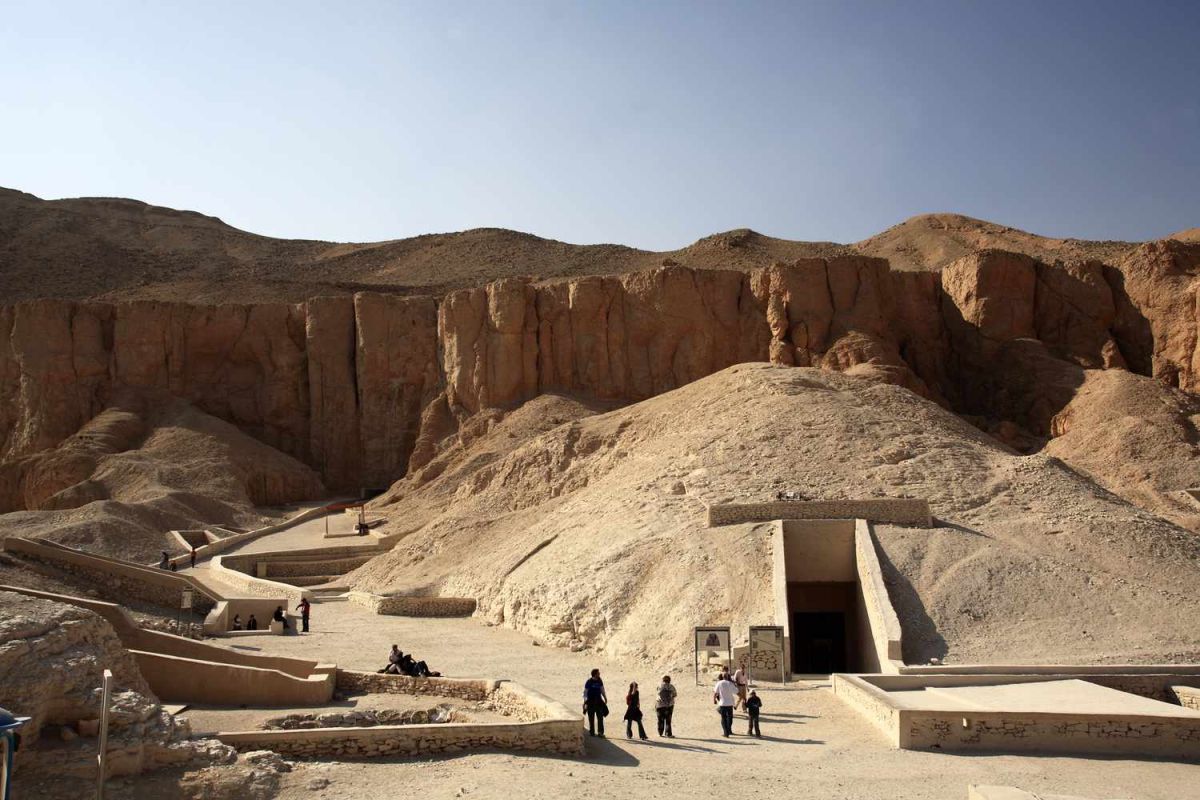
THE VALLEY OF THE KINGS
The road to the NW is the SIKKAT AL-WADAYN (Track of the Two Valleys). It passes on the SW a track to the S monuments and to the N Howard Carter's House on the bluff immediately above. The NW road curves through a valley leading after 3. 75km to the Valley of the Kings Tombs of the Kings, or Wadi al-Muliik; as English, a local name bestowed ·by inspired guesswork rather than of direct knowledge of the function of the area. Open 08.00-18.00. but negotiable and special ti.mes can be arranged. Resthouse with refreshments inside valley.
It consists of two main sections, the E valley where most of the tombs (not all accessible) are located and the W valley with only two royal and two other tombs (special permission required). Han early visit is wanted,
prior arrangements should be made (at agency in Luxor) so that the tombs can be opened and illuminated. Although most are lit by electricity (e.l.), this occasionally fails and for this reason, and to see others that are not lit, it is advisable to take a torch. Those that can bevisited are so large and contain so much material that it is not practicable to see more than four or five at one time; it is better where possible to make two or more visits. I tis best to visit the site as. early in the day as possible. After 11.00 large groups start to arrive.
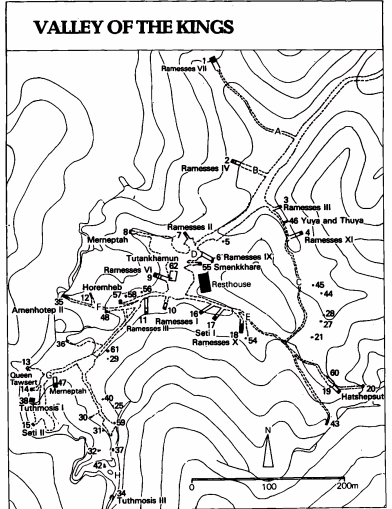
Tombs in the Valley of the Kings
Tomb of Tutankhamun (KV62)
The most famous tomb, discovered almost intact in 1922.
Tomb of Ramesses II (KV7)
One of the greatest pharaohs of ancient Egypt.
Tomb of Seti I (KV17)
Considered one of the most beautiful and longest tombs in the valley.
Tomb of Ramesses III (KV11)
Tomb of Thutmose III (KV34)
Tomb of Amenhotep II (KV35)
Tomb of Horemheb (KV57)
Tomb of Thutmose I (KV38)
Tomb of Amenhotep III (WV22)





-webp.webp "Hilton")
-webp.webp "dusit")
-webp.webp "Marriott Hotels")
-webp.webp "Azimut Hotel")
-webp.webp "Golden Tulip")
-webp.webp "sheraton")
-webp.webp "westin hotel")
-webp.webp "Movenpick")