


Underworld Maps and Golden Kings: Inside Luxor's Royal Necropolis
Silent Valley of the Kings: The Hidden Gateway to the Afterlife
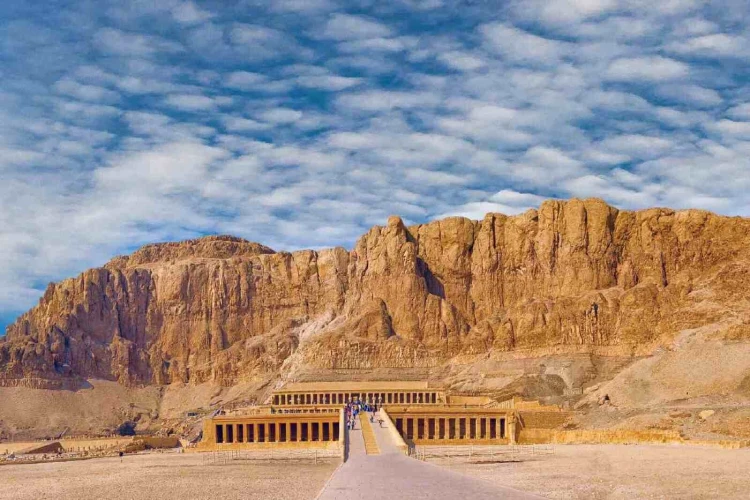
If you stand on the east bank of the Nile in Luxor at sunrise, you will see the modern city kind of waking up, slowly but surely. Felucca boats glide across the water and the palm trees sway in a cool morning breeze that feels almost gentle. But if you look across the river toward the West Bank, your eyes will catch a rough , dramatic outline, a jagged silhouette made of sun-bleached limestone hills.
Rising above that stark scene is a natural, pyramid shaped high point called al-Qurn (The Horn) .
And deep down, inside the silent, scorching valleys at the base of this natural pyramid, there is the Valley of the Kings.
For almost five centuries during Egypt’s New Kingdom (roughly 1550 to 1069 BCE) this dry canyon became the ultimate , private resting place for the empire’s most powerful pharaohs. Since these rulers were desperate to safeguard their treasures from grave robbers , who had already taken advantage of the big pyramids of Giza and Saqqara, they let go of the whole massive, obvious monument idea. Instead, they carved their tombs far down , into the secret , hidden underground core of the limestone rock.
So, lets slip past the rocky mouth of this famous valley, and then come down into the lively, subterranean worlds created to last for eternity.
1. The Strategy: Hiding in Plain Sight
The transition from building towering pyramids to digging hidden, underground tunnels was a brilliant tactical pivot led by Pharaoh Thutmose I and his royal architect, Ineni.
Pyramids, while magnificent, were essentially giant, flashing signs that screamed "treasures inside" to ancient thieves. The Valley of the Kings offered a completely different defense strategy: concealment.
The valley had only one narrow, easily guarded entrance. The tomb openings were cut directly into the canyon floor or the base of sheer cliffs, then completely backfilled with gravel and hidden from view after the royal burial.
To further protect the graves, a highly elite paramilitary force called the Medjay patrolled the clifftops daily, watching for any unauthorized movement in the desolate canyons below.
2. Deciphering the Architecture of the Underworld
Stepping into a tomb in the Valley of the Kings feels like, a surreal sensory shift. One moment it’s this blistering, dry heat from the desert canyon, and then it’s gone… like instantly, replaced by a cool, quiet , slightly heavy air that presses on your thoughts.
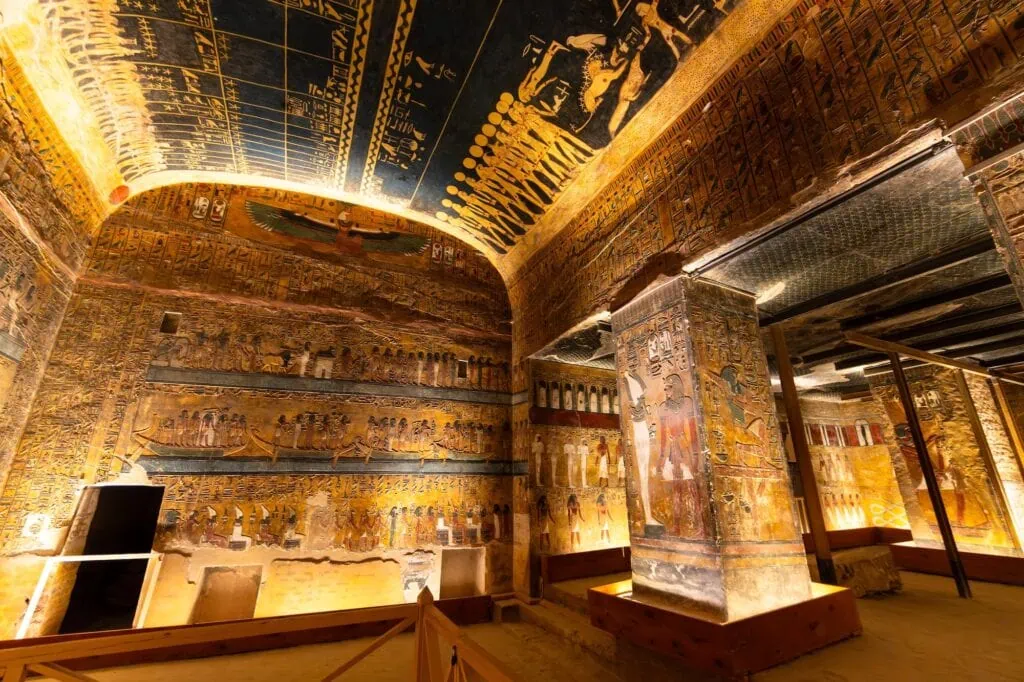
As you go down farther along the wooden boardwalks your eyes eventually get used to the dimness, and then the walls start to show. They’re not just decorated. They’re covered, completely covered, in high-contrast reliefs painted with this vivid intensity. And it’s not random at all. It reads like literal maps of the Egyptian underworld, except it’s been turned into a visual language you can almost walk through.
The so called Sacred Guidebooks of the Dead
The tomb walls basically act like giant illustrated cheat sheets for a deceased pharaoh, meant to help him navigate the treacherous, obstacle filled stretches of night.
The Book of Gates: it lays out the twelve walled portals the sun god’s barque has to pass during the twelve hours of darkness, with fierce fire-breathing serpents doing the guarding.
The Amduat (The Book of That Which Is in the Underworld): this one explains a secret route, the king’s soul must take so it can unite with Osiris and reach rebirth at dawn.
The Litany of Ra: a beautiful chant that praises the 75 different forms of the sun god, so the pharaoh can call on Ra’s strength when spiritual danger creeps in.
And the colors, honestly the colors are still jaw-droppingly vivid—yellow ochre, lapis lazuli blue made from ground stone, malachite green, and carbon black. It’s hard to believe they were brushed onto plaster more than 3,000 years ago, because they don’t look old in the way you’d expect.
3. KV62: The Golden Boy and the Curse of Tutankhamun
Even though the valley has more than 60 numbered tombs, there was one find that basically shifted archaeology forever: KV62, the tomb of the so-called boy king Tutankhamun.
Back in November 1922, after a string of years that really went nowhere, British archaeologist Howard Carter teamed up with his well funded patron Lord Carnarvon, and they finally pulled a stone step out of the ground. It was under the ancient workmen’s huts, sort of near another tomb, and it had been buried under all that time and dust.
Tutankhamun died unexpectedly when he was still quite young (about 19), so his tomb was kind of small , and also hurried… at least compared with the grand, deep passages of Ramses VI or Seti I. Because the whole setup was on the smaller side, later excavations piled rock debris over it, which unintentionally acted like a kind of shield. For centuries, it kept grave robbers away.
Carter, in the famous moment everyone talks about, leaned in through a tiny hole cut into the sealed inner plaster doorway. Lord Carnarvon, understandably impatient, asked if he could see anything. Carter then said that well known line:
"Yes, wonderful things."
What they found inside was, honestly, a packed treasure chest of more than 5,000 objects in pristine condition. There were golden chariots, official state thrones, offerings of food, cosmetic containers jars, and of course the iconic solid-gold funerary mask placed right on the young king’s mummy. Today, most of those items are kept safely in museums in Cairo, yet King Tut’s mummy still lies in its original stone sarcophagus , down in the quiet depth of KV62.
4. Comparing the Giants: Which Tombs to Visit?
So, your general entry ticket to the Valley of the Kings usually gives you entrance to three active tombs, and that part is kinda the deal. But deciding which ones you actually roam through is really what makes the whole visit memorable, because each of them has that totally different architectural vibe, like you’re stepping into separate little worlds.
5. Practical Survival Tips for the Valley
The Valley of the Kings is, honestly , majestic but also wildly tough and a bit unforgiving. To make the most of your whole journey, just remember a few essential travel things that help a lot:
Go Early or Late: The valley actually opens at 06:00 AM. If you show up right when it opens, you can drop into the quietest tombs first, before the huge mid-morning tour buses start showing up. It also means you dodge the brutal midday desert heat , which can be intense.
Be Respectful About the Rules: Inside the tombs, photography is strictly controlled. Phone photos are usually allowed with a normal ticket, but you still need to honor the “no flash” rule. A flash can ruin and then fade those delicate pigments, the ones that have survived thousands of years.
Lock In Your Custom Plan: If you want to truly explore Luxor’s West Bank, it’s easiest with a private, well-informed Egyptologist guide , plus an air-conditioned vehicle so you don’t cook.
And for these specialized private tours, when you book, make sure your checkout goes through secure, bank-grade platforms like WeTravel or payment networks powered by Stripe. These services use certified PCI-DSS Level 1 encryption, and they securely tokenize your card data so your financial details stay fully guarded while you secure your desert itinerary.




-webp.webp "Hilton")
-webp.webp "dusit")
-webp.webp "Marriott Hotels")
-webp.webp "Azimut Hotel")
-webp.webp "Golden Tulip")
-webp.webp "sheraton")
-webp.webp "westin hotel")
-webp.webp "Movenpick")
