


-webp.webp)
The Was Scepter Symbol: Meanings, Divine Connections, and Afterlife Protection
.webp)
Staff of the Gods: Decoding the Power of the Was Scepter
When you look at temple drawings or stone carvings from ancient Egypt, you’ll notice something kind of odd but still really captivating: the gods are almost never empty-handed. Usually, they’re doing the same kind of visual thing, like clutching the Ankh loop, or gripping a Djed column, but there’s also this other thing… a mysterious object they lean on or raise up high. It’s a long, straight staff with a stylized animal head sitting on top, and then at the bottom there’s this clear, two-pronged fork, like it’s split on purpose.
For the ancient Egyptians, this particular staff wasn’t just an artistic extra or some royal walking cane. No, it functioned as an ultimate sign of power, dominion, control, and divine protection, well-being you could say. So, let us go slowly through it—origins of the Was scepter, its distinct anatomy, and why it turned into an essential instrument for maintaining universal balance, intact.
1. The Anatomy of a Symbol: What Inspired the Shape?
At its most direct linguistic level, the word Was is like an ancient Egyptian hieroglyph that literally means “power” or “dominion,” ish. When you peer closely into its shape, you notice this odd but real mix of practical purpose and spiritual imagery, almost like it can do both at once.
The stylized head
Right on the top of the scepter, there’s the head of some strange creature, not quite familiar. It has long straight pointed ears, and a snout that slopes downward. A lot of Egyptologists think this head stands for the Set‑animal , the mythical beast tied to Set, god of chaos, storms, and the desert. And so by putting that head atop a staff of power, the sign ends up pointing toward the highest kind of restraint over wild, unpredictable forces.
The forked base
Down at the bottom, the staff turns into a clear two‑pronged fork. In the everyday, practical world of ancient Egypt, desert nomads and farmers used long, split‑pronged wooden sticks to hold venomous vipers and cobras to the ground, safely. Over centuries, that very simple survival implement kind of grew into a cosmic emblem: a divine staff used to pin down evil and keep the land from getting harmed.
2. A Tool Fit Only for the Divine
Even though pharaohs are sometimes seen clutching the Was scepter during big state rites, it was mostly, treated like something only the deities and their divine companions could truly wield, you know—an exclusive instrument of the gods and goddesses.
Various deities “carried” or presented the scepter in their own peculiar way, to make their specific kind of divine authority look obvious:
Anubis: The jackal-headed god of mummification and guide of souls is often depicted gripping a long Was scepter while he leads the deceased onward, through the hidden realm. He uses it to clear out a safe passage by pushing aside spiritual barriers, and yeah it looks very purposeful.
Osiris: As the ruler of the afterlife, Osiris blends the Was scepter with his royal crook and flail. The message there is that his authority doesn’t stop at the living horizon, it stretches right into eternity, as if the whole calendar folds around him.
Ptah: The creator god of Memphis holds a rather special, merged staff-like emblem. It brings together the Was scepter, the Ankh, and the Djed pillar into one unified super-symbol, kind of like a concentrated sign for life, stability, and total dominion over creation itself.
3. The Practical Integration: Architecture and Amulets
Was was so vital in the Egyptian worldview that they really didnt keep the symbol only for flat temple walls or anything like that. They brought the exact shape, sort of directly, into their physical architecture—and into protective jewelry too. It was like the whole point was, the symbol should travel with the people and also hold up the sacred space.
Temple Columns
Ancient builders often made the huge stone columns inside temple sanctuaries look like giant, three-dimensional Was scepters, and they were sort of presented as if they were holding up the roof. The meaning was visually obvious, for anyone who stepped in, because the very roof of the temple— and, by extension, the sky itself— was being firmly maintained by the gods power and dominion.
Protective Amulets
Regular Egyptians then carried that energy around, wearing small Was amulets, which is kind of a simple thing but the effect was considered quite serious. These were made from things like blue faience, carved bone, or gold. People believed the amulets would give the wearer personal resolve, protection from disease, and also the capacity to keep total control over daily decisions and life choices, without slipping.
4. Bypassing the Chaos: The Scepter in the Afterlife
To get why the Was scepter mattered so much, you really have to see how it showed up in ancient Egyptian funerary practice, kind of like it had its own role in the whole afterlife deal. In the Book of the Dead, it’s described that going through the dangerous stretches of the underworld meant you needed particular magical tools, and not just any tools either.
1. Tomb Protection Phase 1.
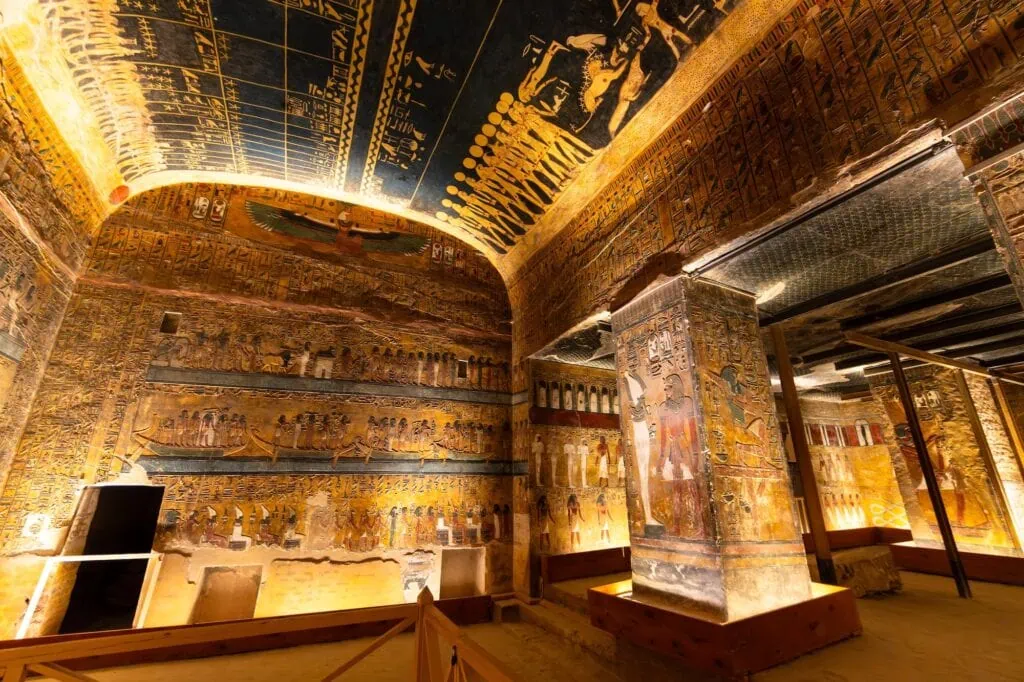
Artists often painted big Was scepters right along the edges of tomb rooms and also on the sides of wooden coffins , so that it would form this protective spiritual barrier around the body. The deceased stayed, in a sense, guarded by that constant sign.
2. Navigating the Gates Phase 2.
When the soul met the intimidating wardens posted at the heavy gates of the underworld, the spiritual force of the scepter helped them project divine authority. Then they could basically insist on entry, like “yes we belong here now,” without fully having to argue.
3. Receiving the Gift of Power Phase 3.
In the last judgment hall, the imagery typically shows the gods extending the Was scepter toward the righteous soul. That gesture then becomes a permanent grant of divine power, so the person can live forever, in the Field of Reeds.


-webp.webp "Hilton")
-webp.webp "dusit")
-webp.webp "Marriott Hotels")
-webp.webp "Azimut Hotel")
-webp.webp "Golden Tulip")
-webp.webp "sheraton")
-webp.webp "westin hotel")
-webp.webp "Movenpick")