


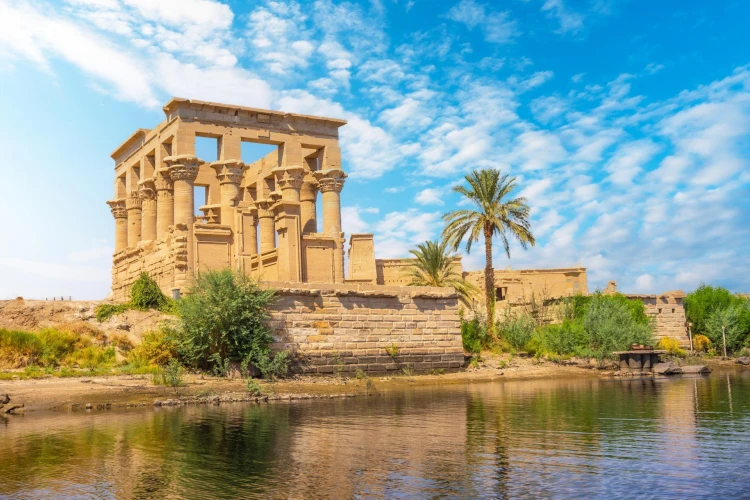
The Secrets of Philae Temple A Detailed History Guide
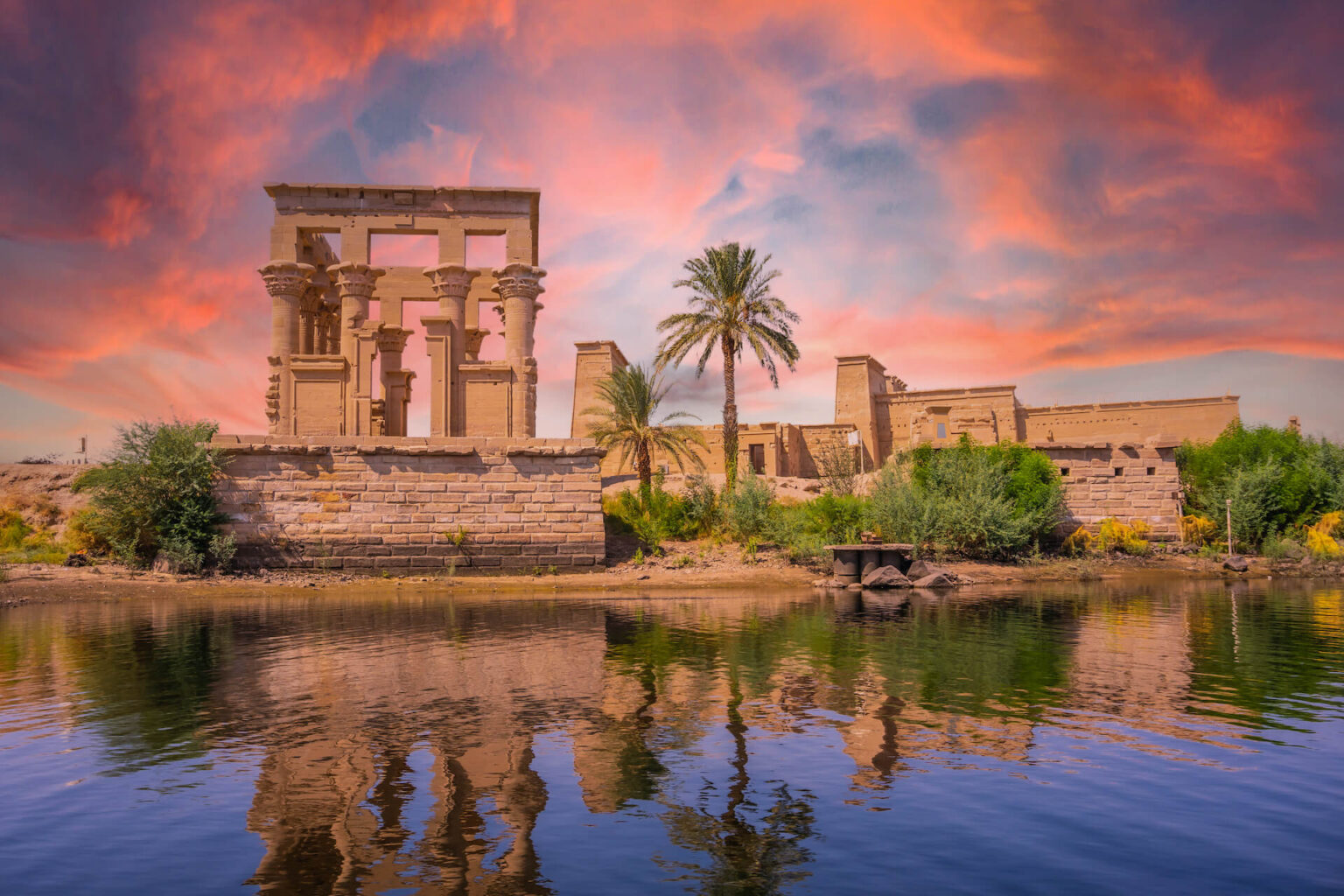
Philae Temple, often called "The Pearl of Egypt," is not just a collection of stone ruins; it is a survivor. Floating on Agilkia Island in the middle of the Nile, it holds the distinction of being one of the last bastions of ancient Egyptian religion and the site where the very last hieroglyphs were ever carved.
For the 2026/2027 season, Philae remains a mandatory stop for anyone seeking the "soul" of the Nile. Here is the deep history and the hidden secrets of the Temple of Isis.
1. The Mythological Heart: The Tears of Isis
To understand Philae, you have to understand the myth of Isis and Osiris. Ancient Egyptians believed that Philae was one of the burial places of Osiris after he was murdered and dismembered by his brother, Seth.
-
The Sacred Island: Isis gathered her husband's pieces and supposedly found his heart (or another part of his body) near the original Philae Island.
-
The Ritual of Resurrection: The temple was the primary site for rituals celebrating Osiris's rebirth. It was believed that the annual flooding of the Nile was caused by the tears of Isis weeping for her husband on this very spot.
-
The "Abaton": Adjacent to the main island was the Abaton (The Untrodden Place), where only priests were allowed to set foot, as it was considered the actual tomb of the god.
2. The Architectural Secret: A Greco-Roman Masterpiece
Though it looks "ancient Egyptian," most of what you see at Philae today was built during the Ptolemaic and Roman periods (roughly 380 BCE to 400 CE).
-
The Fusion Style: The architecture is a fascinating blend of traditional Egyptian forms (like the massive pylons) and Greek influences. Notice the capitals of the columns—unlike the standardized lotus or papyrus of earlier eras, Philae’s columns feature a wild variety of floral designs, including the "composite" style unique to this later period.
-
The First Pylon: Standing 18 meters high, the first pylon is a billboard of power. It depicts Ptolemy XII smiting his enemies in front of the gods. If you look closely at the base, you’ll see small, personified Nile figures bringing offerings, a secret "thank you" to the river that sustained the temple.
3. The "Pearl" That Nearly Drowned
The most incredible secret of Philae isn't ancient—it’s modern. The temple you stand on today is essentially a giant jigsaw puzzle.
-
The 1902 Crisis: When the first Aswan Low Dam was built in 1902, the temple began to disappear under the water for ten months of the year. Travelers in the early 20th century used to row boats through the hypostyle hall.
-
The UNESCO Rescue: In the 1970s, as the High Dam threatened to submerge the site forever, a global coalition led by UNESCO decided to save it.
-
The Move: They built a massive "cofferdam" (a wall) around the island, pumped out the water, and meticulously dismantled the temple into 40,000 individual blocks. Each block was numbered and moved to the nearby Agilkia Island, which was reshaped to look exactly like the original Philae. The project was completed in 1980, effectively "resurrecting" the temple for a second time.
4. The Last Hieroglyphs: 394 AD
Philae was the final holdout of the ancient world. While the rest of Egypt had converted to Christianity, the cult of Isis continued here for centuries because of the local Nubian tribes who were deeply devoted to the goddess.
-
The Graffito of Esmet-Akhom: On a gateway near the temple's rear, you can find the last known hieroglyphic inscription, dated to August 24, 394 AD. It was carved by a priest named Nesmeterakhem.
-
The Silent Language: Shortly after this was carved, the ability to read hieroglyphs was lost to the world for nearly 1,500 years until the discovery of the Rosetta Stone.
-
The Christian Layer: In the 6th century, Emperor Justinian finally closed the temple. If you look at the columns in the Hypostyle Hall, you’ll see Coptic crosses carved directly over the images of the Egyptian gods—a physical record of the moment one world ended and another began.
5. Hidden Details to Look For in 2026
| Secret Feature | Where to Find It | Why It Matters |
| Napoleon’s Graffiti | First Pylon (Inside) | French soldiers in 1799 carved their names to mark their "conquest." |
| The Birth House | Between the Pylons | Celebrates the birth of Horus; where Pharaohs proved their divine right. |
| The Kiosk of Trajan | The River Edge | A roofless Roman "resting place" for the goddess during festivals. |
| Mutilated Faces | Throughout | Early Christians chipped away the faces of the gods to "de-power" them. |
6. The "Sound and Light" Magic
If you can, visit Philae twice—once during the day to see the carvings and once at night for the Sound and Light Show. In 2026, the technology has been upgraded with laser projections that map the history of the temple onto its stone walls. Walking through the illuminated ruins at night feels less like a tour and more like an audience with the past.
The Human Side: Philae is a temple about love, resilience, and the refusal to let go of the past. From Isis gathering the pieces of her husband to the modern engineers gathering the pieces of the temple, the spirit of "reconstruction" is etched into every stone.




-webp.webp "Hilton")
-webp.webp "dusit")
-webp.webp "Marriott Hotels")
-webp.webp "Azimut Hotel")
-webp.webp "Golden Tulip")
-webp.webp "sheraton")
-webp.webp "westin hotel")
-webp.webp "Movenpick")
