


-webp.webp)
The Feather of Ma’at Symbol: Meaning, Afterlife Judgment, and Cosmic Order
.webp)
The Weight of Conscience: Decoding the Feather of Ma’at in Ancient Egypt
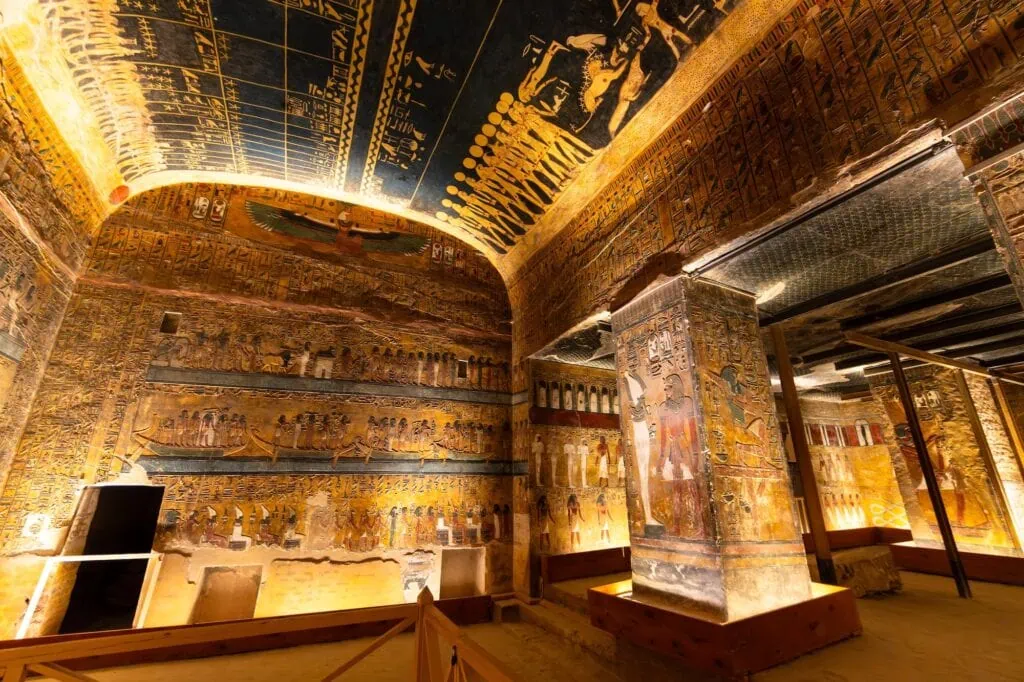
If you wander through the ancient tombs tucked in the Valley of the Kings, or you look closely at papyrus scrolls that are saved inside museums worldwide, sooner or later you end up staring at this incredibly intense scene. It shows this huge set of balance scales, somehow… and on one side there’s a small clay jar holding a human heart. On the other side, at exactly the same level, sits a single delicate bird feather.
To the ancient Egyptians, that fragile thing was the true center of their whole moral, cosmic, and spiritual universe, like really the core of it all. It was not only a sign of fairness , but also the highest divine measure used to judge every human life. So, lets take it slowly and carefully, not rushing, and try to understand the origins of Ma'at , the cosmic meaning of her feather , and why this old idea of equilibrium still talks to the human heart today.
1. Who is Ma’at? (The Spirit Behind the Feather)
To understand the feather, you kinda first have to meet the goddess who wore it, at least that’s the whole idea. In Egyptian mythology, Ma’at was basically the personification of truth, justice, cosmic balance, and universal order, not just some random virtue. She was often described as the daughter of Ra , the sun god , so that means she was there from the very first moment the universe was spoken into existence.
And unlike some other complex deities who kinda ruled over physical territories like the sky or the Nile, Ma’at stood for something more like a philosophical code of behavior.
The Look : She is almost always drawn as this graceful woman sitting on her heels, or sometimes standing tall , wearing a single upright ostrich feather attached to her traditional headband.
The Meaning : The ostrich feather was selected for a pretty specific, very practical reason. Unlike other bird feathers that are noticeably uneven, or end up feeling weighted mostly to one side, an ostrich feather stays perfectly symmetrical. Its strands are exactly alike on both the left and right sides of the central shaft. That physical form made it the absolute ideal visual metaphor for pure, unspoiled balance.
2. The Great Judgment: The Weighing of the Heart
The Feather of Ma'at got, like, the most critical meaning in the funerary ways connected to the Book of the Dead. The ancient Egyptians thought that when you passed away your soul would have to go through a last divine test, the “Weighing of the Heart” thing, happening inside the Hall of Two Truths.
In Egyptian theology the brain was treated as basically useless , yet the heart (Ib) was seen as a sacred keeping place for a person’s conscience, recollections , and every discreet deed that had been done while they were alive on earth.
1. The Negative Confession: Step 1.
The deceased walked into the grand hall before Osiris , and forty-two divine judges. They spoke the “Negative Confessions” out loud, basically naming each wrongdoing they claimed they did not do: “I have not stolen, I have not told lies, I have not polluted the water.”
2. The Balancing Act: Step 2.
Anubis, jackal-headed god , set the person’s heart on one side of a golden balance scale. Then he put the Feather of Ma’at on the other pan in a perfectly matching position.
3. The Silent Verdict: Step 3.
If the heart carried heavy weight from crimes, deceit, and hostility, the balance would lean hard. The frightening monster Ammit, a creature made of crocodile, lion, and hippopotamus parts, moved forward to consume the heavy heart and erase the soul from existence, for good.
4. Passage to Paradise: Step 4.
If the person lived a gentle, balanced life that fit with cosmic order, the heart stayed light like an ostrich feather. Thoth the god of wisdom noted the result, and then the soul was allowed eternal entry into paradise.
3. The Practical Value: Ma’at as a Guide for Daily Life
While the feather played a terrifyingly massive role in the afterlife, the idea of living in Ma'at was brought right down into everyday social survival along the Nile. it was sort of the glue that kept a whole civilization moving along smoothly for more than 3,000 years.
A standard for judges: High court judges, and also grand viziers in ancient Egypt wore small pretty lapis lazuli pendants shaped like the Feather of Ma'at around their necks. This served as a constant, physical nudge that their verdicts had to stay completely unbiased, so the poor were guarded from corruption.
The responsibility of the king: The Pharaoh’s main legal duty on earth was not, you know, building giant pyramids or going off on foreign wars. it was to maintain Ma'at. In temple reliefs you will often see the king holding a tiny delicate statue of Ma'at out toward the gods, like a statement that he was governing with justice, and keeping disorder at bay.




-webp.webp "Hilton")
-webp.webp "dusit")
-webp.webp "Marriott Hotels")
-webp.webp "Azimut Hotel")
-webp.webp "Golden Tulip")
-webp.webp "sheraton")
-webp.webp "westin hotel")
-webp.webp "Movenpick")