


The Egyptian Shen Ring Symbol: Ancient Meaning, Royal Ovals, and Eternal Protection
.webp)
The Circle of Eternity: Decoding the Shen Ring in Ancient Egypt
If you try to inspect the beautiful hieroglyphic inscriptions covering the temples of Luxor , or just stare at those vibrant jewelry pieces brought up from royal tombs , you will often spot this sort of elegant repeating geometric motif. There is a perfect circle sitting on a straight horizontal bar , and that bar is tied tightly to its base.
At first, it can feel simple , but to ancient Egypt’s people, this loop worked like a fundamental energetic sign . It stood for infinity, cosmic defense, eternal rebirth, and complete wholeness . In other words it was a sacred boundary line , separating the safe ordered realm from the chaotic darkness out there.
Now lets take it slow , and do a more detailed look at where the Shen ring began , what protective role it played within divine art, and how over time it helped shape the very names of the pharaohs themselves .
1. What is the Shen Ring? (Anatomy of a Boundless Circle)
At its most direct linguistic level, the word Shen comes from an ancient Egyptian verb that, in a very literal sense translates to, “to encircle” or “to surround,” and also “to bind”. When you look into the way it’s physically built in temple reliefs , you kind of get this deeply clever origin story, sorta like it was planned.
The Egyptians designed the sign to stand in for a long strand of weighty braided papyrus rope. That rope is bent into an almost perfect circle, and the two looser ends are drawn together tightly at the bottom, overlapping across a straight horizontal bar, and then that makes a secure permanent knot.
Since a circle has no real start and no final end point, it turned into the ultimate visual metaphor for eternity. And by adding that horizontal base bar, the old artisans metaphorically anchored the abstract idea of eternity straight to the earth, so it became something stable , humans could lean on and rely on.
2. Divine Protection: The Shen in Sacred Art
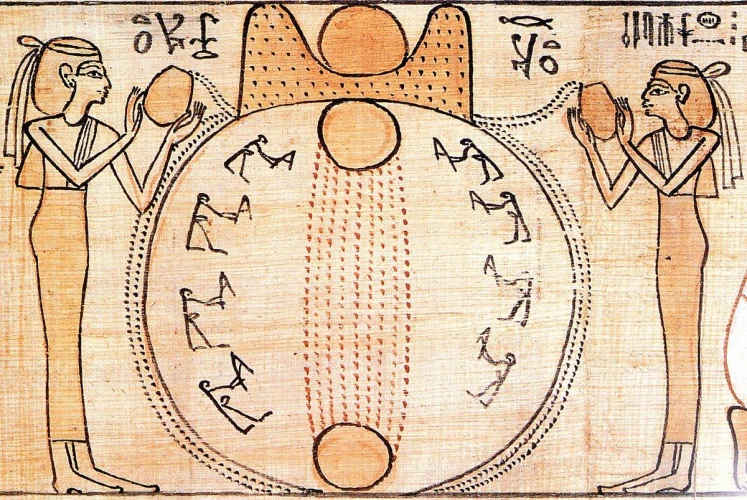
In temple carvings, the Shen ring is rarely shown floating there all alone. more commonly, it’s sorta carried ,or firmly clutched by some powerful winged beings who—using that same protective shape—try to hold the cosmos together and keep trouble at bay.
Most of the best known scenes, they’re tied to sky gods and those protective bird deities :
Horus and Ra-Horakhty : the splendid falcon-headed sky figure is often drawn gliding across the heavens, or perched on a royal throne ,still gripping a golden Shen ring tightly within his sharp talons. When the ring is held above the land, Horus kinda makes it visible, like an unseen, permanent divine sheltering aura over the kingdom of Egypt.
The Goddess Nekhbet : the vulture goddess of Upper Egypt is frequently pictured hovering straight above the Pharaoh, especially during harsh battles. Her long wings are spread wide, and her claws grasp a Shen ring directly over the king’s head, so that he’s fully wrapped in protection from hostile weapons ,and also from bad spirits that would otherwise mess with him.
3. The Royal Evolution: How the Shen Became the Cartouche
As Egypts theological and political structures grew more sophisticated during the Old Kingdom, the Shen ring went through one of those brilliant, design shifts that people still talk about in archaeological history.
The scribes and royal architects, in their own quite careful way, wanted some kind of visual method to protect the sacred name of the reigning Pharaoh. They decided that a regular perfectly round Shen ring was honestly just too small, to hold the multiple hieroglyphic characters that spelled out a king’s official throne title.
So they solved it by taking the top loop of the braided rope ring and metaphorically stretching it out into a longer oval, kind of like elongating the circle but keeping the same idea. The tied bar stayed fixed, locked securely at the bottom, no loose ends.
That elongated Shen ring is what we recognize today as a Cartouche (though it was known in antiquity as a Schenu)
From that point onward, every Egyptian Pharaoh had their royal names written exclusively inside this protective oval loop. The symbolism was really straight forward: by wrapping the king’s name inside an extended Shen ring, the gods were binding his identity in a continuous ring of eternal life , while also shielding it from being forgotten or erased, by time.
4. The Practical Integration: Protection in the Afterlife
Because the Shen ring is supposed to mean an unbroken barrier against decay and chaos, it sort of did a big and practical thing inside ancient Egyptian funeral customs, and also in everyday jewelry design.
1. Sarcophagus placement, Phase 1
Artisans carved or painted matching pairs of Shen rings on the outside head and foot panels of wooden and stone coffins, so the deceased person’s physical body stayed, fully enclosed within that protective loop, you know.
2. The amulet shield, Phase 2
Jewelers made personal amulets shaped like the Shen ring from precious gold, lapis lazuli, and green carnelian, and they placed these right on the mummy’s chest so the beating heart could be guarded from harmful influences in the underworld.
3. Stepping into the infinite, Phase 3
When the soul managed to get past the dark gates of the underworld, the Shen symbol’s presence helped it cast off the temporary mortal shell and enter a endless, circular condition, like the route traced by the stars.


-webp.webp "Hilton")
-webp.webp "dusit")
-webp.webp "Marriott Hotels")
-webp.webp "Azimut Hotel")
-webp.webp "Golden Tulip")
-webp.webp "sheraton")
-webp.webp "westin hotel")
-webp.webp "Movenpick")