

The Egyptian Ankh Symbol: Ancient Meanings, Hidden Origins, and Modern Legacy
.webp)
The Key of Life: Decoding the Ankh in Ancient Egypt
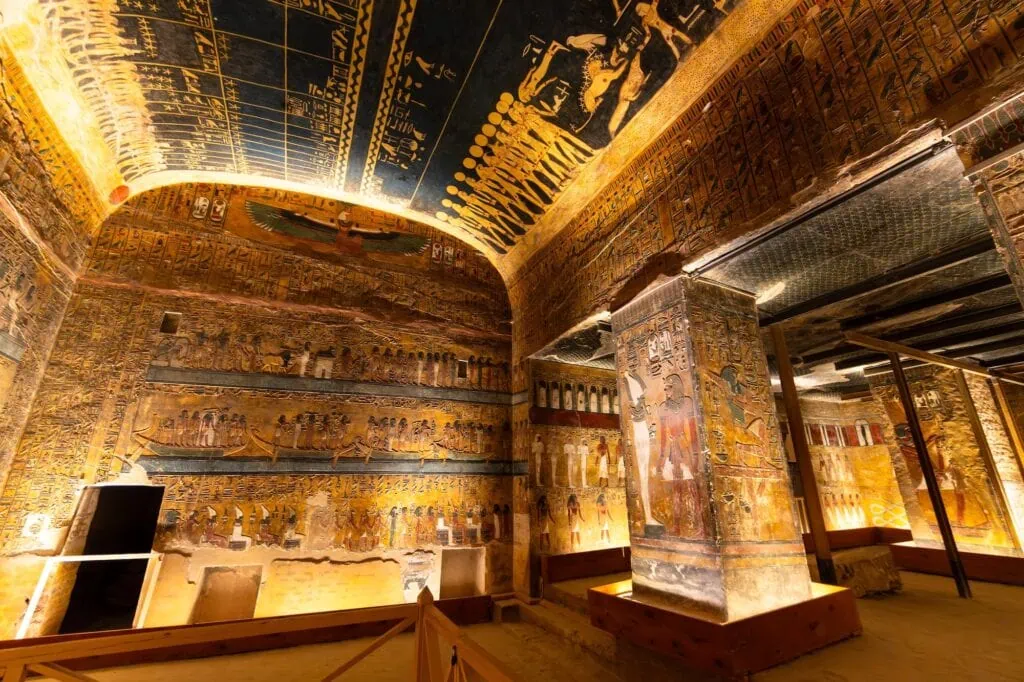
Of all the symbols that somehow survived from the ancient world, none feels quite as universally recognized , deeply cherished, or beautifully enduring as the Ankh. Whether you catch it carved into the towering sandstone walls of Luxor Temple, tucked in the golden collection of Tutankhamun inside the Grand Egyptian Museum, or worn as modern jewelry on the streets of Cairo today, this elegant cross-with-a-loop carries an unmistakable presence, as if it never really left.
To the ancient Egyptians, the Ankh wasn’t just a decorative hieroglyph, or a passing fashion. It was a foundational pillar of their cosmic worldview, a visual encapsulation of life, breath, eternity and even the divine spark that animates the universe , quietly.
Let let us take a slow, detailed look at the true origins of the Ankh, its deep spiritual meanings and why this simple design keeps returning as an eternal symbol of human hope.
1. What Does the Ankh Actually Represent?
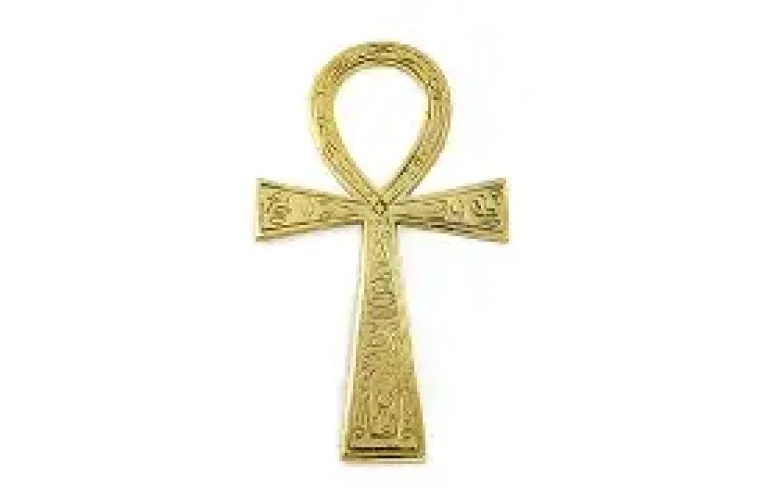
At its most direct linguistic level, the Ankh is an ancient Egyptian hieroglyphic character which, in plain terms, literally turns into the verb “to live” or the noun “life.” But when archeologists and historians look extra closely at its physical form, they notice several kind of beautifully layered visual interpretations , that sort of stack together like meaning on meaning.
The Mirror of the Land
One of the more poetic theories says the Ankh is actually a stylized map of Egypt itself. The vertical stem, like, acts as the life-giving Nile River carving through the desert sands. The horizontal crossbar shows the East and West banks, the river valley where human civilization flourished , and kept going. The top loop is read as the lush Nile Delta opening outward into the Mediterranean Sea. In this view the symbol isn’t just a sign, it’s more of a celebration of the singular geography that let life keep surviving in North Africa.
The Union of Dualities
Another interpretation, also pretty strong, leans into the balance of opposites. The loop is taken as a feminine cue, representing the womb , creation, and fertility. Meanwhile the vertical stem is treated as masculine energy. Then when you combine that with the horizontal bar—basically the horizon where these forces meet—the Ankh becomes, in a sense, a visual metaphor for the ongoing production of fresh life, continuously.
2. The Breath of Life: The Ankh in Royal and Divine Art
When you wander around ancient Egyptian temples with a guide, you’ll likely notice that the Ankh is almost always shown in the hands of the gods. It was treated as a holy tool, more or less a literal “Key of Life” , and in practice only divine beings were allowed to have it.
On royal reliefs you’ll often see a deity such as Isis, Osiris, or Horus holding the Ankh by that top loop , then kind of pressing the lower stem—softly—against the Pharaoh’s lips or nose. This visual action means the god is sending the “breath of life” into the ruler, sort of confirming authority and also guarding their spirit from rotting away.
In the strange Amarna Period under King Akhenaten, the same theme gets even louder. Scenes from that time show the sun disk, the Aten, reaching out with those long rays toward the royal family. At the end of every single ray there is this small human hand holding an Ankh, and it pours over the king and queen with living heat and enduring power.
3. The Practical Value: The Ankh in Daily Life and Medicine
Even though the Ankh had huge cosmic weight , the people of ancient Egypt sort of pulled it straight into their everyday practical lives. It was never only tucked away in dim temple sanctuaries it was more like stitched into the routine of surviving day to day.
Protective amulets: Egyptians across different social levels wore little Ankh amulets around their necks. These were made from blue faience, which is basically glazed ceramic , along with gold or carved stone. The general idea was that they would protect the wearer from physical sickness, sudden mishaps, and also hostile spiritual currents.
The healer’s tool: Since the symbol was tied to “life,” it naturally wandered into the world of health and medicine. Ancient doctors and spiritual healers often placed the Ankh into their medical instruments and their ceremonies, treating it as a sort of conduit for beneficial, restoring life force.
Cosmetic mirrors: The Egyptians really did love craft work , and they often shaped the metal frames of their shiny bronze hand mirrors exactly like an Ankh. The meaning felt oddly smart here: when you stared through the loop of the mirror, you were basically seeing “life” itself , not in a metaphor only, but in the experience of the object.
4. Crossing the Great Divide: The Ankh and the Afterlife
To really grasp the Ankh, you kind of have to get what the ancient Egyptians meant by death. They didn’t see the ending of earthly life as some grim, locked forever kind of stop. For them, death was more like a pause, a temporary transition , a sort of gateway into a grand never-ending continuation called the Field of Reeds
Since the Ankh stood for endless life, it showed up in a huge amount of funerary practices, and honestly it feels everywhere once you start looking :
1. Mummification, protection phase one .
During the mummification work , the embalmers put particular Ankh amulets inside the linen wrappings, right on top of the deceased persons heart. The goal was to keep the soul’s vitality , basically its life force, still in place and not slipping away.
2. The heart evaluation, phase two .
When the soul goes into the Hall of Ma’at for the heart to be weighed against the feather of truth, the images often show the gods with the Ankh. It’s shown like it’s waiting , as if eternal life could be granted as soon as the person was judged righteous
3. Reawakening, in the Field of Reeds phase three .
After Osiris cleared the deceased, they used the spiritual power associated with the Ankh to come back into the afterlife. Then the person steps into a kind of eternity where sickness, aging, and death no longer exist, not as a threat or a limit anymore.
5. The Enduring Legacy: From Hieroglyph to the Modern Era
When the old Egyptian religion eventually faded and Christianity started spreading across the Nile Valley around the 1st century AD, the Ankh didn’t just vanish. No, it kinda stayed , and it even went through a sort of cultural rework.
The early Egyptian Christians, the Copts, noticed something very spiritual between the old life symbol and the Christian cross. So they reshaped the Ankh into their own iconography and well, they made the Crux Ansata, which is often described as a “cross with a handle”. They basically folded the loop into their new belief, and in doing so, they let that ancient sign pass across the threshold of time, keeping its message of hope for many centuries, kind of quietly but steadily.
So today, thousands of years after the last hieroglyph was carved by a temple priest, the Ankh is still surprisingly alive. It has broken past geographic boundaries, and it’s become a broad symbol for vitality , cultural pride, and also this feeling of closeness to the hidden mysteries from the deep past.


-webp.webp "Hilton")
-webp.webp "dusit")
-webp.webp "Marriott Hotels")
-webp.webp "Azimut Hotel")
-webp.webp "Golden Tulip")
-webp.webp "sheraton")
-webp.webp "westin hotel")
-webp.webp "Movenpick")