


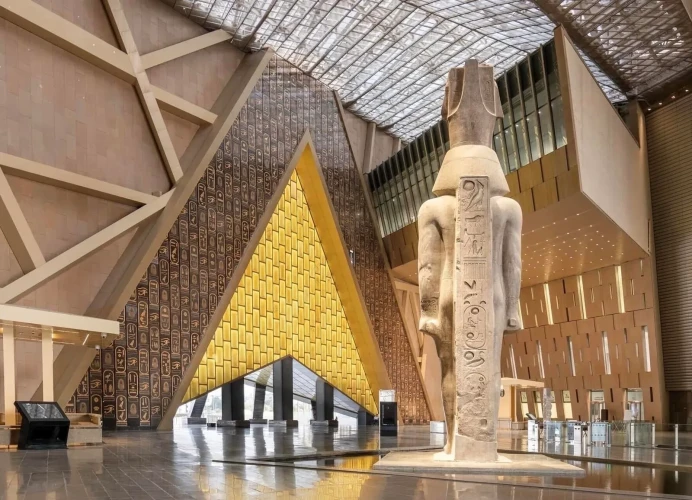
How to Find and Hire a Licensed Egyptologist Guide: 2026 Rules, Costs, and Tips
.jpg)
Unlocking the Secrets of the Pharaohs: Why a Licensed Egyptologist Guide Changes Everything
Standing at the base of the Great Pyramid of Giza you’re looking at something like 2.3 million stone blocks, each one weighing several tons. If you go alone it’s undeniably massive awe-inspiring limestone, this silent imposing monument, sure, but without context it kinda stays just that.
Now picture you standing right there in the same exact spot, but next to a companion who points out a subtle discoloration in the bedrock. Suddenly the whole scene feels less “just rocks” and more… a story. They talk you through the village of around 20,000 skilled builders who lived nearby, they decode the almost hidden engineering logic behind the star alignments, and they connect it all to the religious journey the Pharaoh was said to believe he would take through the underworld.
In a place where history is counted in millennia rather than centuries the person leading you through the ruins shapes what you notice, what you remember, and how you interpret everything. So, let’s dig into what makes a licensed Egyptologist guide genuinely different from a regular tour host, and why having one along can turn a standard vacation into something profound, yes, and frankly a bit life-changing too.
1. What is an Egyptologist Guide? (It is Not Just a Job Title)
A lot of travelers think that if someone is holding a clipboard, or somehow leading a tour group through the Valley of the Kings, they’re automatically an Egyptologist. In Egypt though, it really could not be more different. The label is regulated pretty strictly by law, and the requirements are so serious that most visitors just don’t expect it.
To get the official permit from the Egyptian Ministry of Tourism and Antiquities, a guide has to hit a number of demanding goals that take time and real training:
First there’s a Specialized University Degree. They’re expected to finish a four-year bachelor’s program, focused on Egyptology, archaeology, ancient history, and classical languages. Not a “general tourism” route, but the more specific track.
Then comes Hieroglyphic Fluency. They spend years learning to read and interpret ancient Egyptian hieroglyphs, Hieratic script, and older historical texts. It’s not only recognition, it’s understanding.
After that, Rigorous Government Exams. They need to pass broad national tests, usually covering historical accuracy, safety protocols and even cross-cultural communication. The part about communication is bigger than people think.
And of course, Official Syndicate Membership. They must be active members of the official Egyptian Tour Guides Syndicate, and they carry a formal identity badge that has to be shown at all archaeological zones. Like, consistently, not “only when asked” or anything.
So when you hire a licensed Egyptologist, you’re not really just paying for someone who coordinates your route and points to photo moments. You’re working with a living academic professional, one who has dedicated years of effort to protecting and explaining their country’s heritage.
2. Reading the Walls: The Power of Real-Time Translation
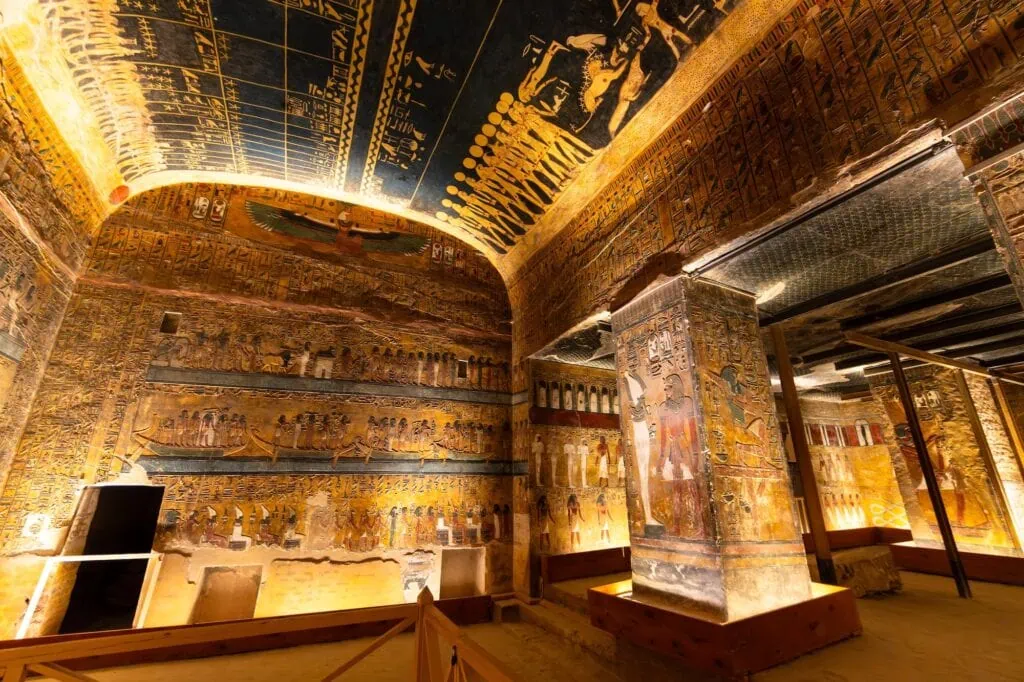
The real, most immediate benefit of going in with an Egyptologist sort of shows up the moment you step inside a sun drenched tomb chamber in Luxor or one of those huge temple compounds like Karnak.
The walls of it all, are covered pretty much from floor to ceiling with intricate relief carvings, royal cartouches, and colorful murals . To the untrained eye, these patterns can feel like a beautiful repetitive maze of birds, eyes, and seated gods, you know the kind that keeps going and going.
But an Egyptologist looks at the exact same stuff and kinda reads it like a storybook left open on a table. They can point right at one symbol and then, translate the inscription almost immediately :
“Here this section explains how Ramesses II returns after the Battle of Kadesh. Pay attention to the spacing of the characters here, the carver made a mistake because the king changed what he wanted the story to say halfway through the work.”
That level of precision really changes what you’re doing in your head. You stop just staring at a wall of symbols, and suddenly you’re face to face with political propaganda, deeply held religious anxieties, and even everyday humor from people who lived four thousand years ago.
3. The Practical Value: Bypassing the Hustle
Beyond the historical and academic stuff, an Egyptologist guide offers a lot of practical help too, like honestly when you’re trying to handle the real on the ground chaos in Egypt’s busiest tourist places.
Big ancient sites can feel… a bit too intense sometimes. Local souvenir sellers, camel drivers, and even unauthorized site guides can end up being unusually pushy, and it’s not always subtle, either.
Your Personal Shield: when you move through a site with a licensed local guide, they kinda become your protective cultural wall. Vendors usually spot the official syndicate credentials right away, so they’ll generally leave you in peace, and you can actually focus on the monuments instead of constantly fending off offers.
Insider Timing: they know the ebb and flow of crowds, and the seasonality too, which is a real thing. Your guide understands exactly when the big tour buses unload, like hundreds of people at Abu Simbel or Edfu, and then they adjust your schedule so you’re roaming during the quieter, cooler morning hours.
Navigating Logistics: from admission tickets to knowing which tucked away tomb chambers need that extra special entry pass, they smooth out the friction so you don’t end up wasting time standing in the wrong line.
4. How to Find and Book the Right Guide
You can’t really stumble on a genuinely exceptional guide just by doing a basic internet search, it sort of, never works the way you want. Instead, use a small but strategic roadmap so you end up hiring a properly verified expert, not just someone who sounds confident.
1. Check the official license : Step 1.
Before you lock in any personal booking, ask right away the person or the agency to confirm that the guide assigned to you is a licensed Egyptologist. When you meet them, take a second and look closely for their official plastic ID badge, issued by the Egyptian Ministry of Tourism, ok.
2. See how specialized their knowledge is : Step 2.
If you care a lot about one particular slice of time, like the Old Kingdom pyramid-builders, or the Coptic and Islamic heritage of historic Cairo, tell them early. A lot of Egyptologists prefer a focused archaeological timeline, it’s not always a “one size fits all” kind of deal.
3. Confirm language comfort : Step 3.
Make sure your guide can speak your native language fluently. Even if they understand history very well, if the way they explain things feels stiff, unnatural , or hard to track, then the real subtleties of the narratives can slip away.
5. Cultivating a Respectful and Rewarding Dynamic
To get the absolute most out of your days exploring with an Egyptologist , it helps to treat the whole relationship like a collaborative partnership, not a simple transactional service. Sort of , you know, like you’re both in the same orbit while you’re there.
Ask your deepest questions: please dont hesitate to bring up complex , even unusual ones. Egyptologists are genuinely passionate about the field and they tend to enjoy stepping away from those usual, pre-made introductions , so you can actually talk about history, philosophy , and also what’s new in modern discovery.
Show appreciation through tipping: in Egyptian travel culture, tipping, locally called Backsheesh is a vital, standard practice, and it directly helps supplement a professional’s income. For a dedicated high-quality private guide , a typical tip is usually around $25 to $40 USD per day per group , depending on how much effort they put in and the care they bring.




-webp.webp "Hilton")
-webp.webp "dusit")
-webp.webp "Marriott Hotels")
-webp.webp "Azimut Hotel")
-webp.webp "Golden Tulip")
-webp.webp "sheraton")
-webp.webp "westin hotel")
-webp.webp "Movenpick")