


Currency Exchange in Egypt
Navigating the Modern Pulse of Egypt’s Economy: A Guide to Managing Money and Currency Exchange in 2026
When you step off the plane in Cairo, the first thing that hits you, isn’t the heat, or the towering palm trees, or even that faint ancient smell of the desert. It’s this absolute, unmistakable buzz. Cairo feels like a symphony of car horns, street vendors calling out their daily prices , and those melodic calls to prayer rolling across a sprawling stretch of urban greenery. Everything is moving, like all day it’s on full throttle. And right at the center of that swirl is the Egyptian Pound (EGP) —the currency that keeps the everyday rhythm going for well over 100 million people.
For any traveler or expat arriving in the country, figuring out how money actually works here isn’t only about reading a ledger or checking a digital price line at a bank window. It’s an essential survival skill ,and also a simple doorway to connecting smoothly with local culture. Egypt’s financial world has shifted a lot over the last few years. If you’re planning a trip, starting a business venture , or staying for a long while, this guide is built to help you handle currency exchange in Egypt like you belong there. So your money stays secure, your conversations land with respect, and your whole journey stays effortless.
The Landscape: Understanding the Egyptian Pound Today
To understand the currency in your wallet it helps, to understand a little bit of the heartbeat behind it. The Egyptian Pound—locally referred to as the Ginei—has been on this historic rollercoaster. For a long time navigating money in Egypt meant dealing with an unpredictable economic landscape, where there was this massive gap between official bank rates and the unofficial, “black market” rates, that caused constant confusion for visitors.
But after sweeping fiscal reforms, and a very firm change by the Central Bank of Egypt to stabilize the economy, the whole financial environment has shifted. The currency has found its footing in a unified, highly transparent official market, more or less.
So what does this mean for you on the ground? It means the anxiety of trying to track “the best hidden rate” is gone. The exchange rate you see on your phone’s currency app when you land is the same rate you will get at the airport, at the corner bank ,or at a registered bureau. The market has stabilized, giving travelers real peace of mind, and making it a level playing field so you can focus on the sights, rather than wondering if you’re getting shortchanged.
Where to Exchange: Your Best Options on the Ground
When you need to swap your home currency into Egyptian Pounds, there are basically three main ways that feel both safe and workable. Each one suits a different kind of trip and a different rhythm, because timing, you know, always matters a little.
1. Authorized Forex Bureaus (The Local Favorite)
You can find them scattered around downtown Cairo, Zamalek, and along the big roads of tourist zones like Luxor or Hurghada. Usually they’re bright, easily noticeable, with offices tied to firms like Misr Exchange or Al Ahly Exchange. These are independent exchange points, fully licensed,so you’re not dealing with something informal.
For many travelers, they’re the simplest option for daily transactions. They tend to run longer than the banks, often staying open late, and yes, many remain available on weekends when major banks are closed . The exchange process is quick, commissions are tiny or sometimes even absent, and the staff are used to international visitors.
2. Commercial Banks
If you like a more formal setting, you can go directly into a branch of the National Bank of Egypt, Banque Misr, or Commercial International Bank. Banks bring strong security, and they generally follow the official exchange rates, same as what you’d expect.
The problem is more about the clock. Normal bank hours in Egypt are pretty strict : typically 8:30 AM to 3:00 PM, Sunday through Thursday. Since Friday and Saturday are the local weekend, depending only on bank branches can leave you stuck if you’re short on cash on a Thursday night.
3. Currency Exchange ATMs (The 24/7 Lifesaver)
This one is pretty innovative and it gets a lot of praise in Egypt’s newer banking setup. You can walk up to almost any major bank ATM in a crowded commercial zone and you’ll see something helpful right away, you don’t really need a debit card to begin. You just touch the screen, then tap Foreign Exchange , and your foreign currency gets converted straight into EGP.
After that, the ATM opens a particular cash intake slot. You feed in your foreign bills, it figures out the live exchange rate on the spot, and then it spits out neat Egyptian Pounds immediately. Honestly it’s ideal for late-night situations, or if you’d rather dodge a physical line and do everything quickly.
The Golden Rules of Egyptian Cash
Even though Egypt’s digital infrastructure is growing pretty fast, cash is still the absolute king of the street. To keep your transactions , stress-free as possible, there are a couple of unwritten cultural rules you kinda just learn by doing.
The “Pristine Bill” Dictum
If there is one line of advice that saves travelers from annoyance, it’s this : your foreign currency has to look like it was taken straight from the mint.
Egyptian bank tellers, and those automated exchange machines too, are unusually strict about how foreign banknotes look physically. If you try to exchange a US Dollar or Euro bill that has a small tear, a random pen mark, heavy creasing, or simply seems overly worn, it will almost certainly be refused. Before you leave your home country, go to your local bank and , ask specifically for crisp, new, unblemished bills. Keep them flat and protected inside a solid travel wallet.
The Magic of Small Denominations
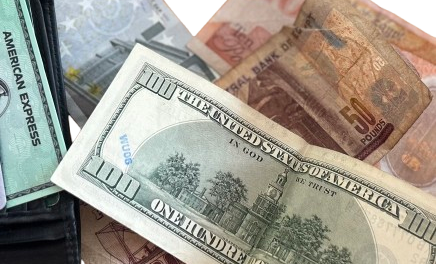
If you exchange a $100 bill, the teller or machinewill likely give you larger Egyptian notes, usually 100 EGP and 200 EGP bills. Those are fine for dinner totals or museum entry, but they can turn into a real headache when you’re trying to buy a bottle of water, pay for a short taxi ride, or tip a luggage handler.
Local street vendors, and taxi drivers even more so, rarely have proper change for a 200 EGP note , especially early in the morning. So make it a point to split and break your larger bills at supermarkets hotels, or upscale restaurants. Treat your 5, 10, 20, and 50 EGP notes like treasure. Having small change will make everyday interactions , way easier.
The Human Side of Money: Understanding Baksheesh
You cant really talk about money in Egypt without also touching Baksheesh, and yeah, it comes up again and again. People often render it as “tipping”, but that sounds a bit too neat. Baksheesh is more like this quietly embedded social deal, a kind of gratitude expression that has roots in Islamic ideas about sharing wealth.
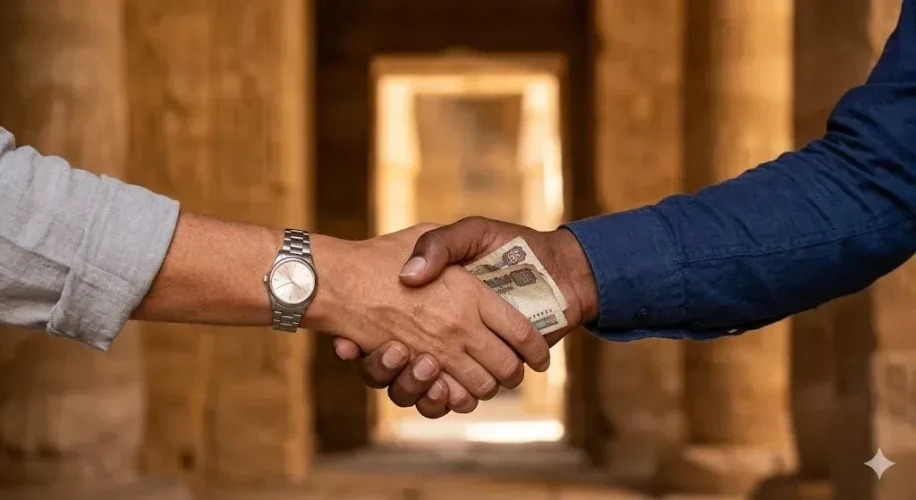
In the West, a tip usually feels like an extra bonus, reserved for really exceptional service. In Egypt, it behaves more like a recognized piece of the whole economic rhythm. The wages for many service people , such as bathroom attendants temple guardians drivers and hotel staff, can be very low. The baksheesh they get, is what helps them keep their households going. Not just “nice to have”, but often the difference between making ends meet or not.
If you approach baksheesh with an open and generous mindset, instead of treating it like some annoying obligation, your whole experience in Egypt shifts. A small gesture—say 10 or 20 EGP—may feel tiny to a traveler, but it actually carries real respect and appreciation for the person assisting you. Try keeping a dedicated pocket for small change, so you can hand someone a small bill easily, without that awkward pause, digging around inside a large wallet in public.
Final Thoughts for a Seamless Journey
Trying to navigate a foreign country financial system can feel kinda daunting, but Egypt’s recent stabilizing reforms have made it a lot easier, honestly than before. If you stick to official exchange offices , keep your foreign bills pristine , and also keep a decent, steady supply of small local notes on you , then you’ll dodge most of the annoying little financial hiccups.
Above all, remember that every transaction in Egypt is also a kind of human interaction . Just smile , say a polite “Shukran” (thank you) , and let yourself enjoy that unmatched warmth, and hospitality of a place that has been welcoming travelers for thousands of years, straight through.



-webp.webp "Hilton")
-webp.webp "dusit")
-webp.webp "Marriott Hotels")
-webp.webp "Azimut Hotel")
-webp.webp "Golden Tulip")
-webp.webp "sheraton")
-webp.webp "westin hotel")
-webp.webp "Movenpick")
