


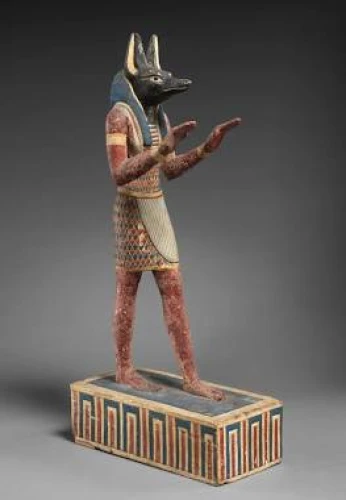
Anubis: the grave keeper and mummification god
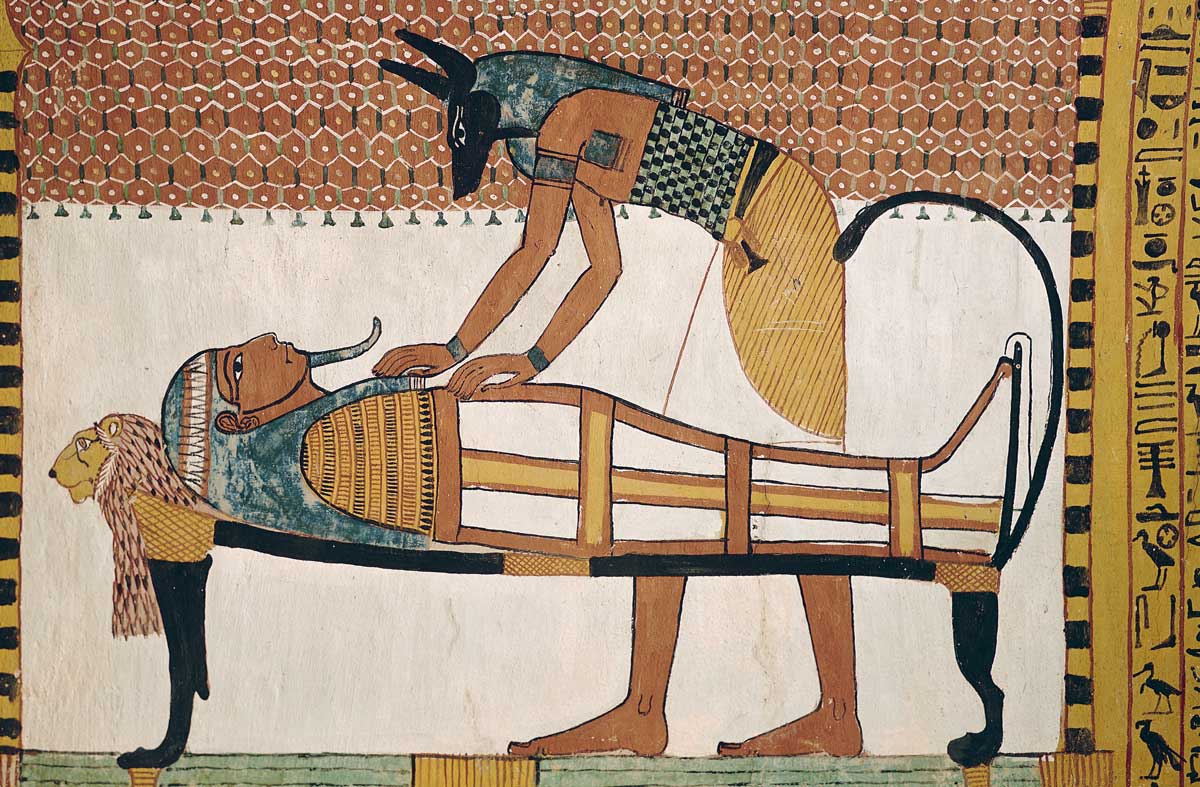
The ancient egyptian civilization most of it is a mystery and unknowed and from things that seemed unknowed is the mummification.
The ancient egyptian had a god for the mummification, a grave keeper and a guide of souls his name is Anubis.
Anubis is a god at the ancient egyptian civilization he is indentify as The black jackal of desert.
Anubis was the grave keeper who protect the dead from the dark magic, grave robbers and he was the first friend a soul would met in the underworld.
The roles of Aubis
Anubis, he was basically tied to every little thing about death and getting ready for the afterlife. Not only that, but his sacred work sort of split into three major parts, like, more or less: The Lord of the Sacred Land, also known as the First Embalmer: In Egyptian mythology, it is said Anubis invented mummification, after he gathered the scattered pieces of the murdered king Osiris, and then he embalmed him so he would not rot. So, because of that story, Anubis became the patron of embalmers. During the mummification work, the head priest would often wear a jackal mask , just to draw in Anubis’s blessing in a more direct way. Guardian of the Tombs: Anubis acted like a spiritual watchman over cemeteries and necropolises, meaning he guarded the actual bodies of the departed from dark magic, wicked spirits, and grave robbers, too. Kind of like a sentinel that never really slept. The Guide of Souls, or Psychopomp: He was the very first companion a dead person might meet once they entered the underworld, called Duat. Anubis would take the person by the hand and then guide them through risky, dim passageways, so they could finally reach the hall of judgment without getting lost, or misled.
The Ultimate Moment : Ruler of the Scales
The true majesty of Anubis really shows during his final, most noble role inside the “Hall of Two Truths”, where the judgment of the dead took place. Anubis was the master caretaker of the Great Scales, you know the whole arrangement.
He would set the heart of the deceased on one side of the scale, and the “Feather of Ma’at” on the other, which stands for truth, balance, and justice . Then he watched the balance with absolute precision, and fairness… Anubis decided the soul’s fate, not by guessing. If the heart was light, and clean of sin, he guided the soul toward paradise. But if it was heavy with evil, he stepped aside, letting the monster Ammit take over and devour it . To the ancient Egyptians, Anubis meant absolute justice that can’t be bribed or bent.
Anubis still shows up as one of the most striking artistic and religious symbols from ancient Egypt. He somehow captures how the ancestors turned their deepest worries about death, and the unknown into a more organized passage, guided by cosmic law, and protected by a loyal jackal-headed deity .
Family and Divine Origins
In the long, crowded history of Egyptian mythology, how Anubis was born kind of shifted across different kingdoms, you know, as the way people prayed to the gods changed over thousands of years. In the earliest religious texts—going back to the Old Kingdom—he is often described as Ra‘s son, Ra being the highest sun god. That kind of early link made him sit straight inside the cosmic order of the universe, and it all felt, somehow, very connected
Later on, during the Middle and New Kingdoms, the cult of Osiris got much louder and more important, so the story also bent a little, and it started weaving Anubis into the main royal family of myth. The best known version, the one most people repeat, says that Anubis was the son of Osiris, the god of fertility and the underworld, and Nephthys, the goddess tied to mourning and shadowy dark
In the myth, Nephthys disguised herself as her twin sister Isis , yes that Isis the wife of Osiris , so that she could conceive a child with him. Nephthys feared her own husband Set, the chaotic and violent desert god , so she left the newborn infant in the marshes of the Nile delta. Isis then did the searching, with a lot of compassion, she found the baby, adopted him, and raised him as her own child
Because of that upbringing, Anubis became extremely loyal to Isis and Osiris. When Set later murdered Osiris and scattered his body across the lands of Egypt, Anubis didn’t hesitate. He used his special knowledge of preservation , and he gathered the scattered pieces, wrapped them in linen, and basically carried out the world‘s first mummification rite. By doing that Osiris could rise again, and become the supreme ruler of the underworld, while Anubis stepped into a supportive job, like the enforcer of justice and guardian of the dead, with no hesitation at all.
Epithets and Sacred Titles
The ancient Egyptians did not usually name their deities with just one plain word, instead they used grand , descriptive titles which were basically epithets. These epithets worked like a kind of quick summary, of what the god could do and what he was responsible for. Anubis, had several well honored titles, and they were seen on tomb walls on coffins, and on papyrus scrolls all over Egypt.
Tepy-dju-ef "He Who is Upon His Mountain": This one really stresses his job as a constant vigil, like a watchful spotter. The “mountain” meant those high, rocky desert cliffs that looked down on the necropolis. From there, Anubis in his jackal body, sat and observed the valleys where the dead rested below, ready to spring, on grave intruders or troublesome spirits who tried to mess with the calm of the sleeping, mummified souls.
Khenty-Imentyu "Foremost of the Westerners": In Egyptian writing, “Westerners” was a poetic way to say the dead, since the sun goes down in the west, marking the closing of life. So when they called Anubis the foremost of the Westerners, they were saying he was the guiding authority, he moved first along the line of spirits stepping into the afterlife.
Imut "He Who is in the Place of Embalming": This title tied him permanently to the mummification space, almost like a spiritual lease on the tent itself. It makes clear that no body could be prepared for forever, without his direct spiritual supervision.
Anubis in modern imagination
So we can say that Anubis was kind and want to help pepole after death not like the movies shows him as a villan because of his body and his head.
unfortunately the media make human thinks he is a bad and hurt who ever wake him up




-webp.webp "Hilton")
-webp.webp "dusit")
-webp.webp "Marriott Hotels")
-webp.webp "Azimut Hotel")
-webp.webp "Golden Tulip")
-webp.webp "sheraton")
-webp.webp "westin hotel")
-webp.webp "Movenpick")