


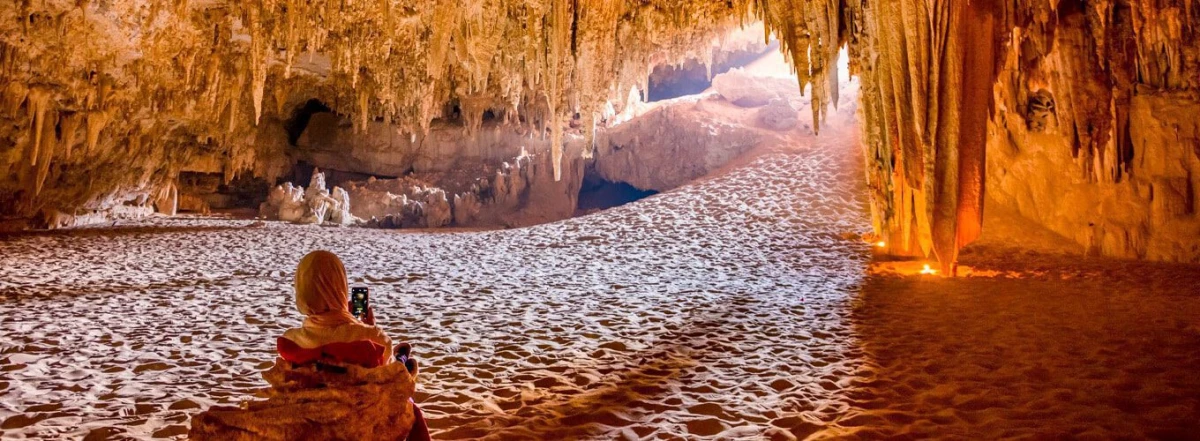
A Green Sahara's Silent Memory: The Neolithic Art of Djara Cave
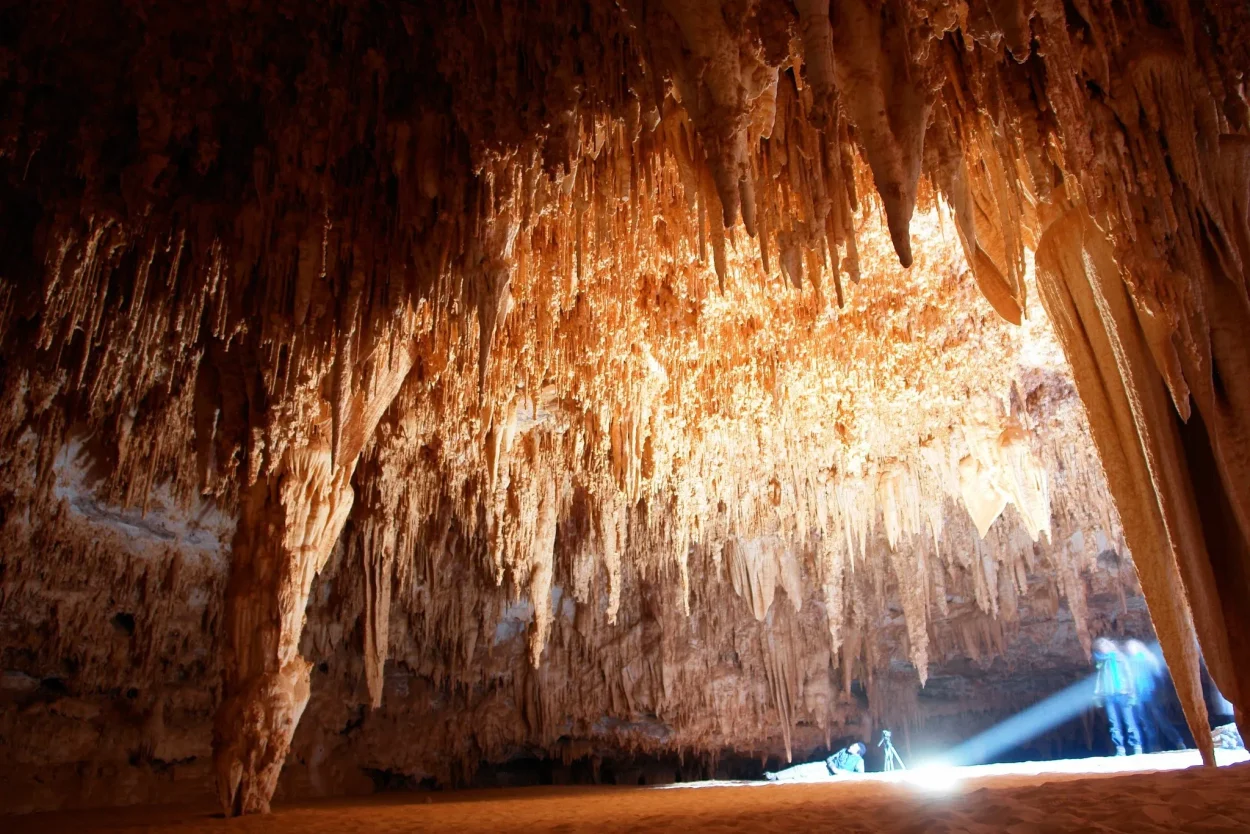
Cathedral of the Desert: The Lost Magic of Djara Cave
Imagine driving for hours across this ocean of endless , blinding white limestone and these golden sand dunes in Egypt’s Western Desert. The sun just hits down, like it can’t be stopped. The wind drags in that dry heat from the Sahara, and the whole place feels pretty much flat, open, and almost no features at all. You’re hundreds of miles from anything modern, and the route you take feels more like the surface of Mars, than like Earth.
Then, your desert guide pulls the 4x4 to a halt by a small, kinda unremarkable hole in the ground. At first it’s nothing, seriously, just a shallow sinkhole.
But when you start climbing down that sandy slope into the earth, the blazing warmth suddenly drops. There’s this cool , damp breeze instead, like the air changed its mind right away. Your eyes take their time to adjust to the darker spaces, and when your flashlight swings around, the beam slices through and shows an amazing thing: thousands of huge, crystalline stalactites hanging from up high, like a frozen, petrified forest that somehow learned to hang in the dark.
That place is Djara Cave (sometimes you’ll see it written as Gara Cave). It’s one of the more structurally stunning, geologically unusual, and historically important dripstone caves anywhere, still somehow it stays one of the Sahara’s best kept little secrets.
1. The Discovery: A German Explorer’s Midnight Wonder
The modern history of Djara Cave starts, kind of, on a cold December night in 1873.
Back then, the famous German explorer Gerhard Rohlfs was pushing forward with a huge state sponsored expedition across the still uncharted reaches of the Libyan Desert, which is basically the eastern section of the Sahara. His crew had dozens of camels, scientists, and local guides, and they kept running into the usual problem—finding water, and a safe route, through the dangerous Great Sand Sea.
During a routine scouting detour between the oases of Farafra and Asyut, Rohlfs suddenly hit something unexpected: a tight little entrance. He lowered himself in, and honestly he was completely stunned. In his own expedition notes, he called it a “magical subterranean palace” and went on to compare the bright white stalactites to Europe’s great Gothic cathedrals ,like they were copied out of a dream.
After Rohlfs’ short look inside, the cave’s exact GPS coordinates seemed to slip away , buried under the shifting sands of time for more than a hundred years. It wasn’t until 1989 that the German physicist and desert explorer Carlo Bergmann managed to track it down again and reopen it for modern study, as well as for curious adventurous travelers.
2. The Geological Miracle: Water in a Waterless Land
To get why Djara Cave feels like this strange geological anomaly, you kind of have to see the way dripstone caves get made, in the first place.
Stalactites and stalagmites form over an incredibly long time, like millions of years, through a very slow and continuous kind of process. Rainwater takes in carbon dioxide from the soil, becoming a bit more acidic than you’d expect. Then as that same water seeps down through cracks in the ground it dissolves the limestone underneath. After the droplets finally reach the open cave chamber, they drop tiny microscopic bits of calcium carbonate. And over eons, those small mineral deposits slowly build up, until you get those massive hanging formations that look almost like stone icicles, today.
The paradox though is this: how can you have a spectacular dripstone cave sitting inside a hyper arid desert, where it nearly never rains?
That answer is tied to Earth’s deeper climate past. Similar to the “green era” that people connect with the paintings in the Cave of the Swimmers, the Western Desert of Egypt went through a few prehistoric wet phases. In other words, millions of years ago, around the Miocene epoch, and later during the African Humid Period, this area was regularly hit by heavy rainfall.
So the huge stalactites inside Djara Cave are basically physical, frozen records of ancient rainstorms. They reflect a time when a greener Sahara existed, long before anything like written human history.
3. The Neolithic Engravings: Art on the Crystal Walls
While the geological formations are, honestly, good enough for the trek by themselves, Djara Cave keeps something rarer inside. I mean, it’s not just the smooth cool rock. The prehistoric engravings are set right into the slick crystalline surfaces of the dripstone pillars, like the cave was waiting for someone to mark it.
And, unlike a lot of other rock art places across the Sahara, where the carvings are mostly on flat sandstone cliffs, the ancient artists of Djara kinda used what was already there. They let the cave’s natural shapes become their work surface, their background, their everything.
What the Carvings Show
These marks, dated to the Neolithic period roughly 6,000 to 5,000 BCE, describe a whole thriving world that we can barely imagine today. There are several themes that repeat, not in a simple way, but in a way that feels… deliberate.
Wild Game
You can clearly see elegant depictions of ostriches, antelopes, and ibexes, so mountain goats.
Domesticated Animals
Early cattle appear too, showing that local communities were moving through a shift from nomadic hunter-gathering toward pastoral herding. Not instantly, but you can trace the change.
The Hunt
Then there are human figures holding bows and arrows, capturing the everyday survival pressure that ancient residents faced.
Why Scientists Pay Attention
Because the engravings were carved straight into the dripstone, researchers get a remarkably exact timeline. In other words, it becomes evidence, and not only story. The carvings suggest prehistoric people didn’t just stumble upon this subterranean sanctuary— they understood it, they returned to it, and they used it as a sheltered refuge, a spiritual ceremonial place, and also as a kind of tribute panel for the wildlife that kept them going.
4. The Sensory Experience: Inside the Quiet Void
Walking into Djara Cave feels like a real sensory moment that photos just can’t really catch , not even close.
The instant you slip off the desert surface, all that chaotic wind, and the blinding glare from the sun, fade out. Inside there is a steady cool microclimate . The air is heavy , old in a way , and weirdly motionless.
When your tour group flips their flashlights off and stays quiet for a brief moment, you fall into pitch-blackness , and this absolute silence, like you can feel it in your body. Under your feet the ground is covered with soft, fine golden sand that has slowly drifted down through the opening over thousands of years . That creates this striking contrast between the bright orange floor and the pale , sparkling white limestone shapes hanging overhead.
5. Planning Your Expedition to Djara Cave
Djara Cave sits in some really incredibly remote, deep desert type area. It s not the kind of place you just pop into on a whim, and it definitely isn’t a simple standard day trip from Cairo either. Going inside this subterranean wonder means you have to do serious preparation, like proper, not casual.
Securing your expedition payments
Since a deep desert expedition of this level really depends on specialized vehicles, satellite communications, plus experienced guides, booking packages often come with a higher price tag.
When you re organizing your desert tour with boutique operators in Egypt, make financial safety a priority. Confirm your agency runs payments using strongly protected, encrypted systems such as WeTravel or payment gateways powered by Stripe.
These services use certified PCI-DSS Level 1 encryption, so your financial data gets securely “tokenized” and your cards stay guarded. At the same time, you can still arrange deposits and milestone payments without stress, right from home.




-webp.webp "Hilton")
-webp.webp "dusit")
-webp.webp "Marriott Hotels")
-webp.webp "Azimut Hotel")
-webp.webp "Golden Tulip")
-webp.webp "sheraton")
-webp.webp "westin hotel")
-webp.webp "Movenpick")