


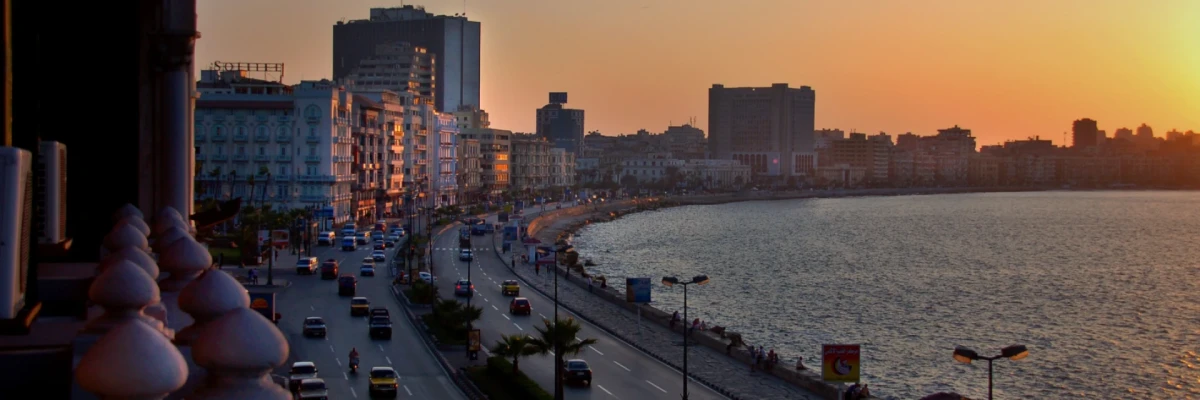
Why Alexandria’s Great Library Still Inspires Today
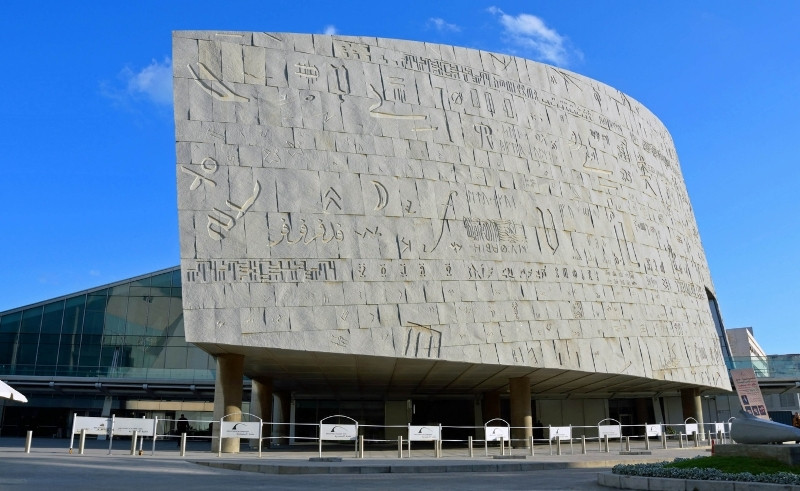
The Library of Alexandria represents the human quest for knowledge, which all historians study throughout their research. The Mediterranean coastal site has functioned as an ancient educational center, which established Alexandria as the foremost academic city throughout history. The venue serves as the single location where guests can experience historical moments together with contemporary times through a shared emotional experience.
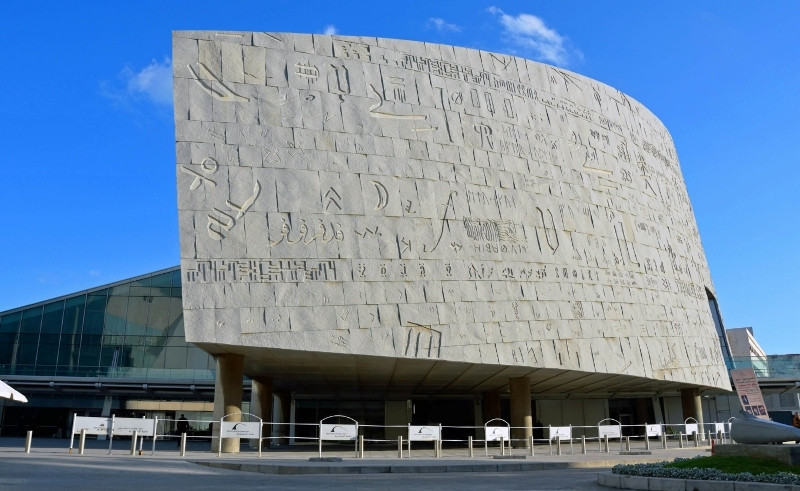
The building itself reflects this mission. The design features a sun-disk shape, which creates a bold appearance while the walls display writing systems from various global cultures to honor the ongoing effort to safeguard human recollections. The building contains extensive reading spaces and exhibition areas that showcase both manuscripts and digital collections, together with historical artifacts that display scientific achievements, literary works, and philosophical advancements. The library not only serves as a reading space for history enthusiasts but also provides a complete historical experience.
The experience reaches its most powerful moment through both the location and the surrounding environment. The library creates a deep thinking environment that faces the Mediterranean Sea, just like ancient Alexandria scholars used to do when they studied their knowledge. The design of every corridor exhibit and reading area displays historical information that scholars actively investigate and develop new interpretations and additional knowledge. The destination serves as a vital site for history enthusiasts who want to discover an inspiring experience.
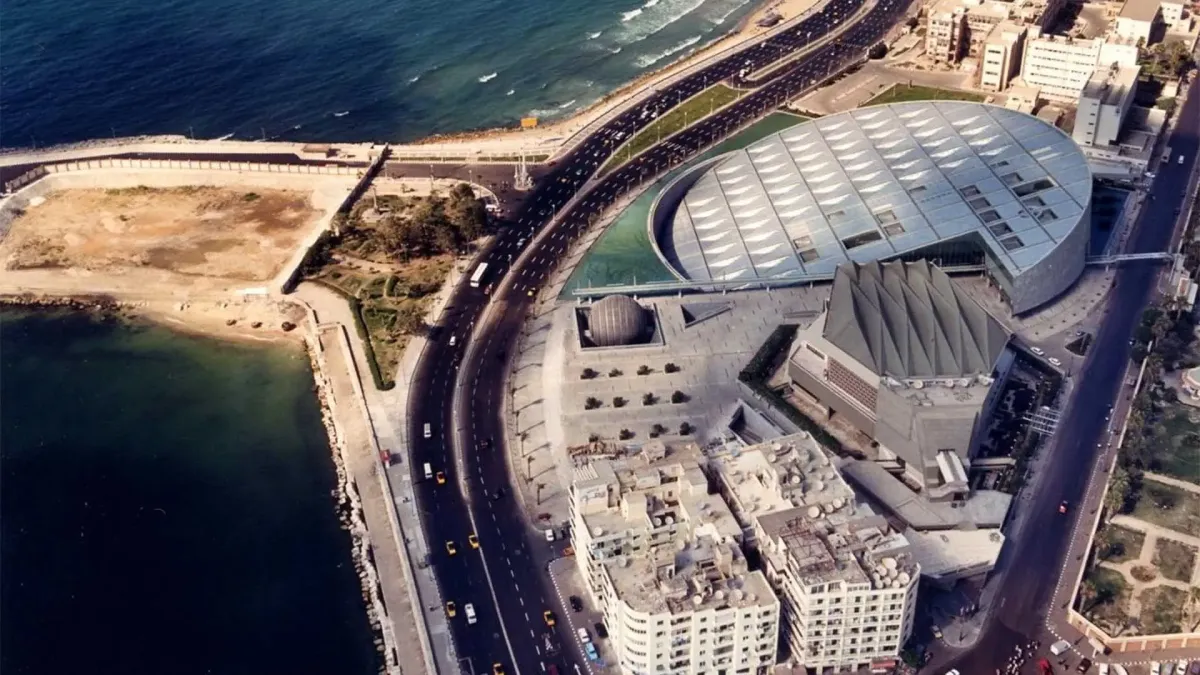
The Architecture: A Sundial Facing the Mediterranean
The building itself is preparing us even for the events of 2026. Indeed, the library looks like a big sun disk, slowly departing towards the Mediterranean. The first thing that would catch one's eye is those bulging freestone ribs that eventually merge into one shiny surface devoid of any seams. Engraved with significance, the letters are in 120 other finely inscribed scripts, being the way monumentalizing the work becomes the synthesis, held in knowledge of the whole human storytelling experience; the act of monumentalization, thus, is in the service of a more varied world knowledge heritage.
Initial Move, the atrium receives you with an unforgettable experience, congruent with the architecture. The Mediterranean Sea at its back, the ever-extending wave-like face of the water falls toward the corniche just a few meters away. The last light basks in a space, its boundaries filled with sea level; no doubt one will powerfully feel the hard-penning of that building ceaselessly into an ocean of invisibility.
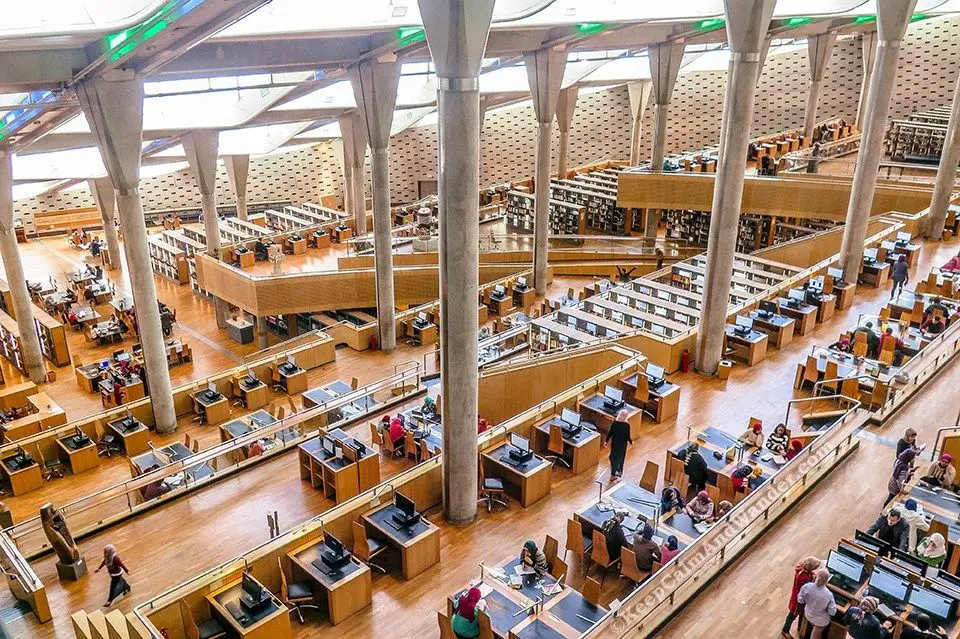
Libraries have been earmarked as the prototype for all modern engineering achievements, while still a suggested tour for tourists to see. Eleven reading areas open out to environmental skies, through a transparent roof that creates a screen to prevent direct sun rays from falling on the books. The enormous main reading room must contain eight million volumes. It throws the observer down, awestruck by the sheer magnitude of the human accomplishments in the field of knowledge and technology.
Manuscript Museum Inside the Library of Alexandria
The Manuscript Museum exists beneath the contemporary design of the library, which serves as the main location that history buffs prefer to experience. The basement area of the building creates a time travel experience, which enables visitors to see the "ghosts" who used to inhabit the ancient Library of Alexandria through its delicate documents and its preserved writing materials.
The museum now displays special documents from its collection, which include ancient scrolls, Islamic scientific documents, and historical texts that show how human ideas changed from the past to the present. Visitors can see original medical treatises that established the first understanding of the human body and hand-drawn maps which early explorers used to explore uncharted territories. The artifacts from the collection hold centuries of history, which link directly to the scholars who established the foundation of modern civilization.
The Digital Manuscript Stack is considered the best advanced feature with which the visiting population may digitally leaf through an ancient book that no one would dare to touch. Whenever technology comes in conjunction with preservation techniques, history gets embodied in very personal and easy-to-reach terms.
Evidence from the 10th-century Qur'anic manuscript and a Greek mathematical scroll also reflects how Alexandria has always been a cultural nexus and crossroads linking the Eastern and Western civilizations along their shared intellectual traditions.
The Antiquities Museum: A Temple transformed into a Library
The Antiquities Museum at Bibliotheca Alexandrina provides visitors with an unforgettable journey into the submerged and rediscovered past of Egypt. Often overlooked by tourists bent on the main reading halls, this hidden gem has increasingly become one of the most captivating cultural experiences of the city in recent times, especially in 2026, with its celebrated section on "Underwater Archaeology."
The show reveals phenomenal pieces dug up in the flooded port of Alexandria, objects left as vestiges of an ancient civilization that now lie beneath the ocean. Major finds among the antiquities include whiffs of the royal palace of Cleopatra and the Lighthouse of Pharos, one of the Seven Wonders of the Ancient World. The remains are underwater witnesses foretelling the story of an urban landscape altered by time, earthquakes, and changing boundaries.
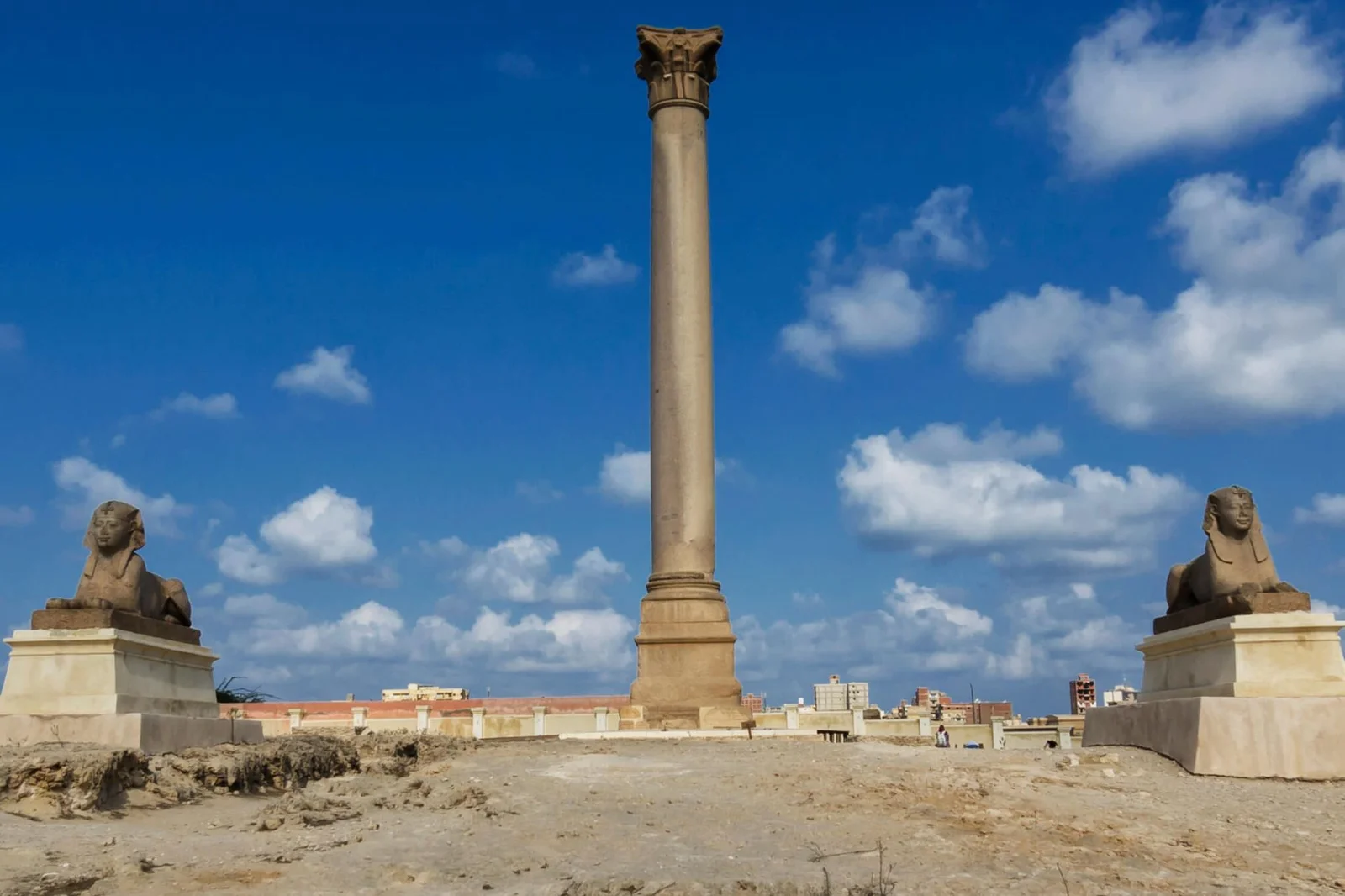
The sight of colossal stone statues, sphinxes, and royal figures, rescued from the Mediterranean seabed, has often been shocking to visitors. The colossal statue showing a Ptolemaic king, salty and encrusted with coral, and the centuries of silence at the bottom of the sea, stand out as most memorable. Today, inside a modern library, the statue and other archaeological objects presented to the public evoke how the threshold of ancient civilization abuts modern knowledge.
The museum is a reminder that Alexandria's history is to be memorized, not just from encyclopedias and ruins on the mainland, but also beneath the sea, hiding until it is exposed again, comprehended, and rebuilt.
How Alexandria is Different from Cairo
Yes, difficult to imagine; however, to someone conversant in history, Alexandria will look very different from Cairo in 2026. Whereas Cairo is a fast-paced, high-strung, dense urban hulk, Alexandria is more leisurely, meditative, and more to the sea. This "human" pace makes history engaging rather than simply zipping through it.
This is a truly global kind of city. Here and there, Belle Époque buildings line the streets, so that every few streets confirm that the city has always been full of an international crowd. Situated alongside the seafront are some old cafes that sit in stark contrast to the new precincts and the state-of-the-art Bibliotheca Alexandrina. With all these elements, the environment is dualistic in nature and a wonderful mix of the old and the new. Indeed, this pretty much inveigles the city into a richer cultural stratification not in any way resembling Cairo's more direct and stringent historical perspective.
In the library, it is alive with experience. It is not only a landmark for knowledge but also an animated institution. Egyptian students from Alexandria University study with the rest of the world, creating a universal academic atmosphere. Instead of an enclosed museum, the library is felt to be still alive and in a constant state of learning and discovery within its walls.
For many, what makes the experience complete is outside of the reading rooms. Sitting in a café with a view of the Mediterranean is a moment to be cherished. It is the best place for thinking, activity, and absorbing feelings mingling with the old charms in Alexandria, which might have already included the archeological wonders of Giza and Luxor elsewhere.



-webp.webp "Hilton")
-webp.webp "dusit")
-webp.webp "Marriott Hotels")
-webp.webp "Azimut Hotel")
-webp.webp "Golden Tulip")
-webp.webp "sheraton")
-webp.webp "westin hotel")
-webp.webp "Movenpick")