


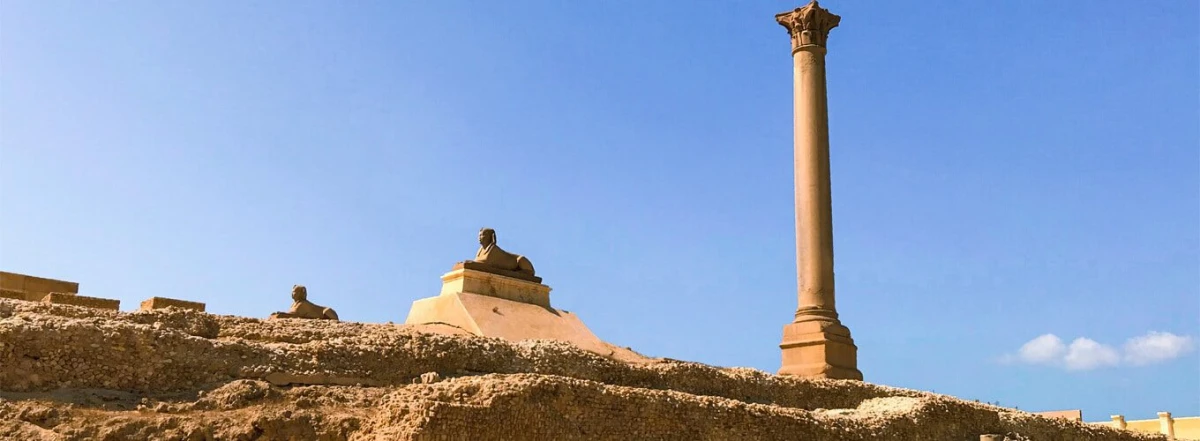
Pompey’s Pillar: Alexandria’s Ancient Wonder
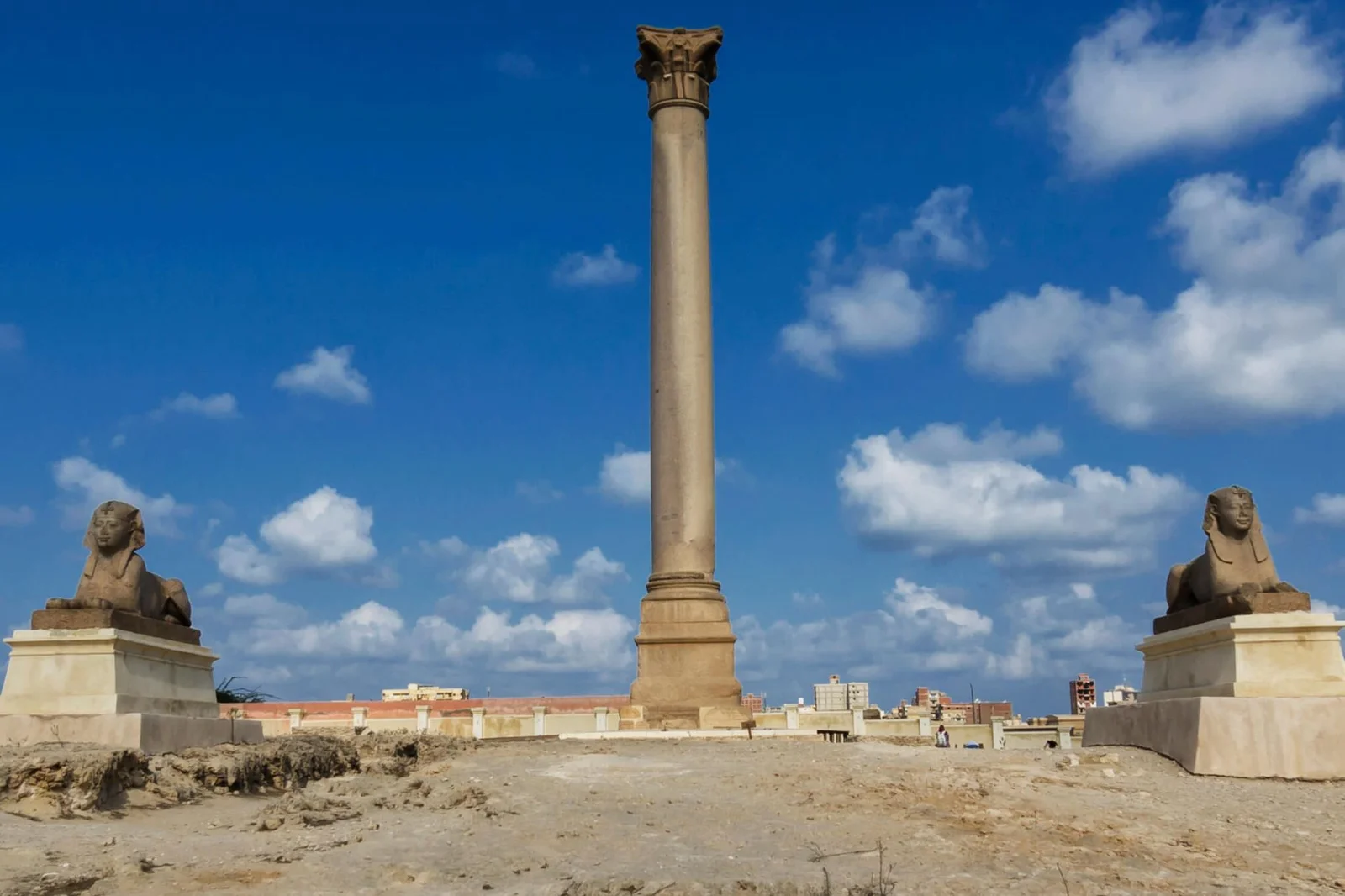
History of Pompey’s Pillar: From Roman Egypt to Today
The monument of Pompey’s Pillar stands as a major landmark in Alexandria, Egypt, which demonstrates the city’s extensive Roman past. The pillar bears the name of Pompey the Great, yet it does not link to the renowned Roman general. The structure reached completion around 297 AD to honor the Roman governor of Egypt, Publius Cornelius Dolabella, who had defended Alexandria against an uprising. The monument functioned as a victory column, which displayed Roman military supremacy over the area.
The people of Alexandria used Pompey’s Pillar as their permanent monument, which they maintained through earthquake damage, foreign attacks, and city changes throughout the centuries. The Roman Empire period, which lasted for several centuries, is evidenced through this structure, which stands as one of the original Roman buildings from that time. The site serves as a historical site that maintains its status as a permanent emblem of Alexandria because it demonstrates its capacity to withstand obstacles while showing its extensive cultural traditions.
Pompey's Pillar: Architecture and Design of Its Construction
Pointing at its impressive architectural ensemble, the historical heritage brings one of Egypt’s tallest monolithic columns to life. An epitome of structural complexity and magnificence, the stone pillar stands at a massive height of 28 meters (92 feet). The primary element considered in its construction is red, resilient Aswan granite, which combines remarkable architectural tastes with immense structural force. The diameter of its base measures around 2.7 meters and diminishes upward as it ascends the structure.
The column is raised on a solid pedestal that renders support and also plays up its visual impact. The topmost portion of the structure comes in the form of a Corinthian-style capital encrusted with decoration like acanthus leaves and scrollwork, thereby suggesting Roman influences of classical inspiration. The engineers of Rome raised Pompey's Pillar in pure granite, which spoke well of their technical know-how! Height and design combine in such a way as to make the architectural marvel a masterpiece to be both treated with awe and appreciated by the total range of viewers in the field of architecture, and given to tourists and historians alike reasons.
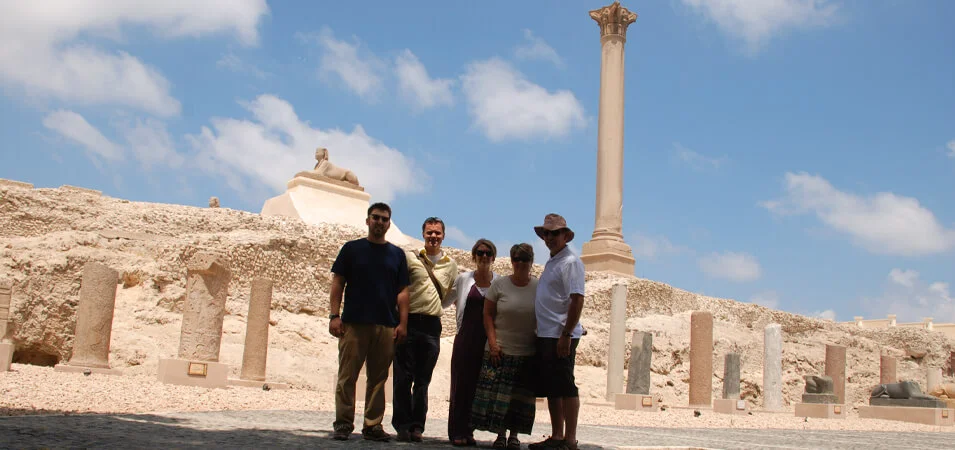
Visiting Pompey's Pillar: What to See and Do
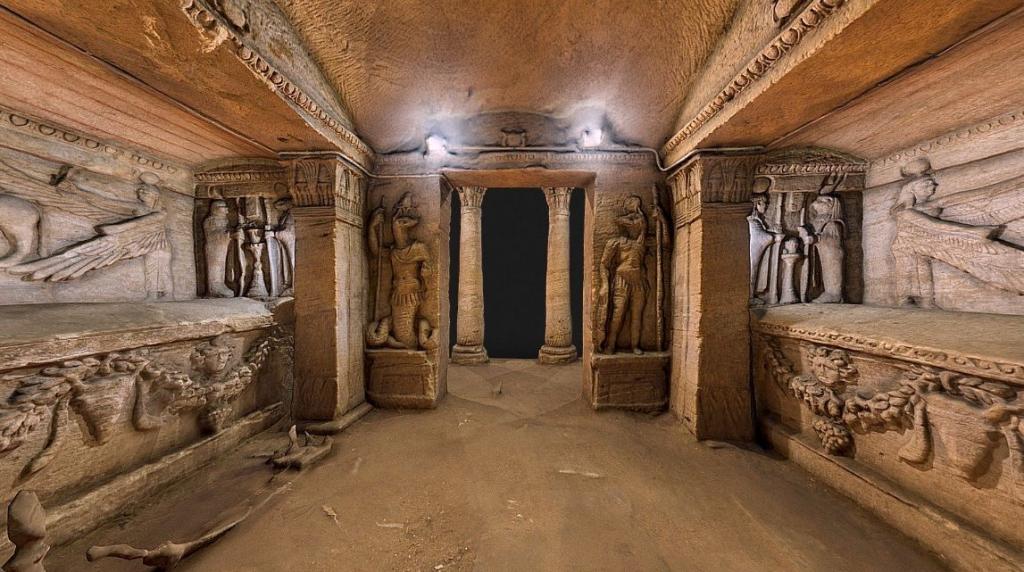
If you are archaeological apparatus and above all about the Roman area of Alexandria, so this is a must-see facility that will offer the most history of this monumental pillar and visual satisfaction. Things are offering to combine thus during this single day a call to the Catacombs of Kom El Shoqafa.
1- What to See at Pompey’s Pillar
The Pillar: Actual admiration of the enormous pillar of stone column from different angles conjures up its days of dominating the Roman cityscape
Nearby Exhibits & Informational Plaques: Now, even though the column itself has nothing to offer exhibit-wise, they give context to its historical significance.
Photography Opportunities: The open area around the pillar allows for excellent shots, especially against the Alexandria skyline.
2- Guided Tours at Pompey’s Pillar
The guided tours explain Roman building techniques and ancient Alexandria urban development, and Governor Dolabella's life, which helps visitors comprehend the historical significance of the monument.
Visitors to the site can see the pillar from multiple viewpoints because they can move through the area, which helps them understand its historical use in the ancient city.
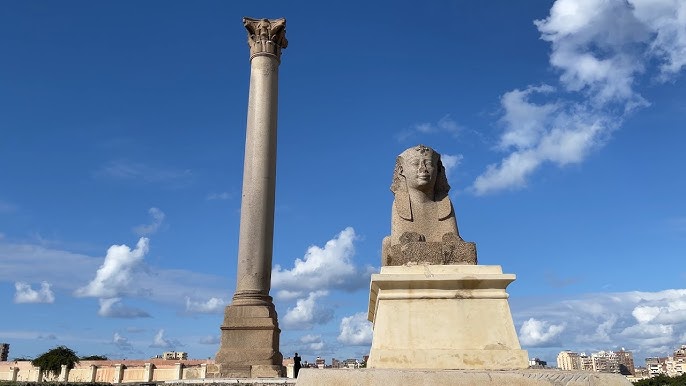
Practical Tips for Visiting Pompey’s Pillar
1- Bear shoes provide maximum comfort to users who need to walk on rough surfaces.
2- Only drink water, especially during Alexandria's hot days.
3- Visit as early as possible to elude the crowd and grab the best light for photography.
4- Pompey's Pillar is not just for sightseeing; it is like a journey back in time, connecting modern Alexandria with its ancient Roman past.
Pompey's Pillar has become one of Alexandria's most constant links to its Roman past, indicating the historical extent of the city and the will with which it has weathered time. The column, erected by the year A. D. 297, honors the local Roman governor Publius Cornelius Dolabella, who had helped protect Alexandria during local unrest. The monument bears his name, hardly connected with the Roman general Pompey. The victory column functioned as a military monument that displayed Roman power and military victories throughout Egypt, while it represented the empire's territorial expansion. The pillar has endured through multiple earthquakes and invasions and the development of Alexandria as a city, while it remains an extraordinary ancient artifact. The structure achieves its imposing height and classical Corinthian design through Roman engineering techniques, which maintain the aesthetic standards of that historical period. Pompey’s Pillar has become an important historical site which provides knowledge about Alexandria’s Roman heritage, while it demonstrates the city’s capacity to protect its historic monuments.






-webp.webp "Hilton")
-webp.webp "dusit")
-webp.webp "Marriott Hotels")
-webp.webp "Azimut Hotel")
-webp.webp "Golden Tulip")
-webp.webp "sheraton")
-webp.webp "westin hotel")
-webp.webp "Movenpick")
