


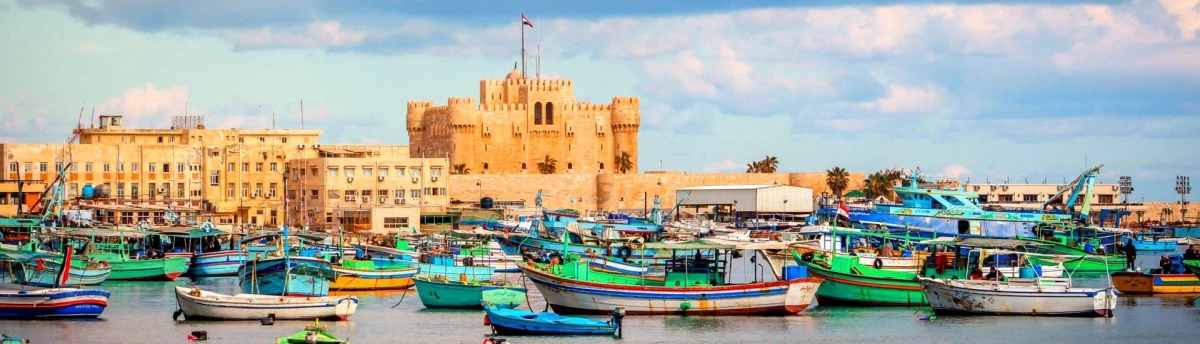
Discover The Citadel of Qaytbay
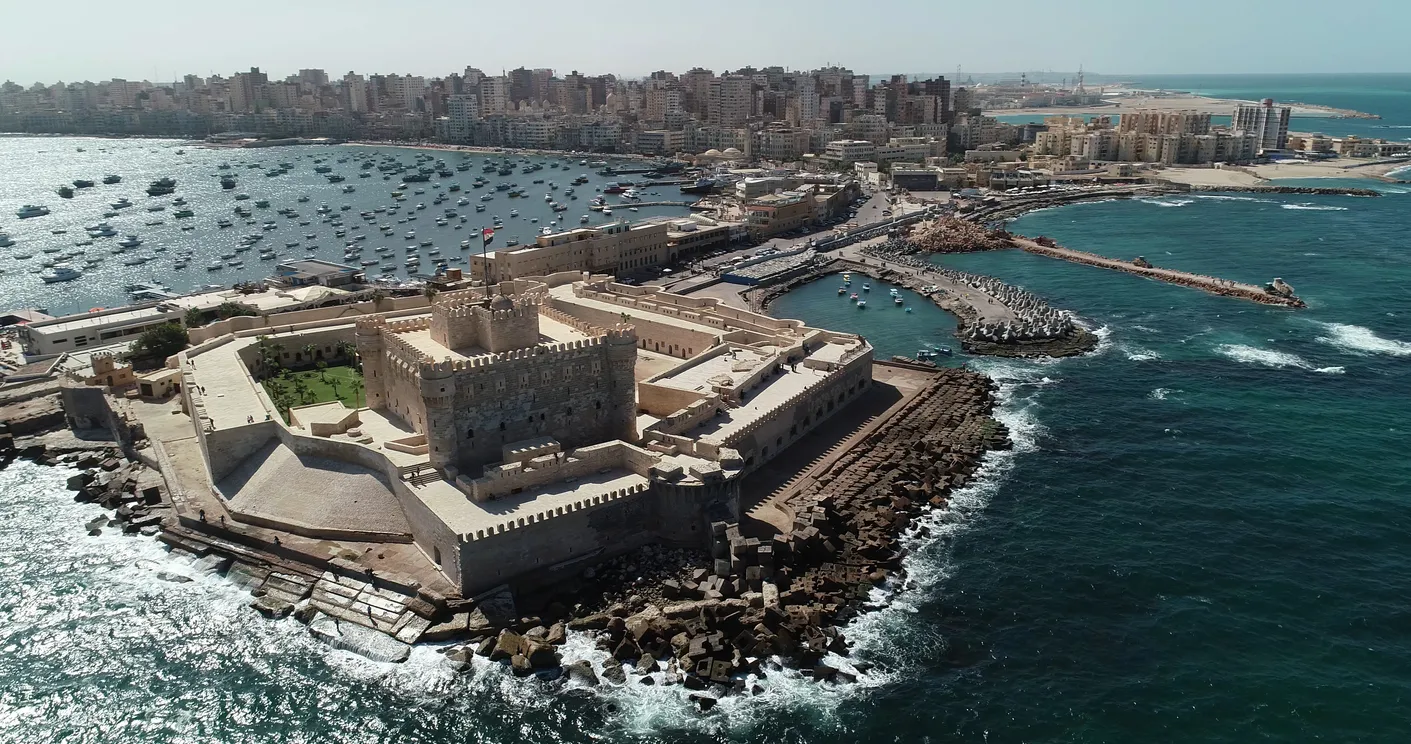
Situated on the Mediterranean shore of Alexandria, Egypt's most renowned historical landmark is Al-Qaytbay Citadel. Built between the period of 1477 and 1479 by Sultan Al-Ashraf Sayf al-Din Qaytbay, the fortress is a testimony to the military strength and architectural abilities existing under the Mamluk regime. Having intentionally been settled over the ruins of the ancient Pharos Lighthouse, one of the Seven Ancient World Wonders, the citadel was sketched to protect the city from naval attacks, delineating one of Alexandria's definitive relations to world trade and defense.
The Mamluk military architecture of the fortress shows its square layout and stone walls, which extend into four corner towers and battlements, and a central entrance. The building has preserved its original design, which contains both its historic beauty and its complete battle history from Ottoman and European Union conflicts. The Citadel of Qaytbay serves as an Egyptian historical site, which attracts visitors who walk its walls to view the Mediterranean Sea from above. The site connects the past and present because it lets people experience Egypt's cultural heritage, strategic value, and architectural excellence, which continue to represent Alexandria's historic legacy.
The Architecture and Significance of the Qaytbay Citadel
The purpose of constructing the Qaytbay Citadel was to protect Alexandria and Egypt on the Mediterranean coast. Alexandria, as a principal port and trading hub, throughout its history, was critically vulnerable to naval attacks. Sultan Qaytbay addressed the need to fortify the city through the creation of a sturdy military structure to challenge attacking forces, specifically the Ottomans and naval powers from Europe.
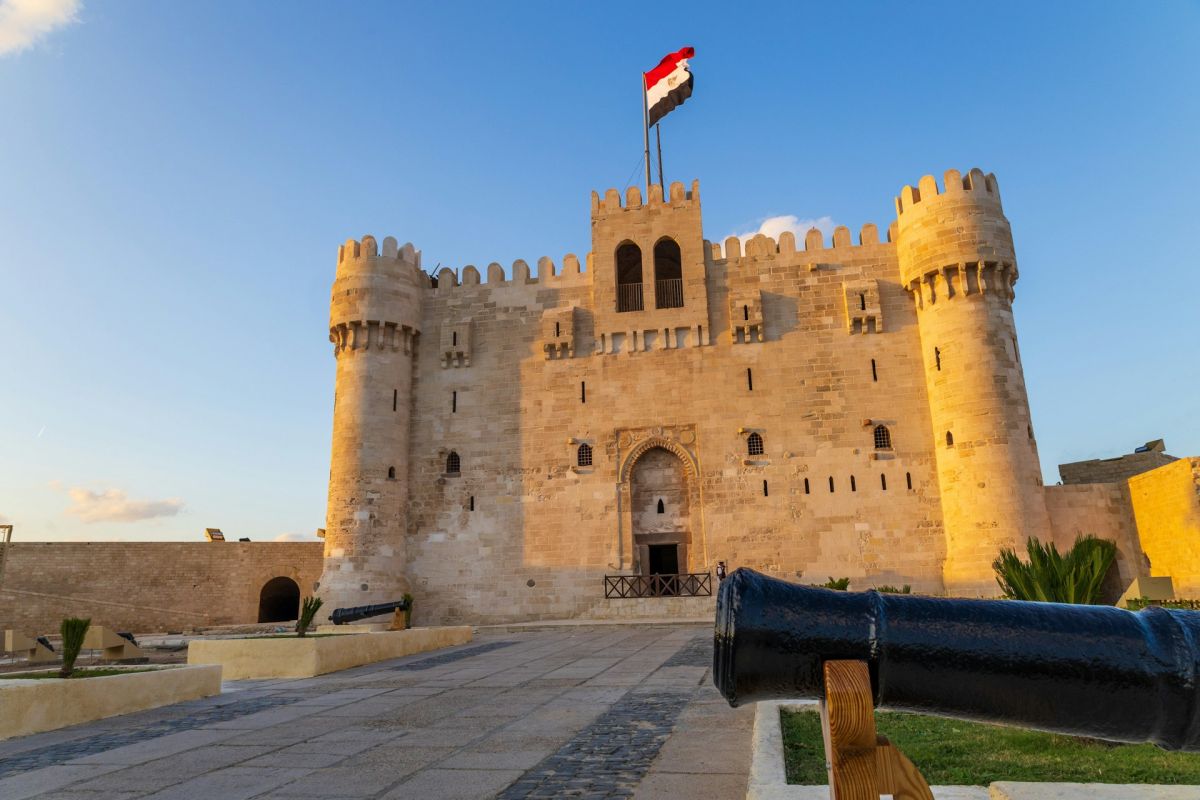
The strategic positioning of the fortress on the coast left it well positioned for other forms of military stationing that demanded a view of the sea ahead. It housed troops and artillery and became a cornerstone of the vast network of the coastal defense of Egypt, providing security to Alexandria for several years.
Strategic Importance and Defense Role of the Qaitbay Citadel
The Qaitbay Citadel stands at the northwest end of Alexandria, which directly faces the Mediterranean Sea. The site of this citadel creates its historical importance because it stands on the former location of the Pharos Lighthouse.
The Citadel was used to control access to the Mediterranean and defend Alexandria against sea-based threats. The fort was fortified with heavy walls, turnings, and artillery to make it a deadly defense mechanism. The site of the citadel allowed those manning the fortress to spot approaching ships at a long distance. This was necessary as the ships needed to be fought off before they could reach the city.
During the Mamluk and Ottoman times, the Citadel, which was an integral part of Egypt's military defense, successfully defended Alexandria against pirate incursions, Ottoman invasions, and European naval attacks.
How Did the Citadel of Qaytbay Protect Egypt’s Coastline?
The Citadel of Qaytbay functioned as a vital defensive system that protected both Egypt's coastal territory and the city of Alexandria. The defenders used the citadel position to observe the sea because it allowed them to detect incoming ships at an early stage. The Mamluks built the citadel as an impenetrable base by installing heavy cannon and ballistae and various other military equipment.
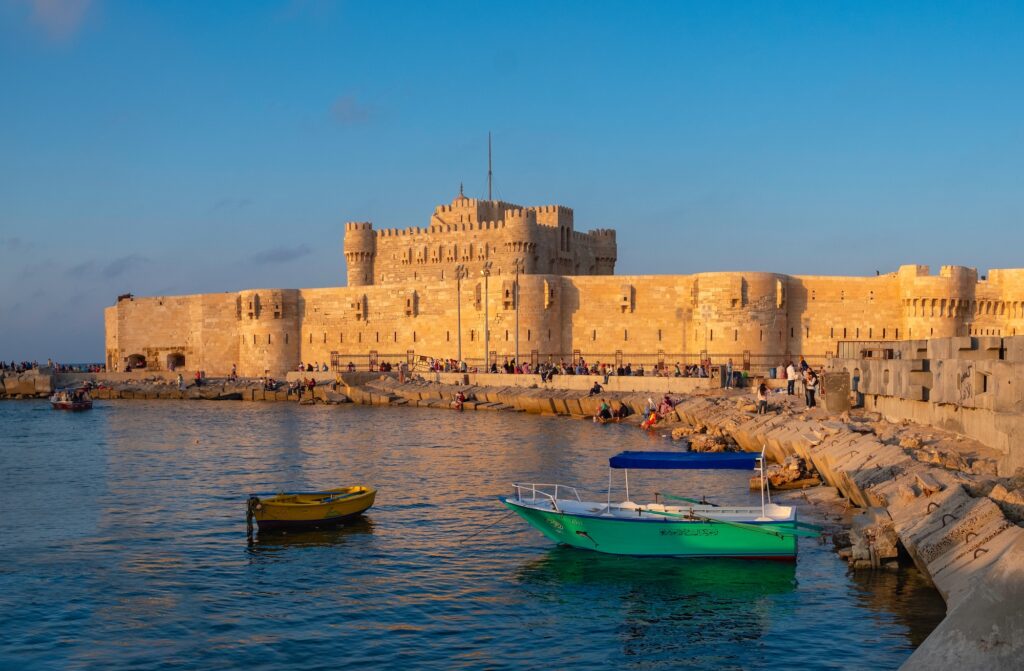
The watchtowers of the citadel enabled soldiers to monitor the Mediterranean Sea from their military lookout point, which they used to detect incoming enemy ships. The citadel's defense system, together with its surveillance system, created an entire protection system that defended Alexandria against all maritime threats. The site functioned as a protective barrier that defended Egypt's northern coastline for more than 1000 years while securing vital trade routes and military operations.
The coastal defenses of Egypt needed the citadel to represent a military structure showcasing the nation's defense capabilities in an era when national security depended so very much on coastal protection. Constructing this citadel on the site of the Pharos Lighthouse improved the military function of this structure in Alexandria by combining the ancient maritime heritage of the city with the current military requirements.
Touring the Citadel of Qaytbay: A Guide to Major Attractions
The Citadel of Qaytbay is not only a historical monument but also a famed tourist location, through which visitors get a glimpse of Egyptian military history and also take advantage of the fact that it looks out over the Mediterranean.
Important Attractions to Consider:
1- Central Tower and Courtyard: For a term about how to travel, enter the vast courtyard of the citadel with immense ramparts and frowning defenses. The central tower provides visitors with a complete view of Alexandria's coastline, which allows them to comprehend the historical importance and defensive value of the city's monumental walls.
2- The Museum: Inside the citadel, there exists a small museum which displays various Mamluk period artifacts that include weapons, armor, and military equipment. Observe the magnificent works of military technology hitherto unknown to visitors, through which they can retrace the defense strategies of Egypt.
3- Architectural Beauty: The citadel is truly a wonder of architecture, with its impressive thick walls, battlements, and decorative details in Islamic military style. The design has not only served the military purpose of the citadel but also reflects the grandeur of the Mamluk dynasty. Defenses in the structure are included with an elegant architectural form that displays the skill of that era.
4- The View: One of the main attractions of visiting the Citadel of Qaytbay is the panoramic view of the Mediterranean Sea. Visitors can enjoy the sight of the calm waters and the bustling harbor, giving them a sense of how strategic this location was throughout history.
The Qaitbay Citadel is believed to be one of Egypt's significant symbols regarding past history, telling about architecture, built on the grounds of the ancient Pharos Lighthouse. The Qaitbay was built regarding the military might of the Mamluk period, amid the fortification assigned to Alexandria, which was one of the Mediterranean's key locations. The pleasure with which the fortress withstood centuries of conflict testifies to the ability of Egypt to carry on the legacy of the past. Today, the fort serves as a memory of military strength and is also a rich cultural hub attracting tourists, historians, research scholars, and students. One finds themselves on top of the Citadel, sightseeing in its central promenade, and staring far into the sea, embracing the stories of those who once defended the city. In a very unique way, the Citadel of Qaitbay represents continuity through centuries, thereby standing as evidence of a lasting heritage of Egypt, demonstrating architectural brilliance, and possessing an enduring charm of ancient Alexandria's antiquity.



-webp.webp "Hilton")
-webp.webp "dusit")
-webp.webp "Marriott Hotels")
-webp.webp "Azimut Hotel")
-webp.webp "Golden Tulip")
-webp.webp "sheraton")
-webp.webp "westin hotel")
-webp.webp "Movenpick")