
 English
 Italy
Italy
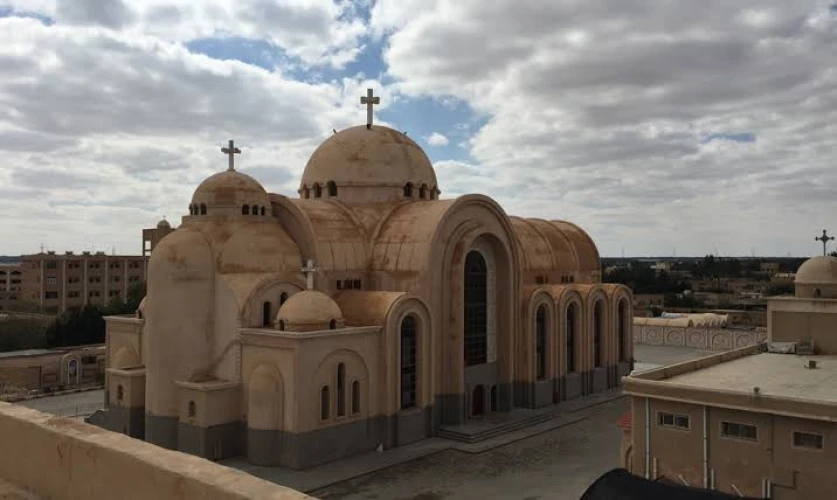
Holy Family Tour from Cairo to Minya and Assiut
The Flight of the Holy Family into Egypt is one of the most spiritually profound and historically captivating stories about ancient times. It is narrated by the Apostle Matthew and describes how Mary and Joseph took baby Jesus to Egypt to escape the bloodthirsty order of King Herod. Believers and non-believers, locals, and tourists who want to follow in the footsteps of the Holy Family have several popular routes to choose from. Most of them are concentrated in Greater Cairo and the desert monasteries of Wadi El-Natrun. However, there is an overlooked region further south with a rich Christian history that the Holy Family and the infant Jesus had to pass through on their way to the Nile Valley. This article provides comprehensive guidance on organizing a Holy Family tour from Cairo to Minya and Assiut along the length of the Nile River.
1. Southern Route Overview: Geography and Distances
The southern route extends for over 400 km to the south of Cairo along the banks of the Nile River. The distinct character of the journey through the territory of Minya and Assiut Governorates is justified by the following considerations:
Minya (Middle Egypt): Traditionally associated with caves and mountainous landscapes, this region is dotted with churches and monasteries. It was here that the Holy Family sought refuge in caves and villages. For example, the Gabil Teir inscription narrates how the pagan idols fell on the ground at the sight of Jesus and how the mountain boulders stopped rolling over the boat at Kaff Adra (the palm of the Virgin Mary).
Assiut (Upper Egypt): The southernmost point of the Holy Family’s flight into Egypt is linked to the Deir El-Muharraq Monastery. Joseph, Mary, and Jesus spent six months and ten days in the caves of Mount Qosqam. It was in Assiut that the Angel of the Lord appeared to Joseph in a dream and told him that Herod was dead and that it was safe to return to the land of Israel.
2. Itinerary: Day-by-Day Overview of the Journey
To fully appreciate the beauty of this region and the chance to follow in the footsteps of the Holy Family, it is recommended to plan a 5-day trip from Cairo to Assiut with an option to extend the journey to Luxor.
Day 1: Departure from Cairo and Introduction to the Local Landscape and Culture
Morning: Departure from Cairo. You may choose between a private air-conditioned car or a train to the south. The drive to Minya will take 3.5 to 4 hours. You will pass through the Eastern Desert road or the parallel Agriculture Road to the east of the Nile River.
Afternoon: Explore the mountainous and desert landscape around the ancient city of Samalut on the eastern bank of the Nile River. The short climb up the rocky hill to the rock-hewn Church of the Virgin Mary built by the Emperor’s mother, Empress Helena in 328 AD will provide spectacular views over the Nile Valley. Seek out the stone chamber where the Virgin Mary, Joseph, and Jesus spent the night. Gaze in awe at the rock formation known as Kaff El-Adra (the palm of the Virgin Mary), where baby Jesus is said to have stretched his hand to stop a huge boulder from rolling down the mountain and crushing their boat.
Evening: Arrive in the Minya city at the edge of the Nile River to view the sunset and have dinner.
Day 2: Discovering Ancient Middle Egypt
Morning: Head to El-Ashmunein (Hermopolis Magna), the ancient Greco-Roman city located to the south of Minya. Explore the local museum and the Greco-Egyptian stone pillars and pharaoh’s statues lying on the ground. According to Coptic tradition, the statues fell to the ground when Jesus entered the city.
Midday: Further explore the village of Dayr Al-Garns (Deir El-Garnous) with its ancient Church of the Virgin Mary. At the well outside the Church sanctuary, holy water from the infant Jesus is still said to cure diseases.
Afternoon: Finally, make your way to the village of Al-Bahnasa renowned for its early Christian traditions, ancient wells, and Coptic ruins to the west of the city.
Evening: Return to Minya for the night.
Day 3: Journey to Assiut and the Discovery of the Monastery of the Virgin Mary
Morning: Drive to Assiut (about 2.5 h from Minya). Make sure to enjoy the scenic views over the Upper Egypt countryside.
Midday: Explore Deir El-Muharraq (Al Muharraq Monastery) perched on a hillside of Mount Qosqam. This unique 1 st century monastery complex is referred to by the locals as the Second Bethlehem. It seems that Joseph, the Virgin Mary, and Jesus spent six months and ten days in a mud-brick house standing at the crossroads of this monastery. The stone altar in the 11 th century chapel is believed to be the oldest altar in the world. It is here that the prophecy of Isaiah 19:19 (“And in that day there shall be an altar to the Lord in the midst of the land of Egypt”) has come to pass.
In the afternoon, take a guided tour of the 12 th century hisn (keep) with its ancient manuscripts and wonderful monastic grounds, where you will be met by the resident Coptic monks.
Evening: Overnight in Assiut city.
Day 4: Cave Sanctuary of Mount Dronka
Morning: Drive to Assiut city to the southwest of Mount Dronka. Venture into the huge mountain cave sanctuary where the Holy Family took shelter from the floodwaters of the Nile before heading back to Nazareth. Explore the crypts, chapels, and candle niches hewn into the rock. Soak up the panoramic views over the Nile Valley.
Afternoon: Take a closer look at the village of Mir (famous for its caves) where the Holy Family was temporarily hosted by the locals before being ordered by an angel to return to the north.
Evening: Overnight in Assiut.
Day 5: Return Pilgrimage to Cairo
Morning: Have a relaxed breakfast while taking in the views over the Nile. Make your way back to Cairo, either by the road or by train. Contemplate the 800-km return journey through the heart of Egypt.
Late afternoon: In time for dinner, arrive in the capital.
3. Travel Tips
When organizing a trip to the Minya-Assiut region, keep in mind the following tips:
The best time to visit this region is in November-March, as temperatures in Middle and Upper Egypt rarely exceed 24 C. In the summer, it is too hot (over 40 C) to explore the mountains.
A recommended option for getting around is to hire a private air-conditioned minivan or car with a professional driver.
Hotels can be 3- or 5-star, depending on the guest category. They are generally located in the city along the banks of the Nile. It is worth mentioning that room availability should be booked in advance, especially during the Coptic holiday season.
When visiting ancient monasteries, caves, and crypts, dress modestly (shoulders and legs covered). In addition, you must observe the monastic hermitage rules: no photos (with permission) of the local monks and of the village’s ordinary inhabitants, and observe the decorum and silence of the interior of the crypts and monasteries.





-webp.webp "Hilton")
-webp.webp "dusit")
-webp.webp "Marriott Hotels")
-webp.webp "Azimut Hotel")
-webp.webp "Golden Tulip")
-webp.webp "sheraton")
-webp.webp "westin hotel")
-webp.webp "Movenpick")