


-webp.webp)
Explore Bahariya Oasis: Egypt’s Untouched Wonder
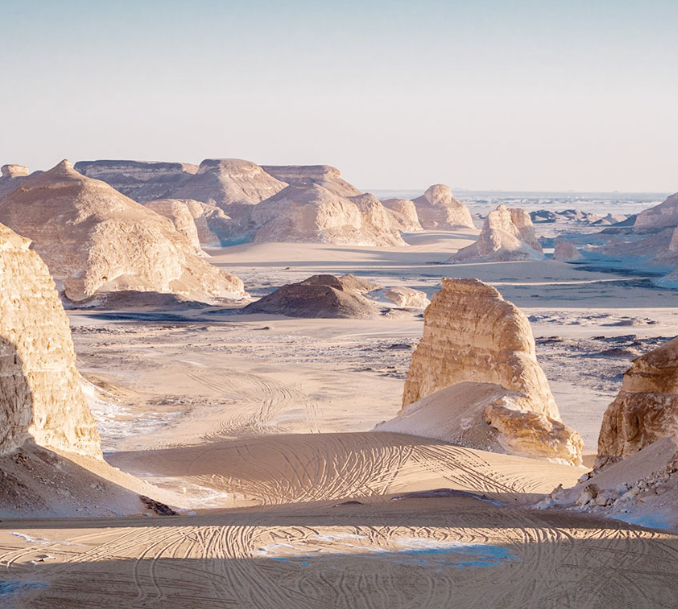
Discover Bahariya Oasis with New Travel Dynamics just 370 km from Cairo, this hidden gem in Egypt’s Western Desert blends breathtaking landscapes, rich history, and vibrant culture. Explore the White and Black Deserts, historic sites like the Golden Mummies Museum and Ain El Muftella Temple, and relax in the Bir Sigam hot springs. Perfect for adventurers and history lovers, Bahariya offers an unforgettable journey where nature, heritage, and serenity meet.
Discover the Grand Location of Bahariya Oasis
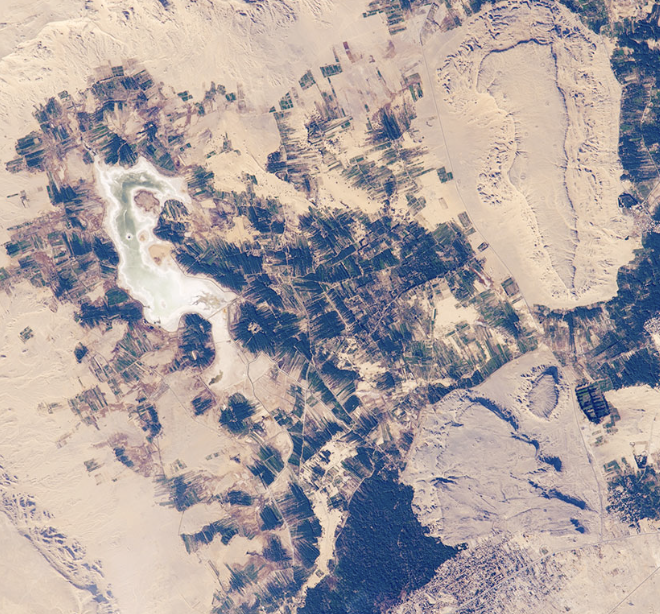
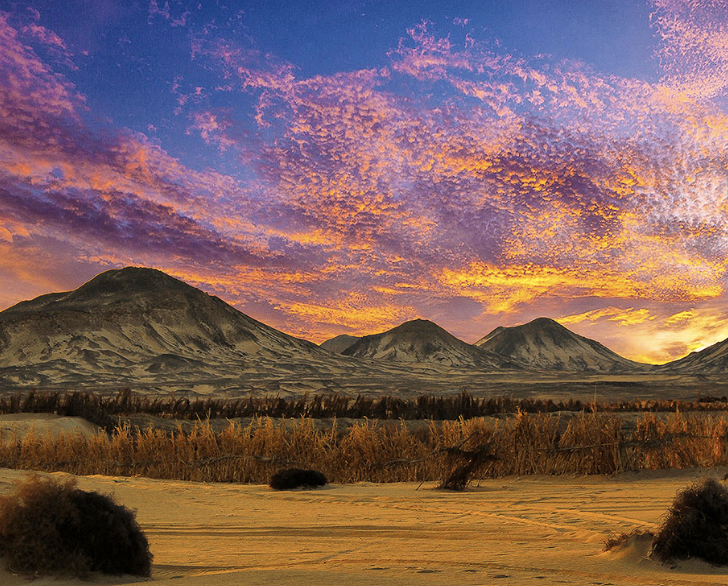
The Bahariya Oasis is 370 km north of the capital Cairo, it is 94 km long and 40 km wide, and covers an area of 2000 km². In the heart of the oasis is the capital, Bawiti. The Oasis is surrounded by various number of huge mountains like Ghurabi, Maghrafa, and Dist, and tourism and iron ore mining are the main economic sectors. Life can find the way as it produces agricultural products like guavas, mangos, olives, and dates. In the northernmost point of the oasis, in the small lake of Al Martin. There are also several natural hot springs in the north of the oasis. The Oasis holds a museum that contains a number of native artworks. It contains some massive mountains like Gebel Maghrafa, Gebel Ghurabi, and Gebel Dist, also known as the English Mountain.
Learn the Meaning Behind the Bahariya Oasis
The name Bahariya was known to be derived from the word "Bahr", which means in Arabic the "Sea".The word refers to the Mediterranean Sea and the Northern lands of Egypt in ancient times. The Pharos named the Bahareya Oasis "Desdes," while the Romans named Bahariya "Parva," or the little oasis.
The Great Towns of Bahariya Oasis
The Bahareya Oasis is known to be the home of more than thirty thousand people who primarily live in the four main towns of the oasis which include Bawiti the capital and the center point of the Bahareya Oasis Al Qaser which is the ancient village in the Bahareya Oasis Mandisha and Zabw.
The area between the towns of Bawiti and Al Qaser contains a number of mountains with many ancient necropolises which include the Necropolis of Qarat Subi and the Abis necropolis of Qarat Feragi.
The Bahariya Oasis has many hot springs which include Ain Bishmu that dates back to Roman times and Bir Al Nebag which is located in Bawiti and Bir Matar which is located further to the North. The Northernmost point of the Bahareya Oasis contains the small lake of Al Marun which is bordered by areas that attract numerous uncommon bird species.
The Marvelous Climate of the Bahariya Oasis
Summer (May to September):
Summers are extremely hot and dry, with temperatures ranging from 30°C to 40°C (86°F to 104°F) or higher. Heatwaves can push the mercury beyond 45°C (113°F). The lack of humidity and rain contributes to the dry and dusty environment, but nights can be slightly cooler.
Winter (November to February):
Winters in Bahariya Oasis are mild and pleasant, with daytime temperatures between 15°C and 25°C (59°F to 77°F). However, nighttime temperatures can drop sharply, falling to around 5°C to 10°C (41°F to 50°F), so warm clothing is recommended for evening outings.
Spring and Autumn (March to April & October):
Spring and autumn are ideal times to visit the oasis, with moderate temperatures ranging from 20°C to 30°C (68°F to 86°F). These seasons offer comfortable conditions for exploring the surrounding natural wonders and archaeological sites.
Rainfall:
Like much of Egypt’s desert, Bahariya receives very little rain, with sporadic showers occurring mainly during the winter. The average rainfall is less than 10 mm per year, contributing to its dry, desert landscape.
Explore the Rich History of Bahariya Oasis
The Bahariya Oasis has a rich history of human habitation that dates back to the Neolithic period. The first significant settlements were established during ancient Egypt's Middle Kingdom (1975–1640 BC). Archaeological discoveries highlight this long history, including a prehistoric hunter-gatherer site at El Heiz and an Old Kingdom settlement at Qārat el-Abyaḍ.
Rock inscriptions from the Middle Kingdom period together with later rock inscriptions were discovered at the site of el-Harrah. The strategic position of Bahariya during the 18th Dynasty enabled it to become an essential political center because it served as a major trade link between the Western Desert and Libyan tribes and the Nile Valley.
The tomb of Amenhotep Huy stands as a significant historical site from this period. The oasis transformed into a busy commercial center by the 26th Dynasty based on the trading activities which developed around the chapels at 'Ain el-Muftilla and the tombs at Qārat Qasr Salim and Qarat esh-Sheikh Subi.
The Greco-Roman period between 332 BC and 395 AD brought great economic success to Bahariya. The oasis became famous for its production of wine and olive oil and dates and cereals. The Qasr el-Miqisba temple serves as an important historical monument from this period because Alexander the Great dedicated the temple to the god Ammon. The Valley of Golden Mummies represents one of the most important archaeological discoveries in the area because researchers found thirty-four tombs there during their 1999 excavation.
Roman soldiers built a fort at Qarat el-Toub and archaeologists discovered a Roman mummy and multiple artifacts at el-Harrah in 2010. The research team found 19 buildings during their later excavations which included a church that dated back to the 5th century. The oasis developed religious importance during the early Christian period which became evident when archaeologists uncovered a monastic complex that included three churches and monks' cells in 2021.
Bahariya's connectivity to the rest of Egypt in the modern era greatly improved with the construction of the Bahariya Military Railway during World War I and an asphalt road in the 1970s, linking the oasis to Cairo. These developments brought modern infrastructure and facilitated cultural exchange, influencing the evolution of the local Waḥātī language, which has since incorporated elements from Cairo’s dialect.
Shed Light On the Mysterious Attractions of Bahariya Oasis
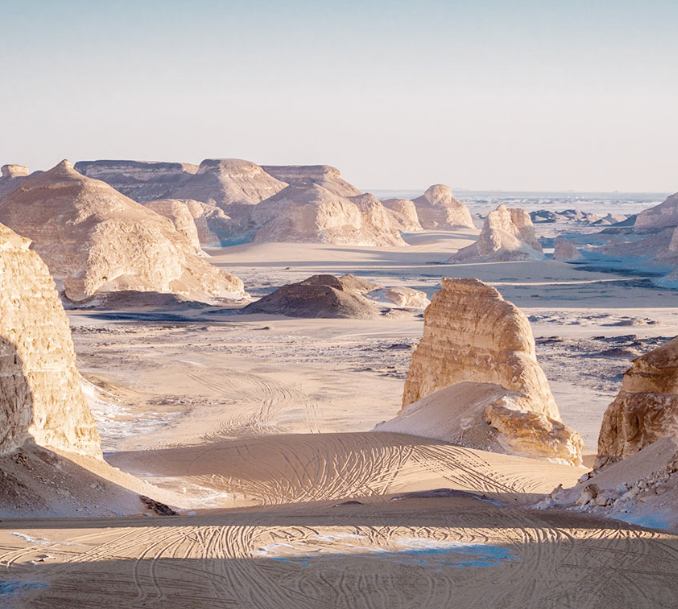
The oasis of Bahariya spreads across 2000 km² while it contains multiple stunning sites that demonstrate the natural beauty and ecological riches of this sacred oasis. The most remarkable attractions of Bahariya showcase their diverse forms and colors to present the most extraordinary stories and information. The most famous attractions in Bahariya include:
White Desert
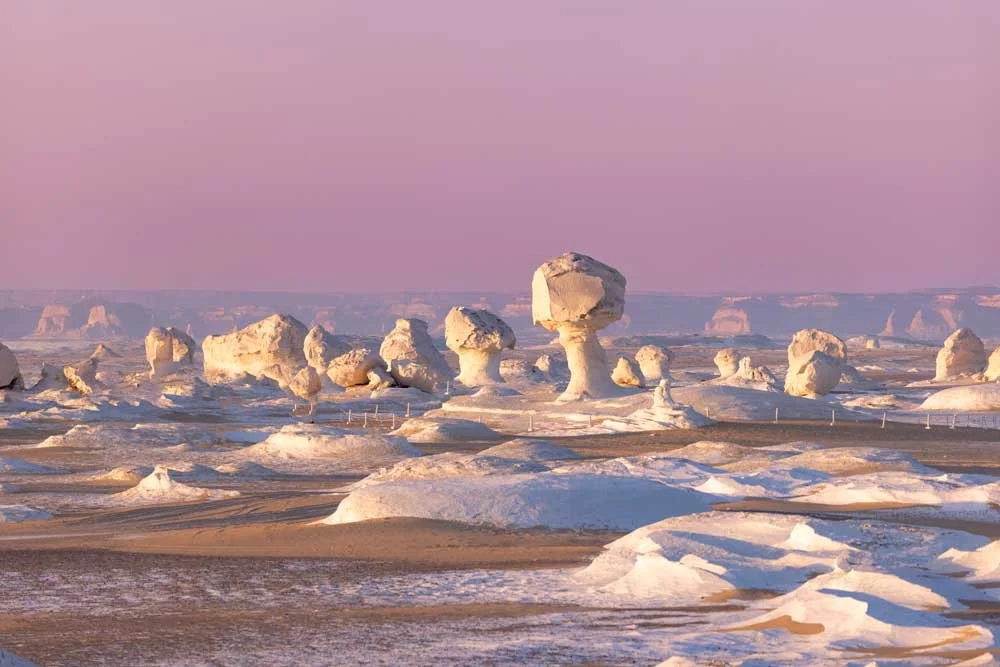
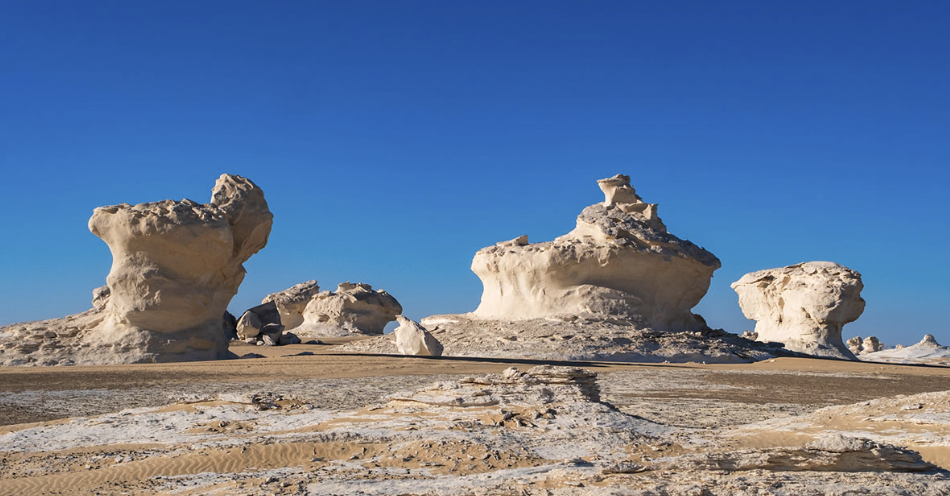
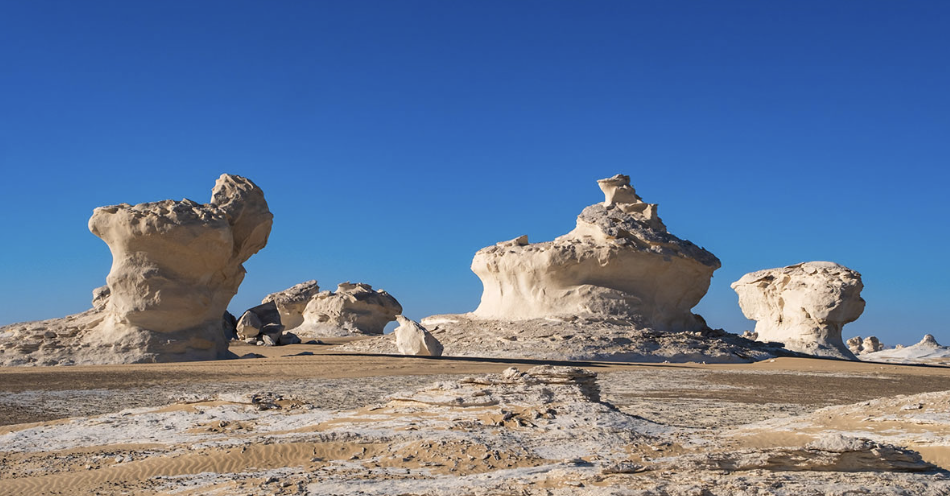
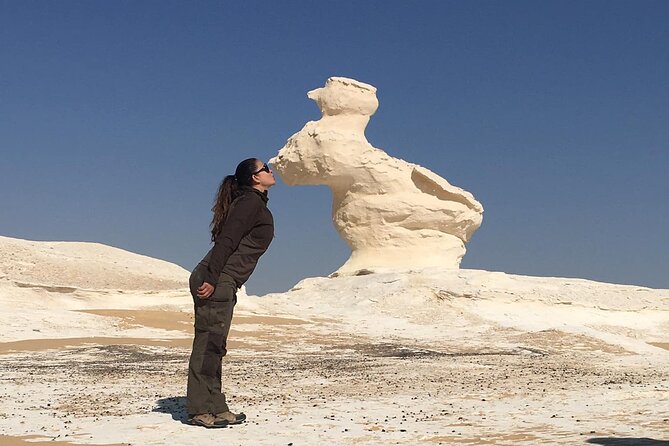
The White Desert (Sahara el Beyda) stands as one of Egypt's most otherworldly landscapes which extends around 45 km north of Farafra Oasis and approximately 100 km south of Bahariya Oasis throughout the Western Desert. The desert attracts visitors because of its special rock formations which appear white and chalky. The rock formations have been reshaped over thousands of years through wind and sand erosion into shapes that look like giant mushrooms and icebergs and animals and abstract shapes.
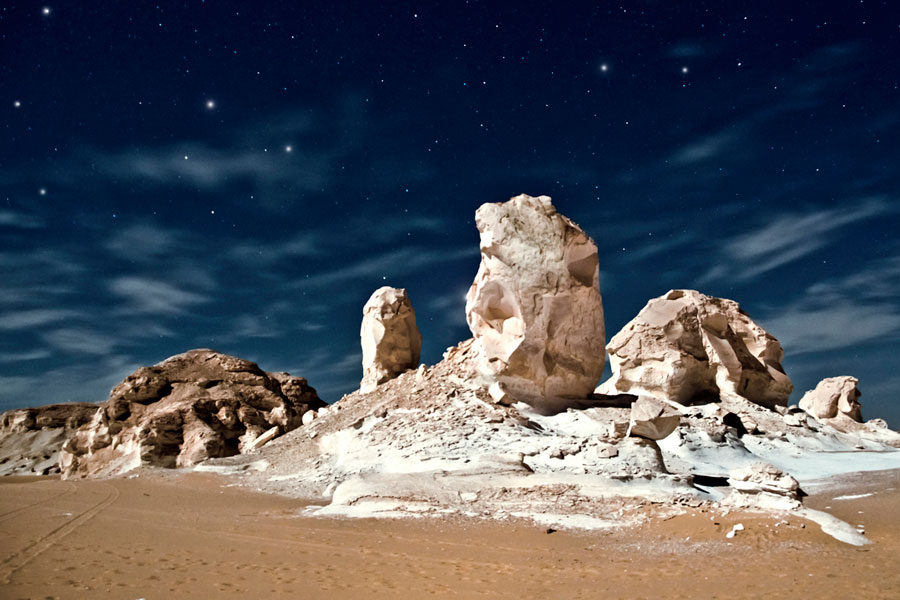
The strange ghostly shapes of these formations change their colors throughout the day because they display bright white in the noon sun and glowing orange or pink at sunset. The desert attracts visitors who want to spend the night because it offers them a chance to experience the peaceful beauty of the desert and the special nighttime views.
The location offers excellent stargazing opportunities because it experiences no light pollution throughout the area. The White Desert shares the same dry weather patterns as the rest of the Western Desert which features extremely hot daytime temperatures and chilly nighttime temperatures that occur during the winter season.
Tourists need to make proper necessary preparations. The White Desert appears empty, but the area contains various desert animals that include foxes and gazelles and multiple bird species. Visitors usually discover the White Desert through Bahariya Oasis tours which take them to adjacent attractions like the Black Desert and Crystal Mountain.
Black Desert
The Black Desert lies between Bahariya Oasis and the White Desert and offers a stark contrast to the pale rock formations of its neighbor. It gets its name from the dark, volcanic rock that covers the landscape, giving it a black, eerie appearance. The Black Desert is covered with small, black volcanic stones, remnants of long-extinct volcanoes dating back millions of years.
These stones are scattered across sandy plains, giving the ground a distinctive black hue. Some areas feature black-topped hills, which stand out dramatically against the yellowish sand. Visitors can climb some of the small volcanic hills for panoramic views of the surrounding landscape. The contrast between the black stones and the pale sand creates a unique and photogenic scene.
The Black Desert is often included in day trips or multi-day excursions with tours to the White Desert, as they are located relatively close to each other. While the Black Desert is not as famous as the White Desert, it offers an equally intriguing and dramatic landscape for those seeking a diverse desert experience.
Golden Mummies Museum
The Golden Mummies Museum in Bahariya Oasis is one of the most amazing modern discoveries in the world of Egyptian archaeology, as it houses a collection of mummies discovered in the nearby Valley of the Golden Mummies, which is a significant archaeological find dating back to the Greco-Roman period. The mummies are famous for their lavishly gilded faces and the wealth of treasures found with them.
The Valley of the Golden Mummies was discovered in 1996 by Egyptian archaeologist Zahi Hawass. The site revealed hundreds of mummies dating back to the Greco-Roman period (332 BC to 395 AD). Many of the mummies are remarkably well-preserved, with gilded masks covering their faces, indicating that they belonged to wealthy individuals. The tombs also contained artifacts such as jewelry, pottery, and amulets, offering insight into the funerary practices of the time.
The museum showcases a selection of these mummies, along with other items found during excavations, such as intricate sarcophagi and everyday objects from the ancient period. The exhibits offer a glimpse into life and death in Egypt during the Greco-Roman era. The Golden Mummies Museum plays a vital role in educating visitors about the cultural exchange between ancient Egypt and the Greco-Roman world, illustrating the fusion of artistic styles and religious beliefs.
Tomb of Bannentiu
The Tomb of Bannentiu is a significant archaeological site in Bahariya Oasis, dating back to the 26th Dynasty of ancient Egypt (the 6th century BC), known for featuring a wide selection of magnificent and diverse artifacts. It was discovered in 1938 and is known for its well-preserved wall paintings and rich decorations. Bannentiu was a wealthy individual and a priest during the 26th Dynasty.
His tomb reflects his high status, with intricately painted walls depicting religious scenes, offerings to the gods, and symbols of the afterlife. The tomb’s colorful murals are a highlight for visitors as they feature images that show Bannentiu in the presence of gods such as Osiris, the god of the afterlife, and Anubis, the god of mummification. The paintings also include scenes of the deceased receiving offerings, which is a common theme in ancient Egyptian funerary art.
The tomb is small but elaborately constructed, with a burial chamber and antechamber. Its detailed craftsmanship offers insight into the religious practices and artistic achievements of the period. The Tomb of Bannentiu is located near other ancient sites in Bahariya Oasis, including the Tomb of Zed-Amun-ef-ankh, and it gives visitors a chance to explore Egypt's lesser-known pharaonic history.
Temple of Ain El Muftella
The Temple of Ain El Muftella is a complex of ancient chapels located in Bahariya Oasis, which dates back to the 26th Dynasty and was used as a religious center during that period. The temple consists of several small chapels dedicated to various gods, including Amun and Horus. The chapels are well-preserved, with beautifully decorated walls that feature hieroglyphic inscriptions and depictions of the ancient Egyptian gods.
The temple was constructed around a natural spring, which was considered sacred and used for religious rituals. This water source (Ain) was crucial to the people living in the oasis and added to the temple's religious significance.
Ain El Muftella was an important religious site for the inhabitants of Bahariya Oasis, reflecting the oasis's role in the wider Egyptian empire during the 26th Dynasty. The site provides insights into how the ancient Egyptians viewed and utilized oases for both practical and spiritual purposes.
Bir Sigam Hot Spring
Bir Sigam is a natural hot spring located around 7 km from Bahariya Oasis, famous for being a popular stop for tourists seeking relaxation and therapeutic benefits after exploring the desert and ancient sites. The spring water at Bir Sigam is naturally heated by geothermal activity and is believed to have therapeutic properties. It is famous among travelers who come to bathe in the mineral-rich waters, which are said to help with ailments such as joint pain and skin conditions.
The water temperature can be quite hot, especially in the winter months when visitors find it most comfortable. The spring provides a welcome break from the cooler desert air at night or during the winter. Bir Sigam is surrounded by the rugged beauty of the desert, offering a serene and peaceful environment for visitors to unwind.
It's a great spot for travelers to relax after a day of exploring the nearby White or Black Deserts. The hot springs of Bir Sigam, along with other thermal springs in the region, are a reminder of the natural resources that have supported life in Egypt’s oases for centuries.
Witness the Majestic Hotels in Bahariya Oasis
While Bahariya Oasis is a remote desert destination, it offers a variety of accommodations, from basic guesthouses to more comfortable lodges, catering to travelers seeking both adventure and relaxation. Here are some popular options:
Ahmed Safari Camp and Hotel
Located near Bawiti (the main town of Bahariya), this hotel offers a traditional desert lodge experience. It provides clean, simple rooms with basic amenities and a peaceful garden. The staff often arranges tours to the White Desert and the Black Desert. A great choice for budget travelers.
Qasr El Bawity Hotel
Qasr El Bawity is one of the more upscale choices in Bahariya Oasis. It blends traditional architecture with modern comforts, offering a mix of standard rooms and suites. The property has a swimming pool, a restaurant, and offers various desert tours and activities.
International Hot Spring Hotel
Known for its naturally heated hot springs, this hotel is located near the heart of Bahariya. It’s popular with visitors seeking relaxation and wellness experiences. The rooms are basic but comfortable, and guests can enjoy the outdoor pool and hot spring baths after a day of exploring the desert.
Old Oasis Hotel
A smaller, family-run hotel, Old Oasis is a more intimate and budget-friendly option for visitors. Located in the village of Bawiti, it offers traditional food, simple rooms, and personalized tours of the nearby desert attractions.
Desert Fox Camp
For those looking for a more adventurous experience, Desert Fox Camp offers a desert camping experience with basic amenities. It is perfect for travelers who want to connect with nature and enjoy the tranquility of the desert under the stars.
The Powerful Safety of Bahariya Oasis
Bahariya Oasis is generally considered a safe destination for tourists, especially those traveling with tour operators or guides. The oasis is located in the Western Desert, which is remote and sparsely populated. It's advisable to check the latest travel advisories from your government or the Egyptian Ministry of Tourism, especially if planning to travel independently. If you plan to explore the surrounding desert, it's crucial to go with an experienced guide who knows the terrain.
The desert is vast and can be dangerous if you're unfamiliar with it. Always carry plenty of water, wear sun protection, and avoid traveling during the hottest part of the day. Bahariya has limited medical facilities, so it's a good idea to carry basic medical supplies. Drink bottled or purified water and be cautious when trying unfamiliar food. While malaria is not a risk, it's still recommended to use mosquito repellent, especially near any oases. Crime rates are low in the oasis, and locals are generally hospitable.
However, it's always a good idea to keep your belongings safe and be aware of your surroundings, particularly in busier tourist areas like Bawiti. Although wildlife in the area is limited, always be cautious around desert animals and insects. Some snakes and scorpions can be found in the desert, so avoid handling wildlife and wear appropriate footwear when walking in the desert.


-webp.webp "Hilton")
-webp.webp "dusit")
-webp.webp "Marriott Hotels")
-webp.webp "Azimut Hotel")
-webp.webp "Golden Tulip")
-webp.webp "sheraton")
-webp.webp "westin hotel")
-webp.webp "Movenpick")