


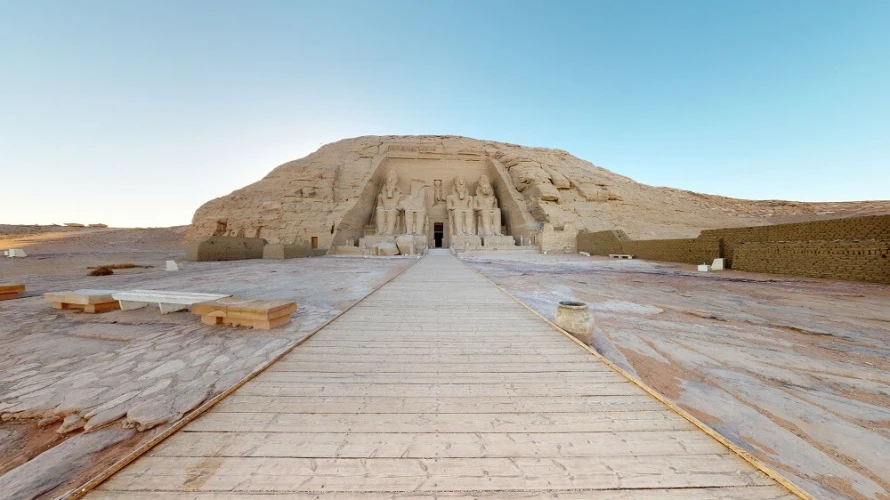
The Sunrise at Abu Simbel Temples Experience
Sunrise in Abu Simbel is to be regarded as one of the most magical moments in all of Egypt. The view is the lively nature which awe-struck you with the blend of feelings of history and a slight dusky atmosphere. Bringing the hardest light in the day via a desert horizon, the immense rock-cut temples emerge ascending in a slow and grand style from the obscurity to create a dramatic and spiritual setting. There can be some ceremonial feeling at this moment, the limpid, early morning air with its soothing chill, which even more enhances the awe, probably steeping it further into the visitors' consciousness by shutting out the normal-day bustle somehow.
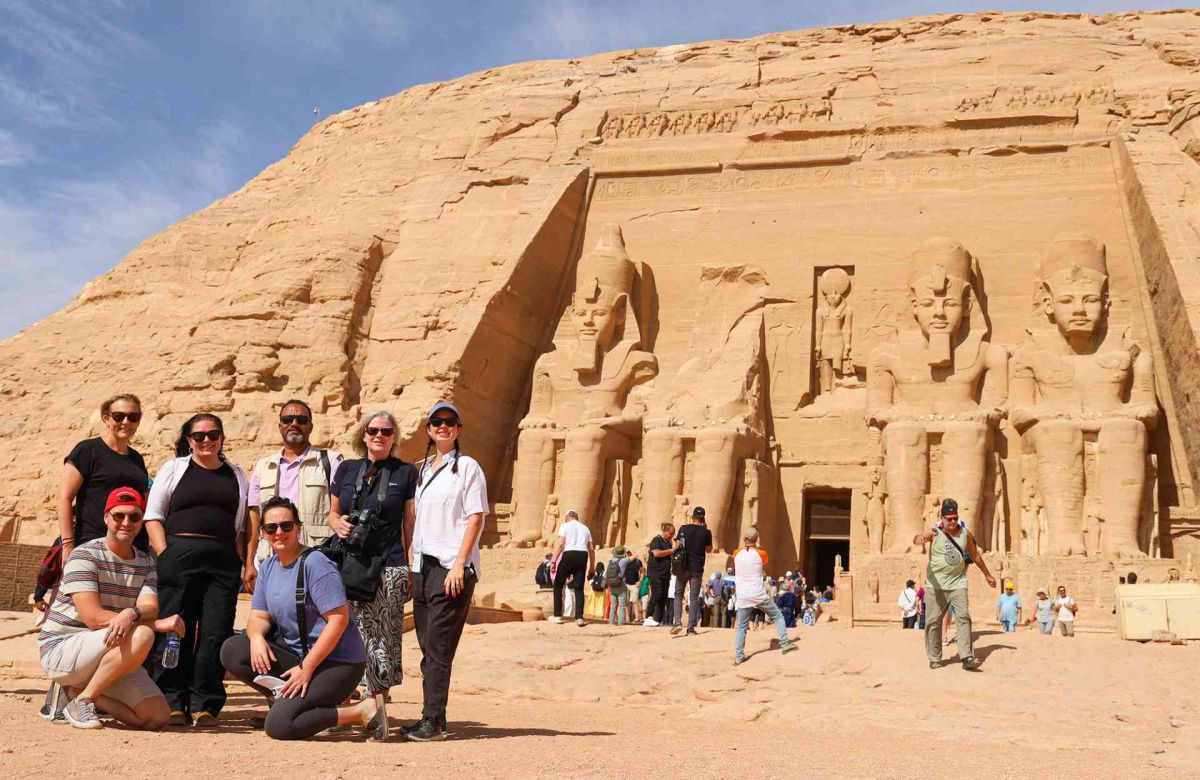
As the sun climbs higher in the sky, its yellow rays breathe golden light into the monstrous statues of Ramses II, dramatically bringing their refined carvings and an intense expression to life. The soft light enhances the façade in ways one would never be able to see during the rest of the day. At this moment of pristine calm, one can easily use their camera to take candid photographs, reflect on the history of ancient Egypt, and relate in greater depth.
The quiet serenity and the ageless architecture linger together to transform Abu Simbel into a special kind of adventure that captures the experience of living with Egypt's historic and cultural richness, and the beauty is just breathtaking at dawn.
Abu Simbel Begins Before Sunrise
In 2026, the journey to Abu Simbel has gotten a lot smoother. Most travelers still take the 3:30 AM convoy from Aswan. It sounds brutal, but there is a strange, human camaraderie in that early morning desert drive. You’re in a van with other travelers from all over the world, watching the stars fade over the Sahara.
By the time you pull into the parking lot at 6:00 AM, the air is crisp, and the sky is turning a deep, dusty purple. You walk around the corner of a massive man-made hill, and suddenly, there they are: four 20-meter-tall statues of Ramses II, carved directly into the mountain, staring out across Lake Nasser.
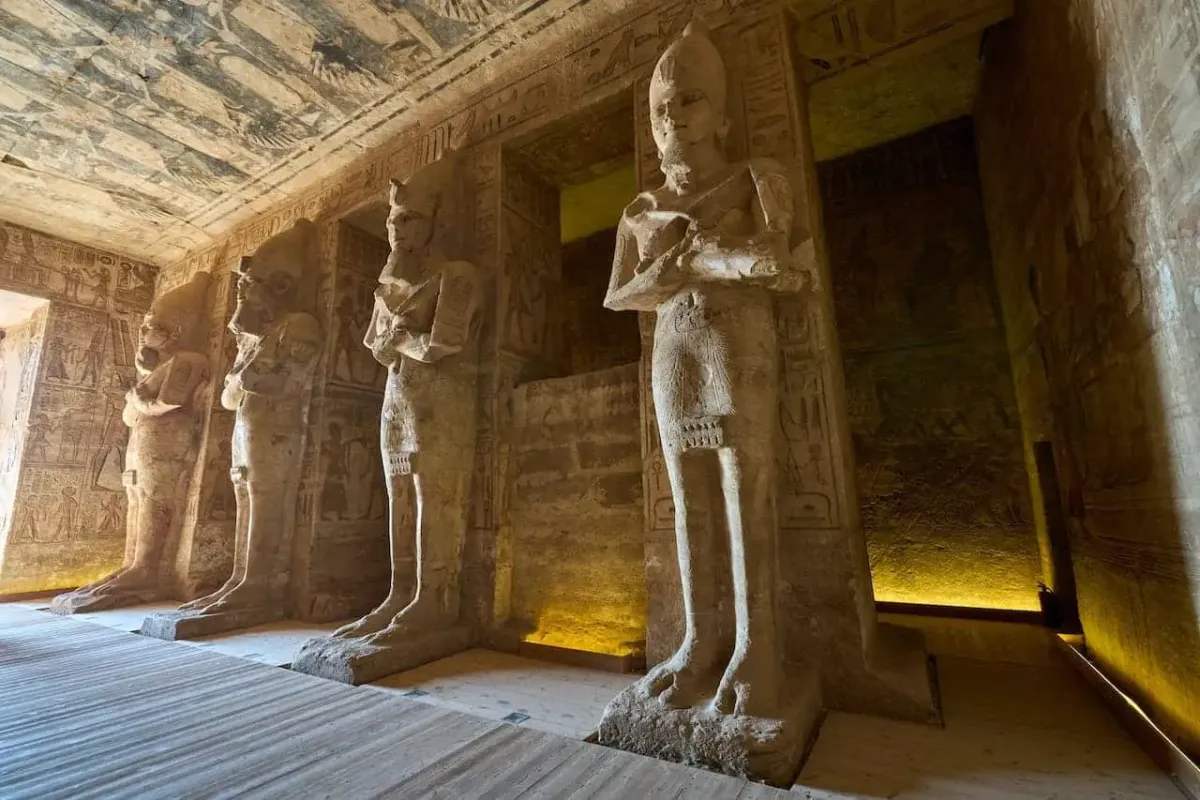
The Solar Alignment: A 3,000-Year-Old Miracle
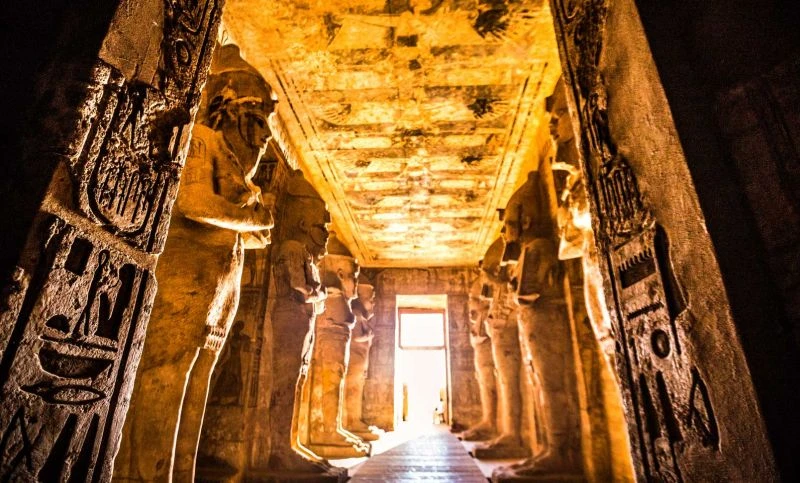
If you happen to be there on February 22nd or October 22nd, you’re witnessing the "Sun Festival." This is when the sun aligns perfectly with the temple's entrance. The light travels 60 meters deep into the mountain to illuminate the statues of the gods in the inner sanctuary, except for the god of darkness, who stays in the shadows.
But even on a "normal" day in 2026, the sunrise is spectacular. As the sun peeks over the horizon of Lake Nasser, the sandstone turns from a cold grey to a fiery, glowing orange. For about ten minutes, the statues look like they are made of liquid gold. It’s the kind of moment where a crowd of 200 people goes completely silent.
How Abu Simbel Was Saved from the Waters
What makes Abu Simbel even more mind-blowing for a modern traveler is the "Human" story behind it. In the 1960s, this entire temple was going to be swallowed by the Nile because of the new Aswan High Dam.
In a massive international effort, engineers cut the temples into 2,000 massive blocks (some weighing 30 tons) and moved them 60 meters up the cliff. They rebuilt the mountain around them. When you stand inside the temple in 2026, you can’t even see the "seams." It’s a testament to what humans can do when we decide that history is worth saving.
The Beauty of Nefertari’s Temple
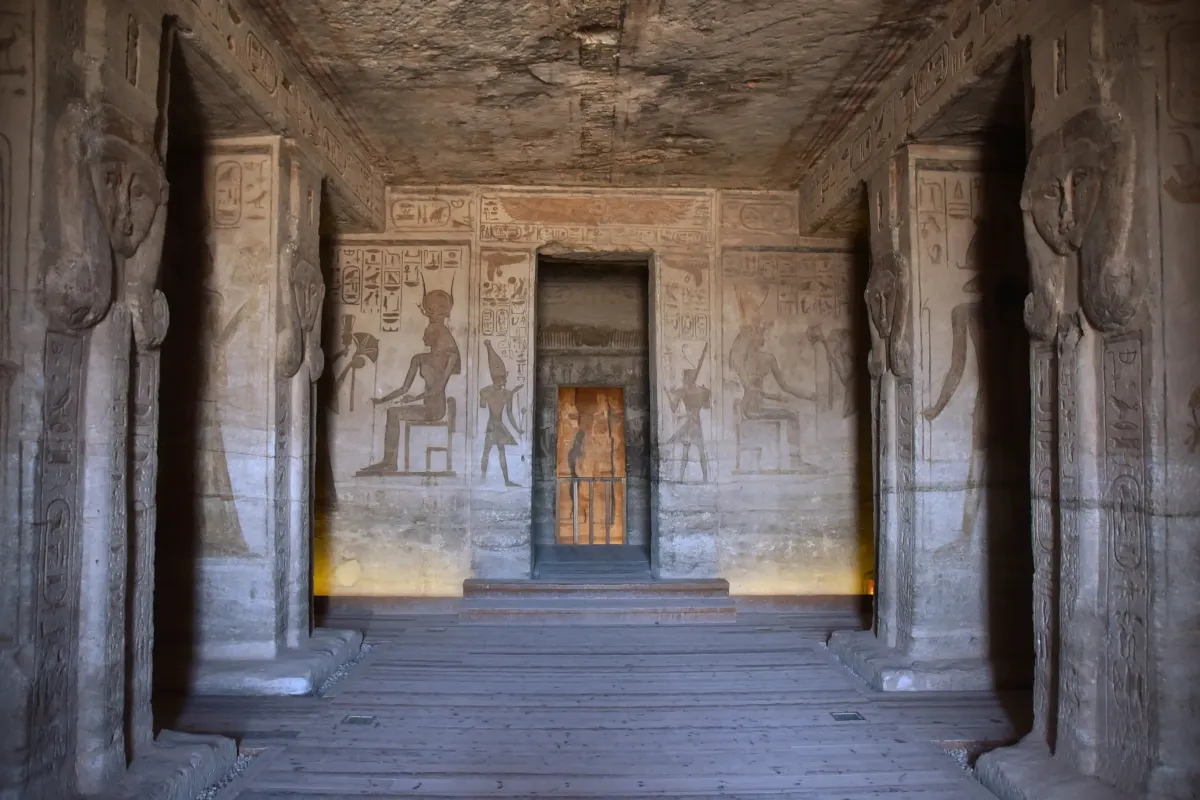
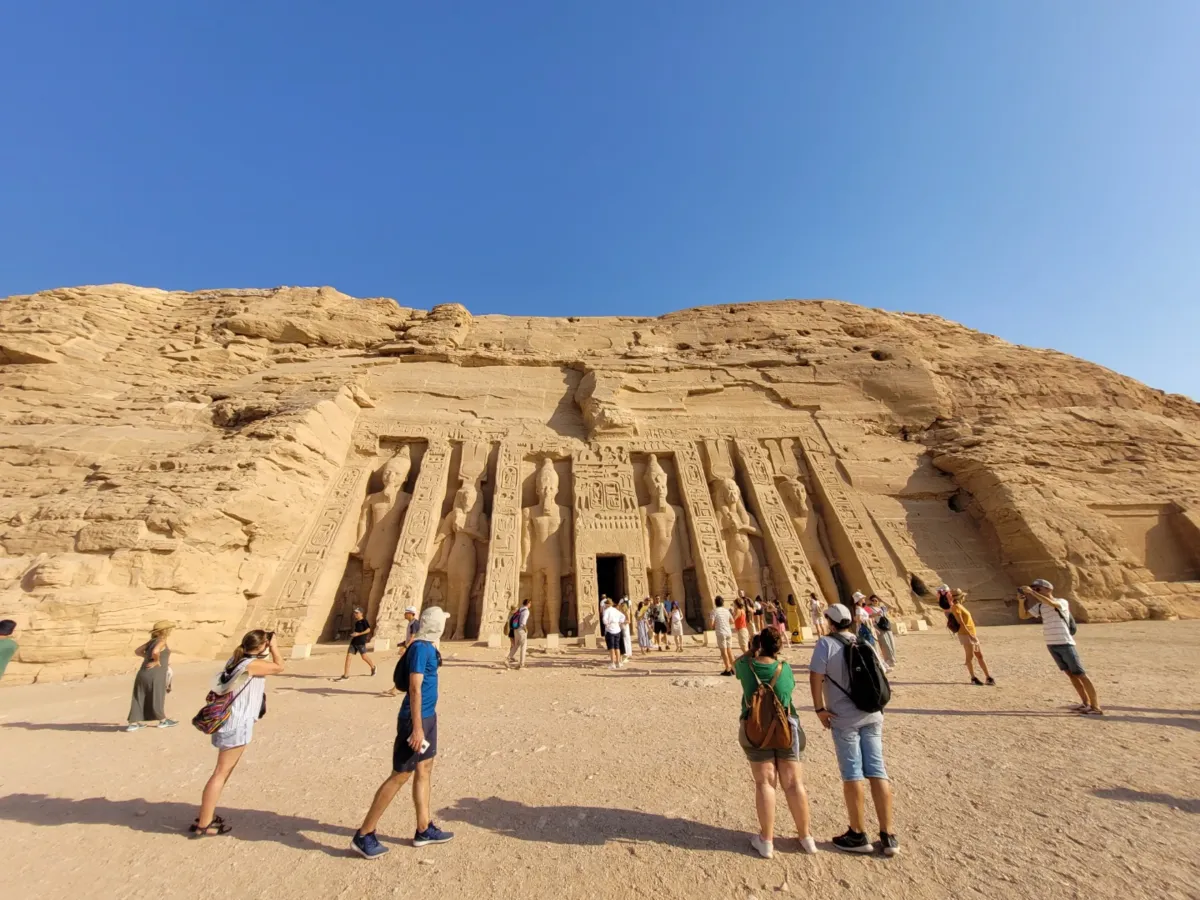
Right next to the Great Temple of Ramses is a smaller, but equally beautiful temple dedicated to his wife, Queen Nefertari. What’s unique here is that the statues of the Queen are the same size as the King, a huge statement of love and respect in ancient times.
The interior of Nefertari’s temple is much more "intimate." The colors of the offerings and the goddesses on the walls have survived incredibly well. In 2026, the new fiber-optic lighting inside makes the blue and red pigments look remarkably fresh.
Your 2026 Guide to Reaching Abu Simbel
You have three main options to reach Abu Simbel in 2026, depending on your budget and energy levels:
The Flight (The "Luxury" Move): There are 45-minute flights from Aswan to Abu simbel temples. It’s expensive, but it saves you 6 hours of driving and gives you an incredible view of the desert from above.
The Private Van (The "Human" Choice): Instead of the big tour buses, hire a private driver. You can leave at 4:00 AM, beat the big groups, and have the temple almost to yourself for the first 30 minutes.
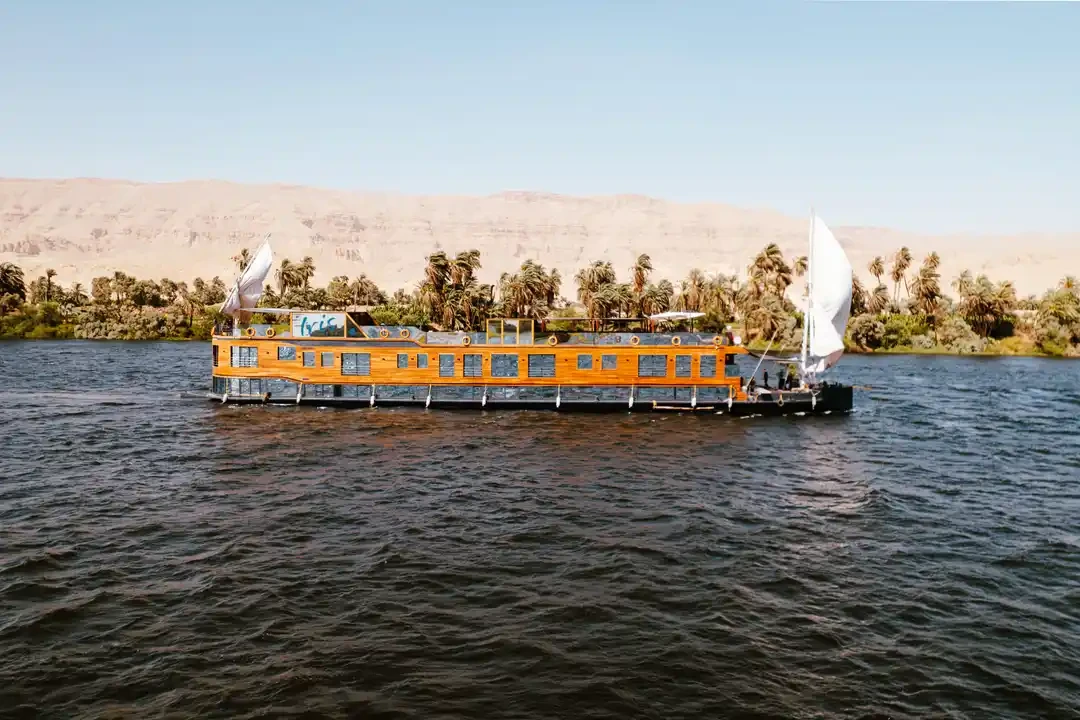
The Lake Nasser Cruise: This is the most romantic option. You stay on a boat on the lake and dock right at the temples. You can literally walk off your boat and onto the site at dawn.
Essential Tips for Visiting Abu Simbel in 2026
The "Coffee" Hack: The kiosks at Abu Simbel in 2026 are pricey. Pack a breakfast box from your Aswan hotel and bring a thermos of coffee for that 6:00 AM wait.
Photography: The best shots aren't of the statues themselves, but of the reflection of the sunrise in the massive, glass-like water of Lake Nasser.
Dress in Layers: The desert is freezing at 4:00 AM and boiling by 10:00 AM. Wear a hoodie over a light t-shirt.
The "Hidden" Museum: There’s a small documentary center near the exit that shows the 1960s movie. Don't skip it; it makes you appreciate the stones a lot more.
Abu Simbel is the ultimate "end of the road" destination in Egypt. It’s powerful, it’s quiet, and at sunrise, it feels like you’ve reached the very edge of the ancient world.




-webp.webp "Hilton")
-webp.webp "dusit")
-webp.webp "Marriott Hotels")
-webp.webp "Azimut Hotel")
-webp.webp "Golden Tulip")
-webp.webp "sheraton")
-webp.webp "westin hotel")
-webp.webp "Movenpick")