 English
 Italy
Italy
Luxor East Bank: Temples, History & Must-See Landmarks
Visitors use the term world's greatest open-air museum" to refer to Luxor. The East Bank of the city maintains its ancient majestic heritage while contemporary Egyptian society thrives across its territory. The city features monumental temples which illuminate with golden light during sunset and share ancient tales about deities and pharaohs and historical kingdoms.
The complete East Bank historical background together with its essential sites exists as your ultimate resource for Upper Egypt site planning.
Karnak Temple Complex – The Largest Religious Complex in Ancient Egypt
The visitor experience in Luxor requires a stop at Karnak. The extensive complex construction started during the Middle Kingdom period and continued until the Ptolemaic period while builders dedicated the site to the god Amun-Ra.
The site contains these essential elements which customers must see:
The Great Hypostyle Hall with 134 massive columns
The Sacred Lake serves as a location for religious ceremonies
The site contains the Obelisks of Hatshepsut and Thutmose I
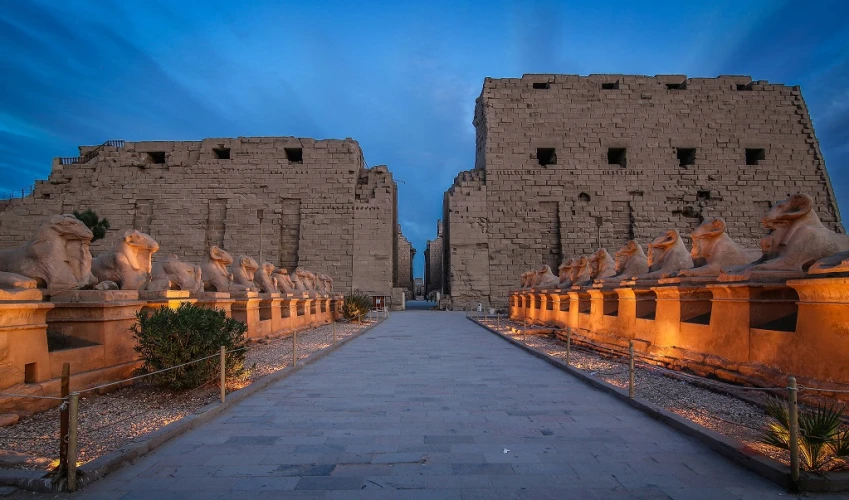
The Avenue of ram-headed sphinxes
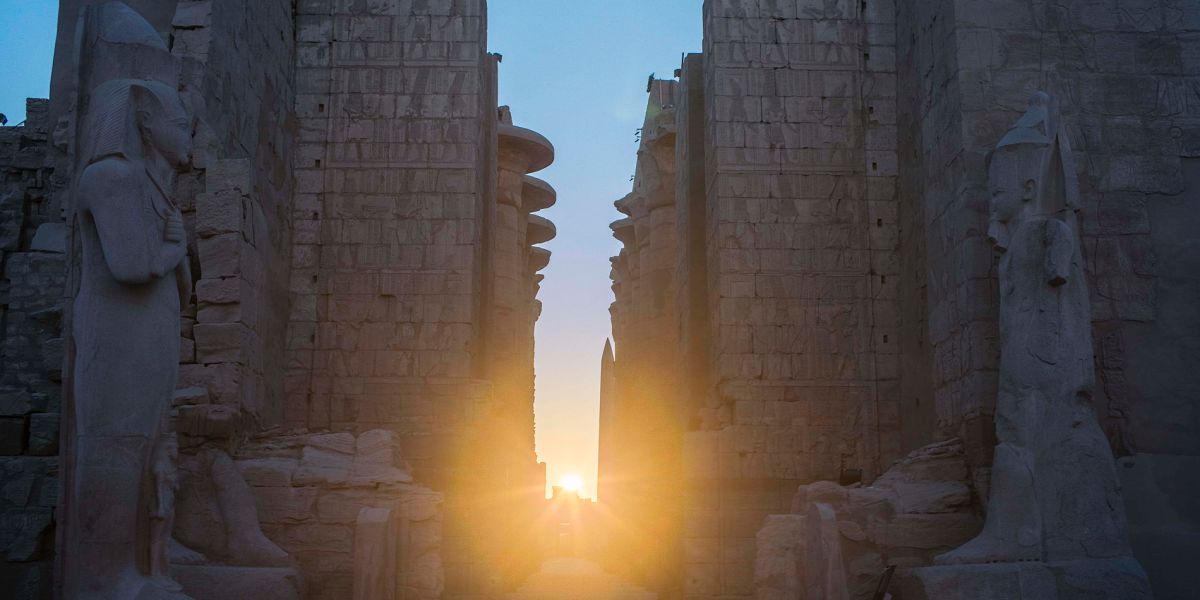
Visitors to Karnak experience the sensation of walking through a stone forest which features towering pillars that display intricate hieroglyphic engravings which depict stories about divine power and royal triumphs.
Pro Tip: Visit in the late afternoon to avoid the heat and stay for the sound and light show.
Luxor Temple – The Temple of Kingship
Located right in the city center along the Nile Corniche, Luxor Temple is beautifully illuminated at night. This temple functioned as the main space where kings received their royal renewal at Karnak.
The main attractions at the site include:
The gigantic statues of Ramses II
The remaining obelisk (its twin stands in Place de la Concorde in Paris)
A mosque constructed on the ancient site contains multiple historical periods
The recent restoration of Avenue of Sphinxes has created a path that connects Luxor Temple to Karnak for visitor access.
-card_webp.webp "Princess Farida Dahabiya")




-webp.webp "Hilton")
-webp.webp "dusit")
-webp.webp "Marriott Hotels")
-webp.webp "Azimut Hotel")
-webp.webp "Golden Tulip")
-webp.webp "sheraton")
-webp.webp "westin hotel")
-webp.webp "Movenpick")