
 EN
 IT
 ES
 FR
 ZH
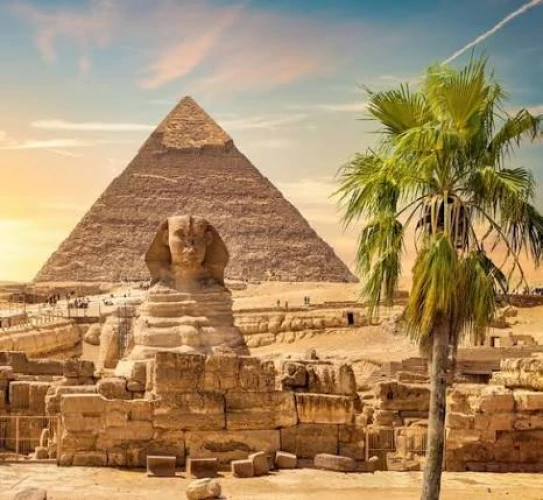
Why Were Pyramids Built as Royal Tombs?
The pyramids of ancient Egypt are some of the most iconic tombs ever created. These massive structures were built to help the pharaoh achieve immortality through the use of amazing technology.
Understanding the meaning behind their design, changes in design, use in tombs and their importance will help you fully understand the significance of the pyramids located in Giza, Saqqara, Dahshur and Meidum.
1. Meaning Behind The Design - The Primeval Mound and The Sun
All aspects of the ancient Egyptian pyramids have a great meaning within Egyptian religion.
The Primeval Mound (Benben) – The first dry land to arise from the primordial waters (Nun) was a primeval mound, known as the Benben. This is where the creator god stood to create light. The pyramids were built to mimic this creation by placing the Pharaoh's body underneath a massive mound of stone to help him be reborn.
Staircase to the Stars – The early staircase pyramids (King Djoser's pyramid at Saqqara) were intended to represent a massive staircase to allow the dead king to ascend to the northern night sky where he could join the Imperishable Stars (stars that never set).
Sun Rays of Ra – By the Fourth Dynasty the pyramid was completely transformed into a true triangle. The sloped sides were now smooth and angled outwards to reflect the rays of the sun shooting through the clouds. This allowed the pharaoh's spirit to ascend up the rays so they could merge with Ra.
2. Development Of The Pyramids
The creation of royal tombs was a gradual process that happened over many years.
Early Dynasties – The first and Second Dynasty kings were buried underground in a rectangular structure with a flat roof made from mud bricks. These were known as Mastabas.
Step Pyramid of Djoser – The royal architect Imhotep built the first massive stone structure in the world by stacking 6 Mastabas together to create the Step Pyramid at Saqqara (circa 2670 BCE).
Experiments – During the reign of King Sneferu, the architects tried to turn the pyramid into a smooth sided pyramid. This resulted in the pyramid at Meidum collapsing. They then built the famous Bent Pyramid (the engineers changed the angle midway so it would not collapse). Finally they built the Red Pyramid at Dahshur which was the first true smooth sided pyramid.
Giza – Sneferu's son Khufu perfected the design of the pyramids along with Khafre and Menkaure. Their pyramids are located on the Giza Plateau and were aligned to incredible accuracy with the 4 compass points.
3. The Interior Of The Pyramid Complex
The pyramids were always part of a massive religious complex.
Valley Temple and Causeway – The Valley Temple was located on the edge of the flood plains of the Nile. This is where the mummified king would arrive by boat to be purified and have the Opening of the Mouth. They would then enter onto a long covered causeway leading to the pyramid.
Mortuary Temple – The mortuary temple was built directly onto the eastern side of the pyramid (facing the rising sun). This was the main place of worship for the royal mortuary cult. Every day the priests would offer food, beer, meat and incense to help keep the Pharaoh's Ka alive.
Satellite Pyramids and Boat Pits – Small pyramids were built to house queens or to perform rituals for the king. Full sized solar boats were buried in sealed pits around the pyramid.
4. Protection Against Tomb Raiders
Ancient Egyptians believed that the soul could only survive if the body of the mummified king and items were protected. The royal tombs had to be incredibly secure.
Hidden Tombs – The architects would dig deep chambers into the solid rock or hide the granite tombs deep within the pyramid. Massive granite doors would be put in place to block the entrance.
Dead Ends – Sometimes false corridors, tombs and pits would be built to confuse the tomb raiders.
5. Top Tips For Visiting The Royal Pyramids
Saqqara and Dahshur – Visit the Step Pyramid of Djoser and explore the large chamber of the Red Pyramid at Dahshur to fully understand how they developed over time. Then visit Giza.
Mortuary Temples – As you walk around the base of Khafre's or Menkaure's pyramids look at the remains of the stone buildings on the east side. These were where the daily rituals were performed by the priests.
Khufu Boat Exhibition – Visit the special exhibition at the Grand Egyptian Museum to view the beautifully preserved cedar solar barque that was buried next to the Great Pyramid 4000 years ago.
6. Why The Pyramids Are The Ultimate Monuments
As the ancient Egyptians didn't believe that divine kingship or order ended after death, the pyramids were built. The pyramids combined sacred geometry, astronomy and amazing stone work to create an eternal bridge between earth and the sky in the Western desert.