
 English
 Italy
Italy
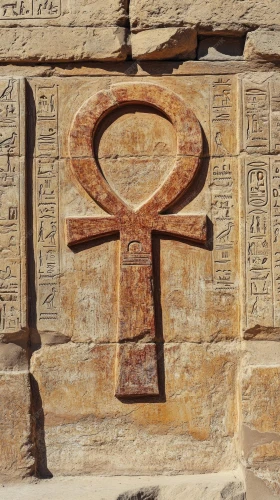
Why Pharaohs Carried the Ankh: Power, Life, and Breath
If you spend even an hour walking through the temples of Luxor or the halls of the Grand Egyptian Museum in 2026, you’ll notice a recurring "accessory" in the hands of the Pharaohs. Whether they are standing in battle, being crowned by gods, or entering the afterlife, they are almost always clutching the Ankh.
But this wasn't just a royal fashion statement or a decorative scepter. For a Pharaoh, carrying the Ankh was a mechanical necessity of the job. It was their "badge of office," their "source of power," and their "insurance policy" for eternity. To understand why the most powerful men and women in the ancient world never left home without it, we have to look at the three pillars of their authority: Power, Life, and Breath.
1. The Ankh as a Scepter of Sovereignty (Power)
In the 2026/2027 season, as we look back at the statues of Ramesses II or Hatshepsut, it’s easy to see the Ankh as just a "symbol." But to the ancient Egyptian, it was a literal scepter of sovereignty.
-
The Monopoly on Life: The Pharaoh was believed to be the only human being capable of "holding" life on behalf of the nation. By carrying the Ankh, the King was signaling to his people that he controlled the "Life Force" of Egypt. If the Pharaoh held the Ankh, the Nile would flood, the crops would grow, and the sun would rise.
-
The Royal Grip: Notice how the Pharaoh holds it. Usually, they don't hold it by the stem (like a cross) but by the loop. This is a position of ease and ownership. It shows that the King isn't "reaching" for life; he already possesses it.
-
The Invisible "Power Cord": Think of the Ankh as a portable battery. The gods were the power plant, and the Pharaoh was the transformer. By carrying the Ankh, the Pharaoh remained "plugged in" to the divine source, ensuring that his earthly power was actually an extension of heavenly power.
2. The "Breath of Life" (The Biological Link)
This is perhaps the most human and intimate reason the Pharaohs carried the Ankh. In the 18th and 19th Dynasty reliefs, you’ll see a specific ritual that looks almost like a medical procedure.
-
The Divine Transfer: A god (usually Horus or Isis) will be shown holding the Ankh directly to the Pharaoh’s nostrils. This is the "Giving of Life" ceremony.
-
The "Ankh" as Oxygen: The Egyptians didn't just see "life" as an abstract concept; they saw it as the air in the lungs. By carrying the Ankh, the Pharaoh was constantly reminded—and reminding others—that his every breath was a gift from the gods.
-
The 2026 Perspective: When you stand in the Temple of Kom Ombo today, you can see these scenes with incredible clarity. It reminds us that for all their gold and armies, the Pharaohs were still human beings who understood the fragility of a single breath. The Ankh was their way of making that breath eternal.
3. The Passport to the Field of Reeds (Eternity)
For a Pharaoh, "life" didn't end with the last breath; it simply changed location. The Ankh was the "Passport" that allowed them to move between the world of the living and the world of the dead.
-
The Anchor of the Soul: In the tombs of the Valley of the Kings, you’ll see the Pharaoh clutching the Ankh as he stands before the scales of Ma’at. It was his proof of character. If he held the Ankh, it meant he had lived a life in balance (Ma’at) and was worthy of continuing that life in the "Field of Reeds."
-
The Recursive Symbol: Often, you’ll see the Ankh paired with the Was Scepter (Power) and the Djed Pillar (Stability). Together, these three symbols formed the "Holy Trinity" of Pharaonic survival. Without the Ankh, the other two were useless. Power without Life is tyranny; Stability without Life is a grave.
4. Summary: The Pharaoh's "Ankh" Toolkit
| Role of the Ankh | Meaning to the King | Why it Matters in 2026 |
| The Scepter | Political Legitimacy. | It shows how leaders use symbols to unite people. |
| The "Breath" | Physical Vitality. | A reminder of our shared human fragility. |
| The Passport | Spiritual Immortality. | The universal human desire to "continue" after death. |
| The Union | The King as "Living God." | The bridge between the mundane and the divine. |
5. Why Modern Leaders and Travelers are Still Obsessed
In 2026, the Ankh has moved out of the tombs and into the world. You’ll see it worn by world leaders, athletes, and digital nomads. Why? Because the Pharaohs were right about one thing: the human desire for continuity is universal.
-
The "Legacy" Factor: The Pharaohs carried the Ankh to ensure their legacy survived. Today, we wear it or display it for the same reason—to signal that we believe in something that lasts longer than a single lifetime.
-
The Human Connection: When you hold a replica of a Pharaonic Ankh in a Luxor workshop, you feel a strange sense of weight. It’s not just the metal; it’s the 5,000 years of "hope" that have been poured into that shape.
6. Finding the "Royal" Ankh in 2026
If you want to see the most impressive examples of the Pharaoh's Ankh this season, here are your three primary stops:
-
The Statue of Amenhotep III (Luxor Museum): A masterclass in how a King integrates the symbol into his seated posture.
-
The Gold Pectorals of Tutankhamun (GEM): See how the "Boy King" used the Ankh as a piece of high-jewelry that doubled as a protective shield.
-
The "Coronation" Reliefs at Edfu: Where the gods literally "pour" a stream of Ankhs over the King’s head like a bucket of water—a "baptism of life."
More Than a Key
The Pharaohs didn't carry the Ankh because they were "superstitious"; they carried it because they were strategic. They understood that power is temporary, but "Life" (in the sense of a legacy, a spirit, and a breath) is the only thing truly worth holding onto.
When you see a Pharaoh clutching that loop-headed cross, realize that you aren't looking at a dead king with a piece of jewelry. You are looking at a human being who was desperately trying to stay "plugged in" to the universe. And in 2026, as we all look for ways to find more "life" in our busy, digital worlds, that ancient impulse feels more relevant than ever.





-webp.webp "Hilton")
-webp.webp "dusit")
-webp.webp "Marriott Hotels")
-webp.webp "Azimut Hotel")
-webp.webp "Golden Tulip")
-webp.webp "sheraton")
-webp.webp "westin hotel")
-webp.webp "Movenpick")
