
 English
 Italy
Italy
Who Were the Nubians? A Cultural Deep Dive for Travelers
Who Were the Nubians? A Cultural Deep Dive for Travelers
To travel through Upper Egypt and Aswan without understanding the Nubian people is to see the monuments but miss the soul of the land. For the 2026/2027 traveler, the Nubian culture isn't just a historical footnote—it is a living, breathing, and remarkably resilient society that has survived empires, floods, and forced migrations.
When you sit down for a glass of sun-brewed hibiscus tea in a village on Elephantine Island, you aren't just meeting "locals." You are meeting the descendants of the "Black Pharaohs," a people whose history is as old, if not older, than the Dynastic Egyptians themselves.
1. The Kingdom of Kush: The "Black Pharaohs"
The first thing a traveler needs to understand is that Nubia (ancient Kush) was not merely a province of Egypt; it was a rival, a partner, and, for a glorious century, its ruler.
-
The 25th Dynasty: Around 744 BCE, Nubian kings from the south marched north and conquered Egypt, establishing the 25th Dynasty. These "Black Pharaohs," like the great King Taharqa, didn't destroy Egyptian culture; they revived it. They built more pyramids in the Sudanese desert than exist in all of Egypt, many of which still stand today.
-
The Warriors of the Bow: Nubians were world-renowned as the "Ta-Seti" or "The Land of the Bow." Their archers were so skilled that they were the most sought-after elite units in the ancient Mediterranean. Even the Romans, centuries later, treated the Nubian borders with a specific kind of wary respect.
2. The Great Displacement: A Human Tragedy
If you visit Aswan in 2026, you will notice that most Nubian villages look relatively new. This is because of the High Dam construction in the 1960s.
-
The Drowning of a Homeland: When the dam was built, the rising waters of Lake Nasser submerged the ancestral Nubian heartland. Tens of thousands of people were forced to abandon their ancient riverside villages, palm groves, and ancestral graves within a matter of weeks.
-
The Diaspora: This created a split in the community. Some were moved to "New Nubia" near Kom Ombo, while others settled on the islands around Aswan (like Elephantine and Bigeh).
-
The Resilience: Despite losing their physical land, the Nubian people refused to lose their identity. They brought their architectural styles, their unique language (Nobiin), and their music with them. In 2026, when you see the vibrant, hand-painted geometric patterns on a house in Gharb Soheil, you are looking at an act of cultural defiance.
3. Nubian Life in 2026: What to Expect
For the boutique traveler, "The Nubian Experience" has evolved. It’s no longer just a thirty-minute stop on a tour bus; it’s an opportunity for deep immersion.
The Architecture of the Soul
Nubian houses are famous for their domes and vaults. In 2026, younger Nubian architects are reviving these traditional mudbrick techniques because they are naturally "climate-smart"—keeping the interiors cool in the 40°C Aswan heat without the need for heavy air conditioning.
-
The Colors: The bright blues, yellows, and whites aren't just for show. They represent the Nile (blue), the sun (yellow), and purity (white).
-
The Alligator Tradition: You might see mummified or even live crocodiles kept at the entrance of some homes. This is a nod to Sobek, a tradition of "taming" the river's power to protect the household.
The Language of Mystery
The Nubian language is an oral tradition with no widely used written script in daily life, yet it remains vibrant.
-
The Secret Code: During the 1973 October War, the Nubian language was used by the Egyptian military as a secret code because it was impossible for outsiders to decipher—much like the Navajo Code Talkers in the U.S.
-
The Sound: When you hear Nubian music—centered around the Oud and the Duff (frame drum)—you’ll notice a rhythm that is more "African" than "Middle Eastern." It is polyrhythmic, celebratory, and deeply soulful.
4. Cultural Etiquette: Being a Guest, Not a Ghost
Nubian hospitality is legendary, but it is also based on mutual respect. In 2026, the community is working hard to move away from "performative tourism" toward genuine exchange.
-
The Coffee Ritual (Gabbana): If you are invited for coffee, say yes. Nubian coffee, or Gabbana, is prepared with ginger and cloves and served in small cups. It is a slow process—the point isn't the caffeine; it’s the conversation.
-
The "Right" Way to Visit: Instead of just walking through a village taking photos of people’s front doors, consider staying in a Nubian Boutique Guest House (like Kato Dool or Ashry Narty). These are often family-run businesses that keep the money within the community.
-
Support the Crafts: Nubian women are master basket weavers. These baskets, made from palm fronds, are incredibly durable and feature designs that have been passed down for generations.
5. The Nubian Identity at a Glance
| Feature | Ancient History | Modern Reality |
| Status | Rulers of Egypt (25th Dynasty). | A resilient minority preserving a unique culture. |
| Language | Old Nubian (used in biblical times). | Nobiin (spoken at home and in song). |
| Religion | Worshippers of Amun and Isis. | Predominantly Muslim, but with ancient folk traditions. |
| Food | Millet and Nile fish. | Shamsi Bread (Sun-leavened) and hibiscus. |
| Music | Percussion-heavy temple music. | Nubian Pop/Folk (think Ali Hassan Kuban). |
6. The Nubian Museum: A 2026 Must-Visit
Before you head into the villages, spend two hours at the Nubian Museum in Aswan.
-
The Architecture: The building itself won the Aga Khan Award for Architecture for how perfectly it blends into the sandstone cliffs.
-
The Story: It houses artifacts that were rescued from the rising waters of Lake Nasser. Most importantly, it features life-sized dioramas that show exactly how Nubian life looked before the dam—the wedding ceremonies, the harvest, and the schools. It provides the necessary context to appreciate the people you will meet later that day.
7. Why Nubia Matters Today
In a globalized 2026, where many cultures are becoming homogenized, Nubia stands as a reminder of the power of roots. They are a people who have lost their land but kept their "home."
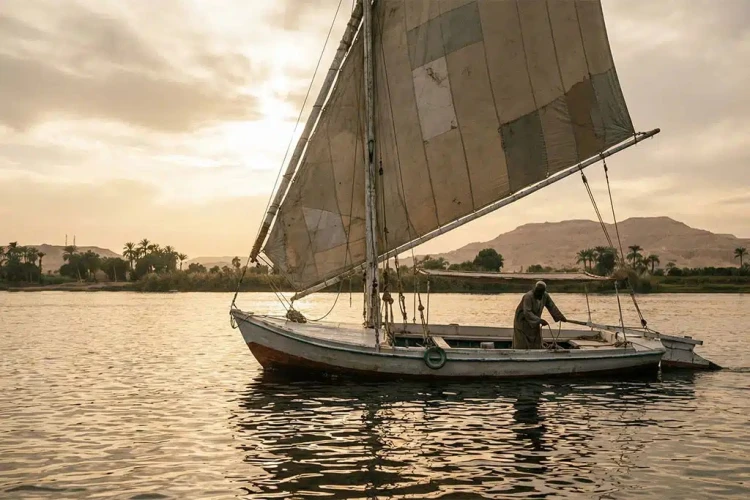
When you see a Nubian captain skillfully navigating a felucca through the treacherous rocks of the First Cataract, you aren't just seeing a sailor. You are seeing a man whose ancestors have been navigating these exact rapids for 5,000 years. There is a quiet confidence in that history—a "Nubian Pride" (Nubia-narty) that is infectious.
Advice for Your Journey
Don't rush your time in Aswan. The "Magic of Nubia" doesn't reveal itself during a 10-minute photo op with a baby crocodile. It reveals itself during the "Golden Hour" when the sun turns the Nile orange, the drumbeats start echoing from the village across the water, and someone hands you a cup of tea and asks where you are from.
The Nubians aren't just part of Egypt's history; they are the guardians of its most welcoming traditions.




-webp.webp "Hilton")
-webp.webp "dusit")
-webp.webp "Marriott Hotels")
-webp.webp "Azimut Hotel")
-webp.webp "Golden Tulip")
-webp.webp "sheraton")
-webp.webp "westin hotel")
-webp.webp "Movenpick")