
 English
 Italy
Italy
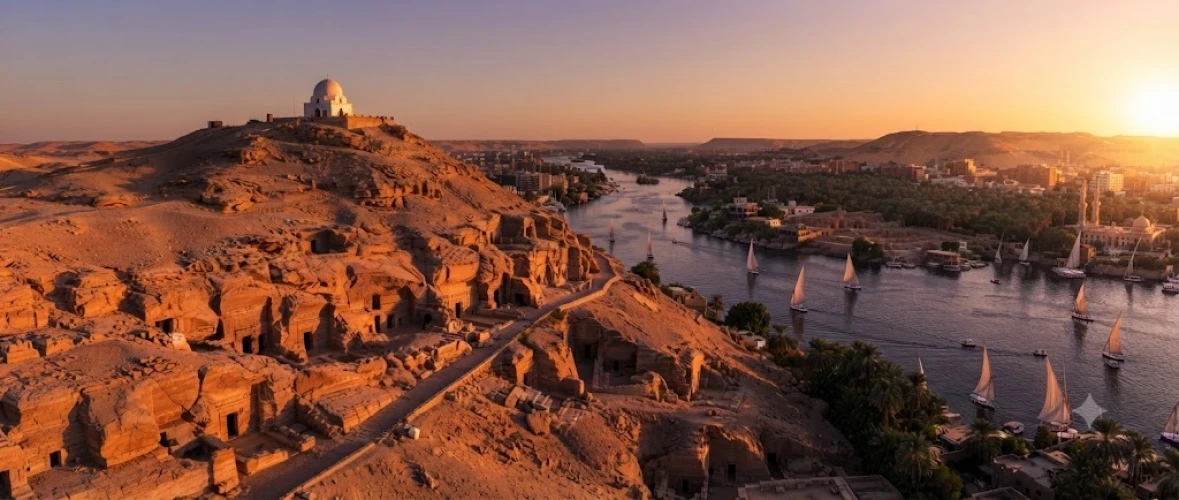
Whispers from the Cliff: Exploring the Qubbet el-Hawa Necropolis
The Hill That Holds History: Walking Among the Governors of Aswan
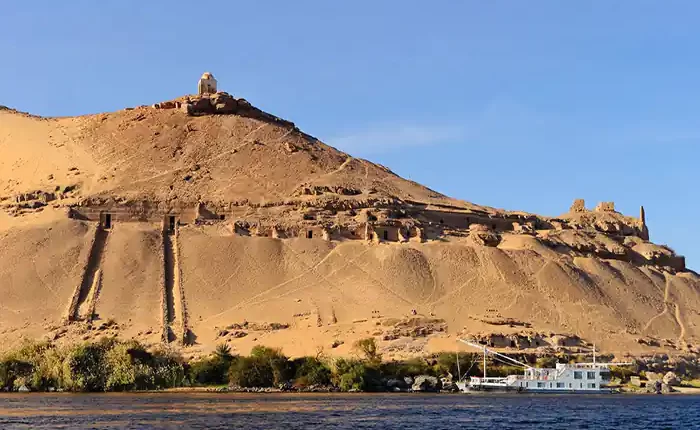
The desert sun hits different in Aswan . It’s a golden, heavy heat that kinda feels like it turns the air into something that’s alive, breathing, you know. If you stand on the banks of the Nile and look across the water toward the west , you’ll catch sight of a ridge of sandstone cliffs that rise sharply against a very brilliant blue sky. Up at the summit there’s a white dome—a calm solitary landmark that kinda gives the hill its name: Qubbet el-Hawa , or the “Dome of the Wind.”
But the real magic here isn’t what’s up on top. It’s what’s hidden inside the rock face. This is the Qubbet el-Hawa Necropolis, and to step into it is like stepping into private journals of men who helped build one of the greatest civilizations in the history.
A Different Kind of Resting Place
When we think about Ancient Egypt , our brains kinda drift right away to the Pyramids at Giza or the tucked away gold of Tutankhamun. We also picture pharaohs- gods down here, laid to rest with riches beyond imagination. But Qubbet el-Hawa, well that place feels different. It doesent really read like a monument to some far off deity.
This necropolis wasn’t made for kings . Instead it was meant for the governors, the voyagers , and the diplomats— the so called “middle management” who kept everything running , day after day. These were the fellows assigned to watch over the southern boundary , to negotiate commerce with the half-known lands of Nubia, and to maintain order in a border zone that was both risky and extremely profitable.
The air around here is full of their stories. When you haul yourself up that steep winding path along the cliff, you’re not only touring a burial ground ; you’re actually stepping into the lives of real people. People with households, with real worries , who could boast about their wins, and who wanted most of all, that they wouldnt fade into nothing and be forgotten.
The Voices on the Walls
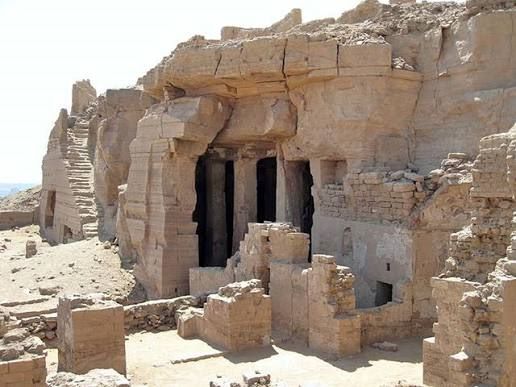
If you want to know what it was like to live four thousand years ago, don’t read a textbook. Just go to the walls of these tombs, really. The art inside the Qubbet el-Hawa Necropolis is stunning, not because it’s glittered up in gold, but because it’s got so much personality, like it still has a pulse.
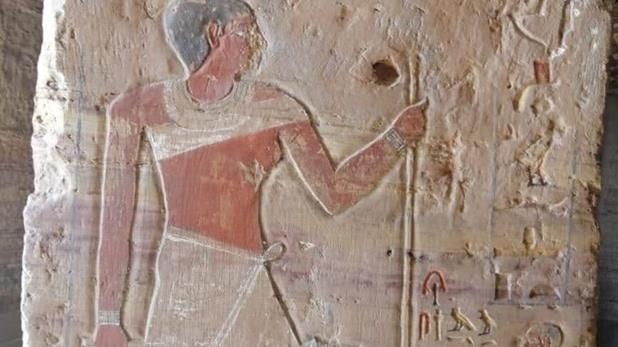
Look at Harkhuf’s tomb, for instance. Harkhuf was an explorer, the kind of person who would be an astronaut, or a deep-sea diver, today. He spent his whole life steering caravans into the guts of Africa, carrying back strange, treasured things, ebony ivory, and incense. But he was also the sort of man who really, desperately wanted to be liked by his king.
On his tomb wall there’s a letter from the young Pharaoh Pepi II, carved in, too. The boy-king was so worked up about a “dancing dwarf” that Harkhuf was bringing back from his most recent trip that the kid wrote this frantic, happy note, ordering him to protect the creature no matter what. You can almost feel the relief and pride spilling off that stone carving. It’s like this pocket of pure joy, trapped in rock, and somehow it survived the whole rise and fall, of empires.
And then you’ve got the stories of Mekhu and Sabni. This father son pair left behind a narrative that kind of reads like gritty historical drama, the kind you can’t look away from. When the father, Mekhu, died during a risky expedition to the south, his son Sabni didn’t just continue on, no. He launched a military campaign, marched deep into hostile ground, recovered his father’s body, and brought him home so he could be buried properly in this Necropolis. It’s a raw emotional confession of family loyalty, one that stretches across centuries and still talks right to our own experiences, with grief and duty.
Life at the Edge of the World
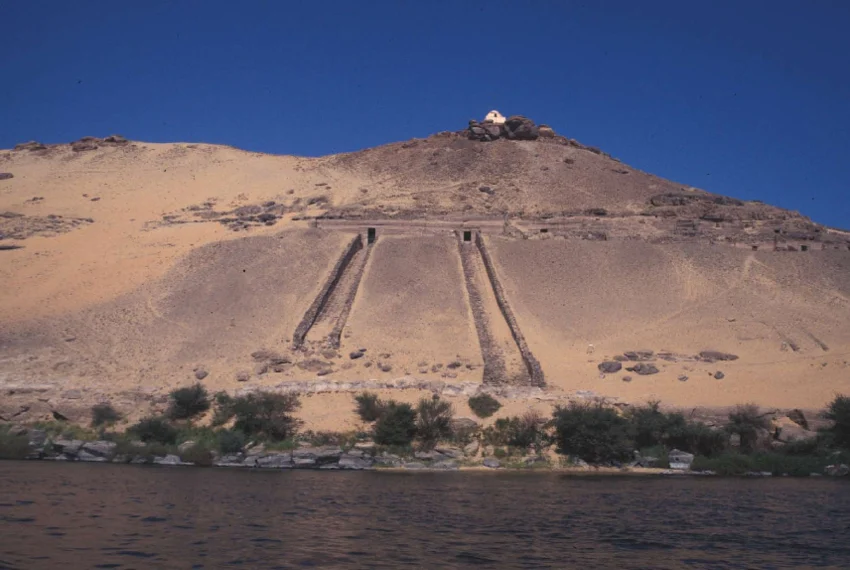
To really get why this Necropolis is so special, you kind of have to picture Aswan about four millennia ago. It was not the laid back tourist place it feels like now. Back then, it was the “frontier”, so yes , the end of everything. Pretty much the last stop before the huge, untamed wilds of the south.
The governors who stayed here were like ultimate multitaskers, seriously. They needed to be soldiers, accountants, diplomats, and priests all at once, no break. Their days were under heavy stress, like nonstop pressure. They were the people responsible for getting the granite for the royal monuments moved, safely down the Nile. On top of that they had to talk with tribal leaders, and half the time the language was only partly understood or not understood at all.
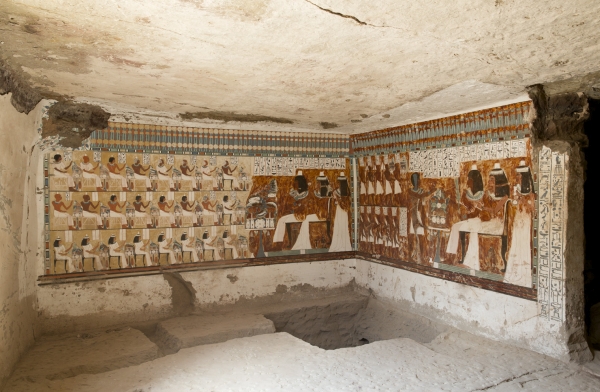
When you walk through these tombs, you can feel that sort of rhythm. You see proof of their day to day existence: laborers working the fields, soldiers training, scribes carefully counting grain. These scenes were not only pretty additions. They were also a kind of statement, a practical signal that, “I was here. I handled the work, I kept the whole system going.”
The View from the Top
So the trek up to the Qubbet el-Hawa Necropolis isn’t exactly for the faint of heart , it’s steep, it’s dusty, and somehow it feels longer than it should. Still, once you actually get to the entrance of the higher tombs, the whole scene sort of makes it feel… right, like every drop of sweat counted.
There you are, looking out. You see the Nile, glittering like a thin silver strip. You see the lush green of Elephantine Island, which pops against the ochre desert, almost like the land is showing off. And you also spot Aswan, the modern city, busy and loud, a lively center that has kept going in this exact place for thousands of years. At that point you start to understand, the smart choice these people made for their last rest.
Because they didn’t want to be isolated. They wanted a kind of nearness , to stay in touch with what mattered , the river, the commerce, and the people they had served. They didn’t really fancy hiding away in some dark and silent pyramid somewhere out in the sand. Instead, they picked a necropolis that lets the dead remain in the surroundings , staring over the living world they spent their working years helping protect.
Why We Still Care
In our life with all the digital stuff we are always trying to leave a mark.. It is hard you know. We post something and share it and scroll through things then something else comes along. It is like the first thing never happened.
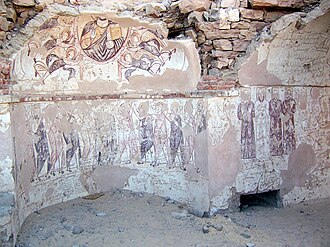
When you stand in a tomb like the one at the Qubbet el-Hawa Necropolis it really hits you. The people who came before us they wanted to be remembered. That is still the same today. The governors who were in charge did not use some way to tell their stories they used the mountain to make their mark. They wanted their stories to stay. Even when people forgot their names their actions would still be there in the earth.
When you visit these places you are not just looking at stones. You are, like a person who sees something. When you read the writings and look at the drawings you are finishing what they started.. In a small way you are giving them a chance to be remembered forever which is what they were trying to do.





-webp.webp "Hilton")
-webp.webp "dusit")
-webp.webp "Marriott Hotels")
-webp.webp "Azimut Hotel")
-webp.webp "Golden Tulip")
-webp.webp "sheraton")
-webp.webp "westin hotel")
-webp.webp "Movenpick")
