
 English
 Italy
Italy
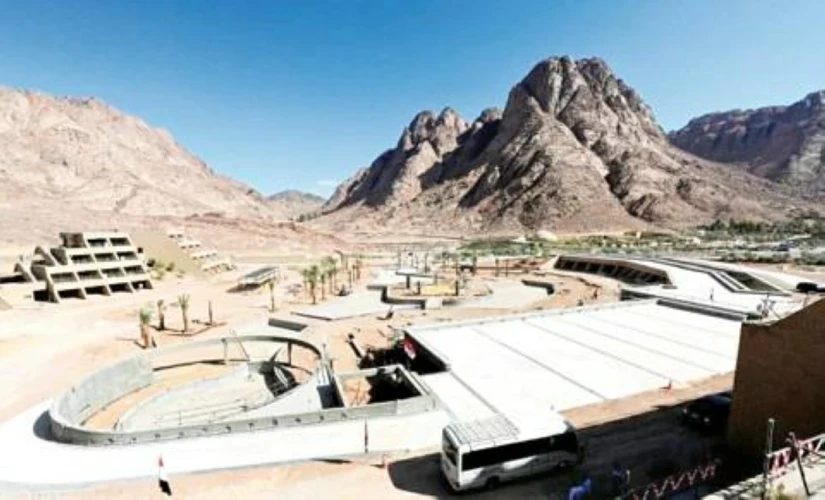
Where Heaven Meets Earth: The Spiritual Magic of Mount Sinai
The scene shows you standing at the base of a jagged granite peak while stars begin to vanish into a sky that displays a bruised purple color. The cold Sinai wilderness air makes your breathing difficult because its altitude creates thin atmosphere. The surrounding silence presents no nothing because it carries heavy ancient sounds which create an atmosphere of waiting. The human race has visited Mount Sinai for thousands of years to seek knowledge in this place which stands as Mount Sinai's shadow.
Saint Catherine's Monastery stands at the mountain's base as a stone and spirit fortress that has operated since the 6th century. The year 2026 brings us permanent access to present time through current notifications and emerging trends and instant feedback. The "eternal" space of Saint Catherine's Monastery provides visitors with an experience that completely contrasts with this modern world.
This place functions as a 100% human space which demonstrates our fundamental human dilemma about how we become unimportant against desert landscapes yet we maintain our ability to store knowledge throughout 15 centuries. The landscape known as "Where Heaven Meets Earth" appears to the observer as a sacred space that exists beyond ordinary tourist locations.
1. The Mountain of the Ten Commandments
The highest point of the peninsula is not Mount Sinai (Jebel Musa) yet its importance exceeds that of all other peaks. This location serves as the sacred ground where Moses encountered God who manifested himself through thunderous sounds and fiery appearances.
The Ascent of Effort: The "Steps of Penitence" consists of 3750 stone steps which a single monk created while the "Camel Path" provides a broader route. The ascent represents a physical challenge which reflects the spiritual development process of human beings. The experience should present major challenges to people.
The Summit at Dawn: The magic of reaching the summit before sunrise develops its own special quality. The surrounding peaks become bright red when the sun rises over the horizon. The moment allows people to experience the sacredness of their religion through a direct connection to their personal beliefs. The mountain view shows you a location where people attempted to hear what God had to say.
2. The Burning Bush: A Living Mystery
The Burning Bush exists as a botanical anomaly which grows in the monastery grounds that exist behind the Great Basilica. The Uncopyable Plant: Tradition identifies this specific bramble (Rubus sanctus) as the one Moses encountered. Modern scientists have determined that it represents the single existing specimen which exists throughout the entire Sinai Peninsula. The plant has been attempted to be cultivated through cuttings to different locations but all attempts have failed to produce viable plants. The natural bush exists as a complete 100 percent human symbol which represents his existence. The bush represents a "fire that does not consume" which demonstrates human spirit and faith that survives through extreme desert conditions.
3. Icons: The Faces That Gazed Back at History
Saint Catherine's contains the most significant collection of early Christian icons which exists in the world. The Byzantine Empire destroyed religious images through "Iconoclasm" because the Sinai region functioned as an isolated area which protected its religious images.
The most famous icon here The Christ Pantocrator dates from the 6th century. The artwork uses "encaustic" technique which combines pigment with hot wax. The facial features create human appeal through their slight asymmetry because one eye shows peacefulness while the other displays authority.
The monks consider these objects as "windows" rather than "art pieces" because they function as visual openings. The current view shows exactly what pilgrims experienced 1,400 years ago. The ancient mind exists in direct visual connection with this particular view.
4. The Library: The World’s Memory Bank
The library at Saint Catherine's contains more than 3000 manuscripts which exist in Greek and Arabic and Syriac and Georgian and Slavonic languages.
The Sinai Palimpsests: Parchment was expensive in the desert, so monks often erased old texts to write new ones. Researchers use multispectral imaging to "recover" hidden medical texts and ancient Bible translations which exist beneath visible ink.
A Sanctuary for Languages: The library proves that the monastery was a global crossroads. The site functioned as a secure area for all the world's languages to exist while various empires experienced their rise and decline.
5. The Mosque and the Ashtiname: An Ancient Pact of Peace
The history of Saint Catherine's demonstrates its most authentic human connection through its peaceful existence with others. The churchyard exists as an open space which the 12th-century mosque occupies that stands just a few meters away from the monastery boundaries.
The monks own a sacred document which holds the actual handprint of the Prophet Muhammad. The document establishes a permanent obligation for Muslims to defend the monastery and all who live there until the end of time.
Bedouin tribes have maintained their role as monastery protectors throughout all of history. The deep trust between Christian monks and local Muslims demonstrates to 2026 that peace depends on people understanding each other and their shared background.
6. Why Mount Sinai Matters Today
People continue to visit this distant Egyptian region because modern technology provides worldviews through screens.
The "Unfiltered" Experience: The Sinai wind and the ancient incense scent create a physical experience which you must experience through your own senses. The experience produces sensory data which connects us to our physical existence.
The Perspective of Time: The Justinian I wall which you sit against includes modern problems which become less important to you. The realization hits you that you belong to a vast and beautiful historical narrative.
The Keeper of the Flame
The historic sites of Saint Catherine's Monastery and Mount Sinai continue to operate as active cultural sites. The sites exist as "Living History" which creates an ongoing historical experience for visitors. The 4:00 AM bells currently ringing in the present day represent the same bells which have been sounding since the beginning of the last 1500 years.
The location serves as "Where Heaven Meets Earth" since visitors shift their focus from walking to looking up at the stars. The location exists to honor human capabilities which enable people to protect their belongings and endure challenges while they search for something beyond their individual existence.
People who visit the area for its historical aspect or artistic value or challenging mountain climb will walk away from Sinai with a different type of spiritual burden which comes from experiencing deep stillness that enables them to process their thoughts.




-webp.webp "Hilton")
-webp.webp "dusit")
-webp.webp "Marriott Hotels")
-webp.webp "Azimut Hotel")
-webp.webp "Golden Tulip")
-webp.webp "sheraton")
-webp.webp "westin hotel")
-webp.webp "Movenpick")