
 English
 Italy
Italy
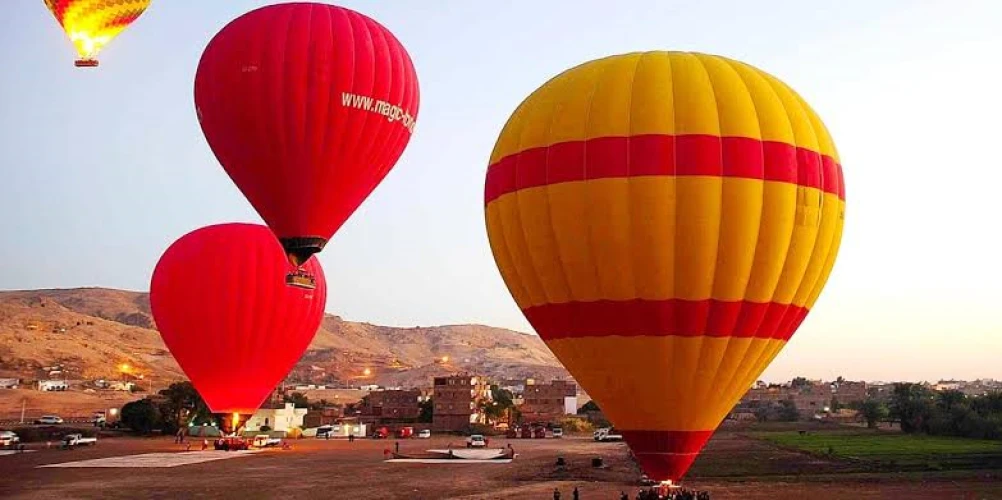
Safety First: What You Should Know Before Stepping Into a Luxor Balloon Basket
Safety First: What You Should Know Before Stepping Into a Luxor Balloon Basket
When considering an adventure such as flying hundreds of feet above the ground in the open air of one of the most ancient landscapes ever discovered, stopping and thinking about safety is completely understandable. Thoughts like a wicker basket, open fire, and wind currents might leave the most avid adventurer asking, "But wait – how do I get up there, and how safe is it?"
Rest assured, it is indeed safe. Hot air ballooning in Luxor is actually a very regulated, professional form of flight that thousands of people participate in each week without trouble at all. But, just like any form of adventure, safety requires a team effort of government aviation officials, professional pilots, and smart adventurers willing to follow sky law.
Before you put on your jacket, venture out into the predawn desert and step into that wicker basket, here is a comprehensive look into everything you should know about safety, regulations, weather, and protecting yourself for your amazing morning aloft.
1. The Strict Regulations Behind Luxor’s Skies
After the incidents in the past concerning safety issues, the Egyptian Civil Aviation Authority (ECAA) has revamped the aviation system of Egypt making Luxor the best and most controlled balloon flying destination in the whole world.
What does that mean to you as a passenger?
Licensed Commercial Pilots: All the pilots who fly balloons over Luxor have to be holders of a commercial license, have good health and thousands of flight hours before being allowed to transport any passenger.
Flight Corridors: Balloons cannot just fly around; they have to be flown within defined flight corridors within the West Bank. They are not allowed to cross over to the Nile and fly towards the busy center of the city.
Equipment Inspections: Balloons have to undergo regular inspection by aviation officers concerning balloons envelopes, burners, fuel tanks and wicker baskets. If any of the above mentioned equipment does not comply with strict standards, it will never take off.
2. The Weather Rule: Why Flights Get Canceled (And Why That's Good)
Hot air balloons do not come equipped with steering wheels, rudders, nor engines that allow the pilots to counteract the environment.
Due to this basic law of physics, safety becomes totally dependent on the weather. If the surface wind speed is too high (typically above 8 to 10 knots), or there is morning fog that affects visibility, the ECAA would immediately call off all hot air balloon flights on a morning's notice.
Golden Booking Rule: Since flights may be canceled due to sudden changes in the weather, never ever book a hot air balloon tour on the last day of your stay in Luxor. Should the weather turn and prevent hot air balloon flights from being conducted, you would need a buffer day in order to compensate for this problem. The operators would easily be able to reschedule your tour the following morning or issue you a full refund of your money.
3. Why Passenger Weight Limits Actually Matter
While making arrangements for your hot air balloon ride, you are likely to be requested to provide the correct details of your weight. Even if it is not easy to disclose such information, the truth is that it is a key safety calculation and not just an idle administrative exercise.
The physics of hot air balloon flying is very precise. It is important for the pilot to calculate the total weight of the wicker basket, propane fuel tanks and every single passenger to establish how much propane burning will be required for ascending and descending safely. The provision of inaccurate data will affect the lifting calculations of the plane. Be truthful with your weight information and expect the operators to stick to the maximum passenger limits within the different sections of the basket.
4. Essential Rules for Inside the Basket
When you reach the launch site, observe the last stages of inflation and get inside the gondola. Your main task is to pay close attention to what your pilot and ground crew tell you. Here are some basic safety tips that you should follow until the end of the flight:
Use the inner handles: The wicker gondola is made of steel cables and has handles attached to the inner sides of the walls. In case of take-off and landing, you need to hold on to these handles to maintain your balance.
Learn how to land properly: At the moment when the pilot informs you about landing, he will ask you to turn round, face away from the direction of movement, hold the inner handles, and bend your knees a little bit. It will help to reduce any discomfort while touching the ground in the desert sand.
Do not bend too far over the edge: Although the wicker wall is high and strong, it’s dangerous for you to bend too far over the edge or attempt to jump to other parts when in mid-air. Make sure you stay in your own area and take the scenery from there.
Keep your equipment secured: Do not allow your mobile phone or camera to hang loosely from a wrist strap or in a pocket. Leave behind your big backpacks and cameras.
Peace of Mind in the Clouds
Hot air balloon flights can be incredibly freeing experiences; the knowledge of what is going on in terms of safety will allow you to fully enjoy the experience. If you use a reputable company, respect the weather advice, and strictly follow all the instructions, then you can be assured of having an experience which is as safe as it is exciting.





-webp.webp "Hilton")
-webp.webp "dusit")
-webp.webp "Marriott Hotels")
-webp.webp "Azimut Hotel")
-webp.webp "Golden Tulip")
-webp.webp "sheraton")
-webp.webp "westin hotel")
-webp.webp "Movenpick")