
 EN
 IT
 ES
 FR
 ZH
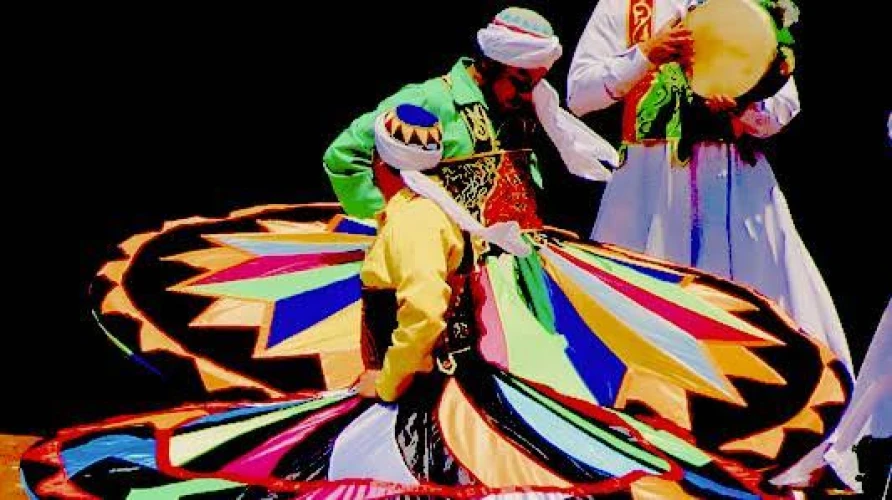
Wekalet El-Ghouri Tanoura Show
The Wekalet El-Ghouri Tanoura Show is considered to be one of the most fascinating authentic cultural performances in Egypt today. This live performance takes place in a beautifully maintained 16 th Century Mamluk Complex in the heart of Historic Cairo, featuring a mesmerising Sufi tradition called the Tanoura. This is a form of meditative dance involving men twirling on the spot to traditional Egyptian music.
Woven around traditional architecture, live acoustic instruments and spiritual beliefs you will have a memorable experience enjoying this culture-filled performance.
What is the ‘Tanoura’ Dance?
The Tanoura (meaning ‘skirt’) is a traditional Egyptian form of the whirling Sufi dance practised by the Mevlevi Order of Turkey. However, whereas the Mevlevi dancers in Turkey wear very simple flowing white robes and the dancing involves silence, the Egyptian ‘Tanoura’ is far more vibrant with colour and sound.
Spiritual Meaning:
The Tanoura Dance is based around Sufi beliefs and the whirling represents the movement of the universe. It represents the movement of the planets around the sun and the cycle of life.
Counter-clockwise movement: The dancer moves in a circular motion which replicates the movement of the earth and pilgrims moving around the Kaaba in Mecca.
Arm movements: Whilst the main Tanour dancer is whirling he will raise his right arm towards the sky to receive the blessing and lower his left arm to return the blessing to the earth and audience.
Removing the skirts: The dancers wear many layers of heavy, colourful, hand-sewn skirts. During the height of the performance they remove the skirts with great skill. This represents releasing their burdens here on earth and to free themselves from their ego to become spiritually elevated.
Performance
The performance is performed by the official El-Tannoura Troupe for Cultural Heritage. They are a group of highly skilled musicians, singers and dancers who aim to preserve traditional Egyptian folk arts. The dance is typically split into 3 parts and lasts for 75 minutes.
Musical Introduction (Mawwal):
The performance begins with the musicians playing traditional Middle Eastern instruments. This includes the nay (a reed flute), oud (lute), qanun (zither) and traditional percussion instruments such as duff (frame drum) and tabla (darbuka). The lead singer will sing Sufi poetry and mawwal (improvised singing) throughout.
Group Dancing (Mizmar):
Before the whirling begins a group of musicians begin to play The Mizmar (high-pitched double reed instrument) in the main courtyard. The percussionists and musicians dance with each other playing their instruments in a competitive rhythm.
Tanoura Whirling:
The main part of the performance begins with the master Tanoura dancers making their way to the centre of the lit stone courtyard. The lead dancer begins to whirl slowly and then gradually increases speed. He doesn’t appear to get dizzy throughout.
During the height of the music the performer will move his heavy skirts with great skill. He lifts the skirts above his head, whirls them in to create geometric shapes (like an umbrella) and layers the skirts to create beautiful patterns. During the final part of the performance the skirts are lit up with LED lights to create a magical finale in the beautiful stone arches.
Historical Background:
One of the highlights of this performance is the incredible history behind it. Wekalet El-Ghouri (Caravanserai of Sultan Al-Ghouri) was built by Sultan Qansuh Al-Ghouri (one of the last Mamluk Rulers of Egypt) in 1504CE.
The building was originally built as a merchants’ hotel and storage area. It contains a large open courtyard with 4 storeys of stone archways and wooden mashrabiya windows. The acoustics of this stone courtyard provide amazing sound from the live instruments. The building provides an authentic feel to this medieval performance.
Performance Details:
Location: Al-Azhar district of Medieval Cairo. Next to Al-Muizz Street. Directly opposite the Khan el-Khalili market.
Performance Times: Typically performed 3-4 times per week. Usually on Saturday, Monday and Wednesday evenings.
Tickets: Tickets can be purchased on the door. Seating is on a first come first served basis so it is advisable to get there early to get good seats at the front.
Photography: You can take photographs but it is not advisable to use a flash.
Tips:
Get there early! Entrance usually opens earlier than the performance begins. Try to get there 45-60 minutes early to get a good seat and enjoy the amazing 16 th Century Mamluk architecture.
Pair with Medieval Cairo: Try to plan your afternoon to walk along Al-Muizz Street or visit the Khan el-Khalili market before heading over to the performance.
Wear comfortable clothes: You will be sitting on wooden chairs in an open courtyard. It is advisable to wear a light jacket during winter evenings.
Why visit?
This isn’t a commercial belly dancing performance or one found in hotels. This is a real preservation of Egyptian culture, supported by the Egyptian Ministry of Culture. With the athleticism, deep spiritual meaning, live music and incredible history this is one of the best cultural experiences in Cairo for people of all ages to enjoy.