
 English
 Italy
Italy
Visiting Abu Simbel: Is the Flight from Aswan Really Worth It?
For many travelers planning their 2026 Egyptian itinerary, Abu Simbel sits at the very edge of the map, both geographically and logistically. It is a four-hour drive through the stark Nubian Desert or a short, forty-five-minute hop by plane from Aswan.
Because it requires such a significant commitment of time and money, the question is always the same: Is the flight really worth it? In 2026, the answer isn't just about the convenience of the seat; it’s about the unique "rhythm" of the experience. Here is a humanized deep dive into why (or why not) you should take to the skies to see the Sun Temples of Ramesses II.
1. The Logistics of Time (The 4 AM Reality)
To understand the value of the flight, you have to look at the alternative. Most travelers reach Abu Simbel by bus convoy.
-
The Road Trip: This involves a 3:30 AM or 4:00 AM wakeup call in Aswan. You spend nearly eight hours of your day in a van or coach. While the desert sunrise is beautiful, the fatigue of the "convoy crawl" can often dull your excitement by the time you actually reach the temple gates.
-
The Flight: By contrast, the flight allows for a much more civilized morning. You can have a slow breakfast at your hotel or on your Dahabiya in Aswan, catch a mid-morning flight, and arrive at the temple feeling fresh. In 2026, where "slow travel" and wellness are the primary trends, saving six hours of bumpy road travel is a luxury that many find indispensable.
2. The Aerial View: A 2026 Perspective
There is a perspective you can only get from the window of a plane: the scale of Lake Nasser.
-
The Rescue Story: From the air, you can see the sheer vastness of the water that threatened to swallow these temples in the 1960s. You see the "New Abu Simbel" sitting on its artificial hill.
-
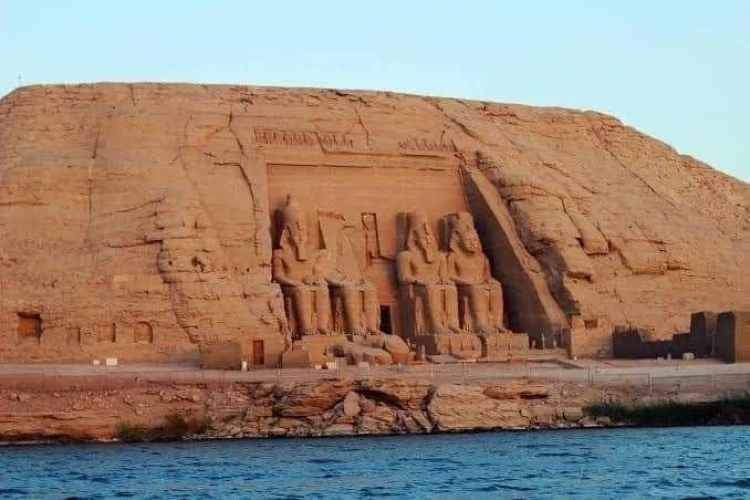
The Visual Context: Seeing the temples from above, carved into the golden cliffs against the impossibly blue water of the lake, provides a sense of isolation and grandeur that you simply don't get when arriving by the desert road. It frames the temples as the frontier outposts they were meant to be.
3. The "Crowd-Gap" Strategy
In 2026, the "crowd surge" at Abu Simbel is predictable. The bus convoys all arrive at roughly the same time (between 7:00 AM and 8:00 AM) and leave by 10:30 AM.
-
The Flight Advantage: If you book one of the later morning flights, you arrive just as the thousands of bus travelers are heading back to Aswan.
-
The Result: You often get a "Golden Window" between 11:00 AM and 1:00 PM where the temple is significantly quieter. Standing between the feet of the 20-meter-tall statues of Ramesses II in near-silence is a transformative experience that is nearly impossible to achieve if you arrive with the 4:00 AM convoy.
4. The Engineering Miracle: A Human Achievement
Whether you fly or drive, the reason you are there is to witness what many consider the greatest archaeological rescue mission in history.
-
The Move: In the 1960s, the entire temple was cut into 2,000 massive blocks (some weighing 30 tons) and moved 65 meters higher and 200 meters back from the rising river.
-
The Precision: The engineers were so precise that they maintained the "Solar Alignment." Twice a year (February 22 and October 22), the sun still shines directly through the entrance, down the 60-meter-long hall, to illuminate the statues in the sanctuary.
-
The Human Touch: When you walk inside, look at the seams between the blocks. They are almost invisible. It is a testament to what humanity can do when the world decides that history is worth saving.
5. Abu Simbel: The Two Temples
Your ticket isn't just for the famous "four giants" of Ramesses.
-
The Great Temple: Dedicated to the gods Ra-Horakhty, Amun-Ra, and Ptah—but mostly to the ego of Ramesses II himself. It was designed to intimidate anyone coming from the south into Egypt.
-
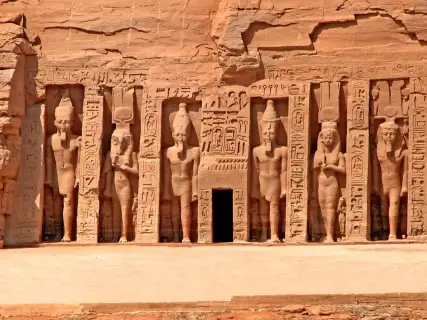
The Small Temple (Nefertari): Located just a few steps away, this temple is dedicated to Ramesses’ favorite wife, Queen Nefertari. It is one of the few places in Egypt where the Queen’s statues are the same size as the King’s—a profound ancient statement of love and respect.
Comparison: Flying vs. Driving in 2026
| Feature | The Flight (EgyptAir) | The Private Car/Bus |
| Travel Time | 45 mins each way. | 3.5 - 4 hours each way. |
| Typical Cost | $150 - $250 USD (Return). | $30 - $100 USD (Depending on group). |
| Comfort Level | High (Air-conditioned, fast). | Low/Medium (Long desert road). |
| Crowd Control | Can be timed to miss the rush. | You arrive with the "surge." |
| Views | Lake Nasser & Aerial scale. | Desert mirages & Sand dunes. |
6. The 2026 "Stay-Over" Alternative
If the flight feels too expensive, but the bus feels too rushed, there is a third "human" option that has gained popularity in 2026: The Overnight Stay.
-
The Plan: Drive or fly to Abu Simbel in the afternoon, stay at a boutique Nubian lodge (like Eskaleh Eco-Lodge), and visit the temple for the Sound and Light Show at night.
-
The Reward: You can visit the temple again at sunrise the next morning before the buses from Aswan arrive. Watching the first light hit the faces of the statues with only a handful of other people is, quite simply, the best way to see Abu Simbel.
7. Is it "Worth It"? The Final Verdict
If your budget allows, the flight is worth it for one primary reason: Energy. Egypt is an exhausting destination. By the time most travelers reach Aswan, they have already walked miles through Karnak and the Valley of the Kings. Saving yourself an 8-hour round trip in a van preserves your mental and physical energy to actually enjoy the temple once you get there.
However, if you are a "road warrior" who loves the romance of the desert crossing—and you don't mind a 3:00 AM alarm—the drive is a rite of passage that saves you a significant amount of money that could be spent on a private guide or a luxury dinner later.
Tips for Your 2026 Visit
-
Book Flights Early: In 2026, the Aswan-Abu Simbel flight is one of the most frequently "sold out" routes in Egypt. Book at least 3 months in advance.
-
The "Check-In" Secret: If you fly, the airline usually provides a free shuttle bus from the Abu Simbel airport to the temple site (it’s only a 5-minute drive).
-
Photography: In 2026, you can take photos inside the temples with your phone for free, but please, turn off the flash. The ancient pigments are fragile, and the light is sensitive.
Regardless of how you get there, standing in front of Abu Simbel is a "bucket list" moment for a reason. It is the point where human ego meets divine ambition, all carved into the side of a mountain at the edge of the world.





-webp.webp "Hilton")
-webp.webp "dusit")
-webp.webp "Marriott Hotels")
-webp.webp "Azimut Hotel")
-webp.webp "Golden Tulip")
-webp.webp "sheraton")
-webp.webp "westin hotel")
-webp.webp "Movenpick")
