
 English
 Italy
Italy
Valley of the Kings to Philae Temple: A Complete 5-Day Luxor to Aswan Nile Cruise
Luxor to Aswan Nile Cruise: The Ultimate 5-Day Itinerary
Honestly, there’s no journey in the world that feels quite like sailing along the Nile. As your ship slides through calm water, you can see emerald-green palm groves slowly fade into sharp, golden desert dunes. It’s the same scenery that once pushed ancient pharaohs, explorers, and poets to write and wander, thousands of years ago, and it still feels unreal today.
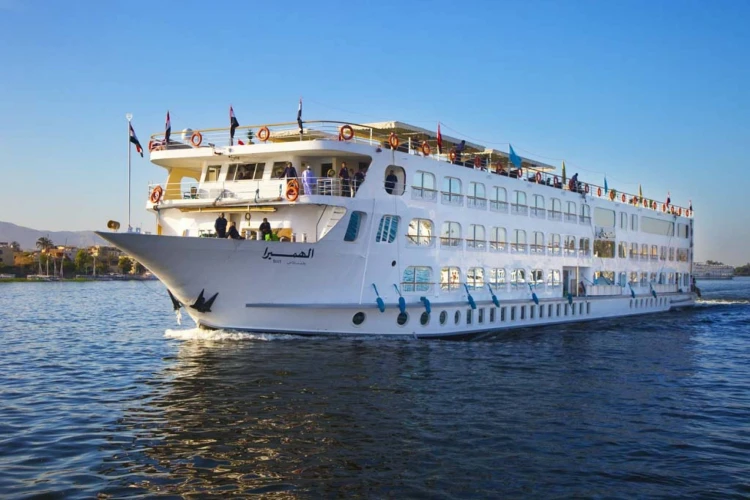
If you go sailing upstream from Luxor to Aswan over 4 nights and 5 days, a lot of people call it the ultimate Nile cruise route. The whole thing is done at a relaxed, unhurried rhythm, so you float smoothly between Egypt’s most grand temples and those underground royal tombs. You unpack one time only, you savor world-class meals on the open-air deck, and you just… watch centuries of history drift by your window, like it’s happening right now.
Below is your full day-by-day itinerary for a truly unforgettable voyage along the Nile River, start to finish.
Day 1: The Grand East Bank of Luxor
Your adventure starts in Luxor, which some people call the world’s greatest open-air museum. Once you board your cruise ship, find your cabin, and eat a fresh buffet lunch on board, you’ll head out to wander through the historic East Bank, a place that feels somehow older than time itself.
Karnak Temple, The City of Gods
Your first stop is Karnak Temple, also considered the largest religious complex ever created by human beings. It was built across roughly 2,000 years, shaped by over 30 successive pharaohs and the result is… honestly staggering in scale.
Go through the Great Hypostyle Hall where 134 towering sandstone columns rise like giant stone trees into the sky, and the carved surfaces still show faint traces of ancient paint.
Luxor Temple at Dusk
As the afternoon heat relaxes, head to Luxor Temple, right in the middle of the city. When twilight arrives, soft yellow floodlights wash over the colossal statues of Ramses II, plus the grand entry obelisk.
Between Karnak and Luxor temples stretches the newly restored Avenue of Sphinxes, a 3-kilometer stone-paved processional road lined with hundreds of carved sphinxes, and it really feels like a slow moving corridor into the past.
Day 2: Tombs of the Pharaohs & Setting Sail
Put an early alarm for Day 2, it is crucial if you wanna beat the desert sun when you cross over toward the famed West Bank of Luxor, that ancient territory of the dead.
Valley of the Kings
Go down deep under the limestone cliffs, into the subterranean Valley of the Kings. Those tucked-away tomb chambers were built to keep royal mummies and all their treasured items safe for eternity.
As you walk through those decorated passageways, kind of like the tombs of Ramses IV or King Tutankhamun, you’ll find yourself staring at how vivid and bright the 3,000-year-old wall paintings still look today, even now.
Hatshepsut’s terraced sanctuary
Then head to the grand Mortuary Temple of Queen Hatshepsut, at Deir el-Bahari. It was shaped by her royal architect Senenmut, and the big multi-level, colonnaded terraces seem almost new, they rise in a smooth line from the steep mountain rock behind it.
On the way back to the ship, pause for a short moment at the Colossi of Memnon, two huge stone statues of Amenhotep III that have been standing guard over the floodplain for ages.
Sailing toward Esna
Back aboard for lunch while the cruise drifts south toward Esna. You can spend the rest of your afternoon on the sun deck, lounging near the pool, sipping cold hibiscus tea, (karkadeh), and just watching everyday life ripple along the riverbanks.
Day 3: Temples of the Falcon & Crocodile Gods
Edfu: The Falcon God, Horus
After a sort of restful night on board, you wake up in Edfu. Then, in a short horse–carriage ride, or a comfortably air-conditioned transfer, you get to the Temple of Edfu, it is dedicated to the falcon-headed god Horus.
The thing is, Edfu was built during the Ptolemaic period, and it is usually treated as the most whole, and frankly, unbelievably well-preserved temple across all of Egypt. Since it stayed under desert sands for ages, its heavy roofed stone halls and the huge entry pylon remain almost entirely unbroken, like time was polite.
Kom Ombo: The Dual Temple
Go back to the ship for lunch, then you keep sailing further south toward Kom Ombo. When dusk arrives, you’ll visit the unusual Temple of Kom Ombo, it sits up there on a high bend, kind of overlooking the river like it’s watching everything.
Most Egyptian temples are different, but Kom Ombo is completely symmetrical, and it serves two deities at the same time:
Sobek: the strong crocodile god of fertility and creation.
Haroeris (Horus the Elder): the older sky god.
Right next to the temple, you can step into the little, yet surprisingly interesting Crocodile Museum, to see actual ancient mummified crocodiles that were found in nearby catacombs.
4. Day 4: Aswan & The Island of Isis
On the fourth morning, your ship reaches Aswan, Egypts southernmost city, known for its vivid Nubian culture and granite scattered river scenes.
Philae Temple: kind of a Jewel of the Nile
Take a quick scenic motorboat ride across Lake Nasser , to get to Philae Temple, placed on Agilkia Island. It’s dedicated to Isis, the goddess of magic and motherhood, and the place feels oddly romantic… with graceful floral columns and richly worked reliefs that seem almost too detailed.
Back in the 1970s, UNESCO started this huge rescue effort. They unmounted the whole temple piece by piece, then reassembled it on higher ground to keep it safe from the rising waters connected to the Aswan Dam.
The Unfinished Obelisk & the High Dam
In the afternoon, head to the old granite quarries of Aswan and look closely at the Unfinished Obelisk. If it had been carved all the way through, it would’ve become the largest stone obelisk ever lifted by ancient Egyptians, likely weighing more than 1,000 tons.
Wrap up with a visit to the Aswan High Dam, a modern engineering wonder that formed Lake Nasser and reshaped Egypts farming, plus electricity.
Day 5: Sailing Feluccas & Farewell Aswan
On your final morning, you disembark after breakfast, then just… before leaving Aswan, you really should do a quintessential local thing: get onto a traditional wooden felucca sailboat.
No engine noise, none, only the gentle rustle of canvas sails in that desert breeze, you glide past the lush palm groves of Elephantine Island and the botanical gardens of Kitchener’s Island, while the sun reflects off the Nile one last time.






-webp.webp "Hilton")
-webp.webp "dusit")
-webp.webp "Marriott Hotels")
-webp.webp "Azimut Hotel")
-webp.webp "Golden Tulip")
-webp.webp "sheraton")
-webp.webp "westin hotel")
-webp.webp "Movenpick")