
 English
 Italy
Italy
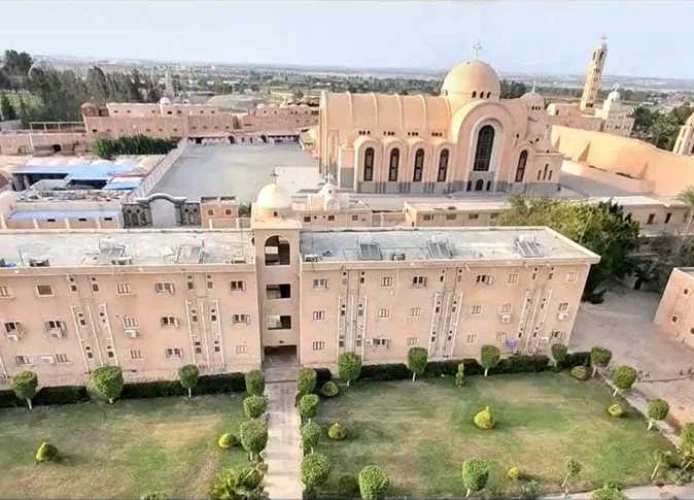
Valley of Natron: How Scetis Became the Cradle of Desert Monasticism
Wadi El Natrun and Its Ancient Monasteries: History, Heritage & Spiritual Haven
Along the desert highway, between Cairo and Alexandria, there sits this quiet historic depression, it is called Wadi El Natrun, (The Valley of Natron). In ancient as well as Christian times it was also known as Scetis and the valley is often remembered as the cradle of communal Christian monastic life in North Africa.
For almost two thousand years, this sandy lowland, the one named after natural salt pools that were used in pharaonic periods for mummification, has worked as a place for prayer and austere endurance, plus quiet scholarly saving of texts. In its high point during the 4th and 5th centuries , Wadi El Natrun held dozens of flourishing monasteries and, thousands of desert hermits.
Right now, only four active historic monasteries are still in operation inside the valley, and they stand there as living reminders, not just of Coptic Orthodox heritage but also old architecture and a monastic rhythm that continues.
Below is the fuller story, the architectural importance, and the spiritual inheritance of Wadi El Natrun and its ancient monasteries.
1. The Origins: From Pharaonic Trade to Monastic Haven
Long before it became a monastic sanctuary, Wadi El Natrun had this heavy strategic and economic role, in ancient Egypt, kind of like it mattered in every direction.
The valley has naturally found deposits of natron, that compound with sodium carbonate and sodium bicarbonate, and it was there from the beginning. The Ancient Egyptians mined natron a lot, for mummification rites, for glassmaking practices, and also for ceremonial cleansing, you know that careful purification kind of thing.
Then around 330 AD the whole thing shifted, like the valley’s purpose changed, almost overnight. Saint Macarius the Great (Anba Makarios) , a student of Saint Anthony, went into the desert of Scetis to look for spiritual quiet. Because of Macarius’ devotion, thousands of seekers later moved toward the area, step by step. And while the hermits in the Eastern Desert stayed mostly alone, the monks of Wadi El Natrun built a semi-cenobitic routine, where they stayed in their own small cells during the week, but on weekends they would gather together for communal worship, shared meals, and guidance for the soul.
2. The Four Active Monasteries of Wadi El Natrun
While dozens of monastic sites once dotted the valley landscape, four historic monasteries have somehow survived through the centuries , and they are still active today, in a way that feels constant:
Deir Anba Makarios: founded by St. Macarius; it is like the old spiritual nucleus of the valley.
Deir Al-Suryan: known for majestic frescoes and a huge Syriac manuscript library, always mentioned in the same breath.
Deir Anba Bishoy: named after St. Bishoy; it keeps his incorrupt body and also a broad modern seat, even if people say it differently.
Deir Al-Baramus: recognized as the oldest actual monastic place in the valley.
I. The Monastery of Saint Macarius the Great (Deir Anba Makarios)
Established around 360 AD by Saint Macarius himself, this monastery is often described as the historical, and spiritual centre of Scetis.
Patriarchal burial place: for centuries , it functioned as the usual location for the election and burial of Coptic Popes. Over 47 Popes of Alexandria are resting on its grounds.
Sacred relics: the monastery contains relics of Saint Macarius the Great, Saint Macarius of Alexandria, Saint Macarius of Edom , plus relics that are linked to Saint John the Baptist and the Prophet Elisha.
Modern renaissance: in the mid-20th century, under the guidance of Father Matta El Meskeen, the monastery went through large physical, and also scholarly restoration work. This included modern agricultural projects and , at the same time, careful theological research, almost like two hands working together.
II. The Monastery of the Syrians (Deir Al-Suryan)
Near the Monastery of St. Bishoy , Deir Al-Suryan sits in a quieter area and was founded sometime in the 6th century, it was dedicated to the Virgin Mary. Then in the 8th century, Syrian monks moved in, alongside Egyptian ascetics, and that mixture really is what gave the monastery its historical name.
World-Famous Frescoes
In recent years, restoration projects dug under layers of old plaster and uncovered early medieval frescoes that are honestly breathtaking. You can still see, in these scenes, the Annunciation, the Nativity, and also the Dormition of the Virgin Mary.
The Cave of Saint Pishoy
Inside the grounds there is a small cell, often described as a cave , where Saint Pishoy prayed in solitude, like in a kind of private silence.
Manuscript Heritage
For centuries, Deir Al-Suryan held one of the richest sets of ancient Syriac, Coptic, and Arabic manuscripts you can imagine. It helped preserve foundational works connected to early Church fathers, and not just in a casual way either.
III. The Monastery of Saint Bishoy (Deir Anba Bishoy)
Founded by Saint Bishoy (Anba Bishoy), a beloved contemporary of Saint Macarius, known for humility and prayer-life, this monastery is among the most visited places in Egypt. People come not only out of curiosity, but also because it feels, kind of lived in.
Relic of Saint Bishoy
In the main church the body of Saint Bishoy is enshrined. Coptic tradition says it has remained incorrupt for centuries, and that alone draws many visitors.
Architectural Complex
The monastery includes a massive 5th-century keep (jawsaq) , plus ancient refectory halls, and several historic churches, all together like a small protective world.
Papal Residence
In the 20th century, Pope Shenouda III established an official Papal Residence inside the monastery grounds. Since then, it has become a key administrative and spiritual retreat center for the Coptic Church, so it is not only religious but also organizational in a way.
IV. The Monastery of Al-Baramus (Deir Al-Baramus)
Deir Al-Baramus, which is also called The Monastery of the Romans, sits toward the northernmost stretch of the valley, like, near the end where everything feels a bit quieter. It takes its name from Saints Maximus and Domitius, two young Roman princes who, after leaving behind their royal imperial routine , chose to live as modest desert monks. This change didn’t happen by chance, they went under the direction of Saint Macarius.
Historic Priority: Many people see it as the oldest continuously standing physical location in Wadi El Natrun.
Fortified Architecture: The whole complex is ringed by tall defensive walls, built to handle past invasions and sudden threats . Inside there are five ancient churches , an old keep , and also wide, thriving olive groves that still carry on like an unbroken tradition.
3. Architectural Design: Survival in the Desert
The way the monasteries sit in Wadi El Natrun really shows centuries of, gradual adaptation to desert life and the usual historical troubles that came with it, kind of like the place itself had to learn how to survive.
Outer Ramparts: They’re built with tall stone walls, about 10 to 12 meters, meant mostly for protection from desert raids.
The Keep (Jawsaq): This is the multi- story stone tower you reach only by a retractable wooden drawbridge, and it feels purposely cut off.
Ancient Refectory: A long domed stone hall where communal meals happened, and during those meals there were holy readings , as accompaniment, not just background.
But the most noticeable thing across the whole valley is The Keep (Al-Jawsaq). It was put up in the late 5th and 6th centuries after raids by Berber nomads, and those sturdy, self-contained stone towers functioned as the last resort safe havens. Within each keep you could find water wells, rooms for food storage, small chapels, and manuscript vaults, all arranged so the monastic community could last through long sieges without having to rely on anyone outside.
4. Cultural and Global Significance
Wadi El Natrun wasn’t just some local getaway, it felt like a real international center for very old learning. People like scholars , ascetics, and travelers came from Rome , Greece, Syria, Ethiopia, and even Western Europe, they all made the journey to Scetis not only to pass time but to take in the sayings and wisdom of the Desert Fathers, the Apophthegmata Patrum . What was taught down there in that valley kept echoing, and it helped stir up European monastic traditions, especially those connected to Saint Benedict, and Saint John Cassian , in particular.
Historical Snapshot
Deir Anba Makarios: Founded by Saint Macarius the Great (around 360 AD) , the traditional burial place of 47 Coptic Popes.
Deir Al-Suryan: Founded by Egyptian and Syrian monks (around the 6th Century) , known worldwide for early Christian frescoes and manuscripts.
Deir Anba Bishoy: Founded by Saint Bishoy (around the 4th Century) , this is the shrine of St. Bishoy and also the place tied to the Papal Residence.
Deir Al-Baramus: Founded by Saints Maximus & Domitius (around 340 AD) , considered the oldest continuously operating monastic place in the valley.





-webp.webp "Hilton")
-webp.webp "dusit")
-webp.webp "Marriott Hotels")
-webp.webp "Azimut Hotel")
-webp.webp "Golden Tulip")
-webp.webp "sheraton")
-webp.webp "westin hotel")
-webp.webp "Movenpick")
