
 English
 Italy
Italy
Understanding the Hieroglyphs of Ancient Egypt
When you first step onto the sun-baked sands of ancient Egypt, you will experience a visual spectacle that surrounds you. The walls of Karnak's towering stone columnsand the concealed tombs of the Valley of the Kingsboth display their messages through their architectural elements. The system of communication uses complex visual elements to convey messages because its basic system only consists of simple alphabet symbols.
The ancient Egyptian language remained hidden for centuries because its beautiful artistic code functioned as an artistic barrier. We can now understand the ancient Egyptian language because of multiple linguistic advancements which have occurred throughout history. The mechanics of Egyptian hieroglyphs provide a direct window into pharaonic thought for anyone who wants to become a historian or study archaeology or enjoys ancient mysteries.
Our research into ancient Egyptian language will show how this communication system developed through time until it was discovered again after being lost to history.
The Roots of the Ancient Egyptian Language
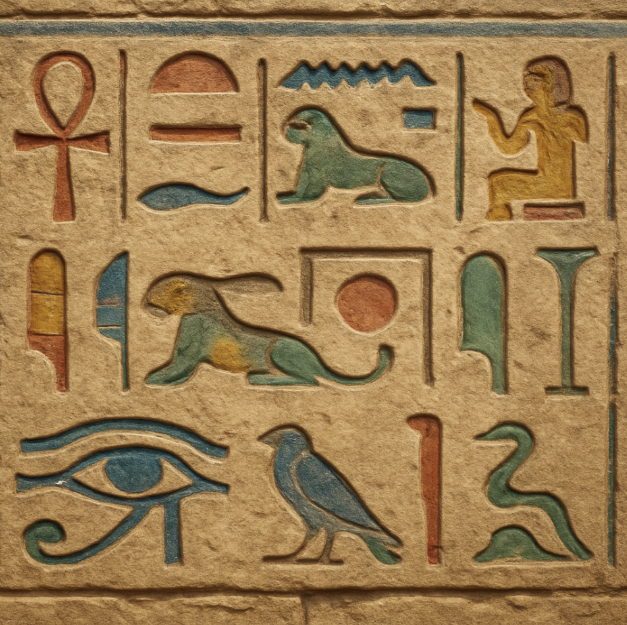
The deep linguistic roots of this ancient script must be studied because that is the only way to achieve proper understanding of its historical value. The Afroasiatic language family contains its roots which linguists use to trace the ancient Egyptian language back to its earliest beginnings, from which it evolved into modern Arabic and Hebrew languages. The historical connection serves as a crucial explanation because it shows the reason ancient Egyptian uses root consonants as its primary linguistic element, which exists in modern Egyptian languages.
The people who created writing system viewed it asmore than a practical tool because they believed it contained special magical power. They called their writing system Meduneter. The Meduneter sacred carvings which he called "the gods' words" required extreme accuracy in their temple and monument carving process because it demanded exact replication of their original design. The act of writing a name established its permanent existence.
The development of formal hieroglyphic writing began around 3200 BCE. The work contained extensive decorative elements which served dual purposes to create both monumental inscriptions and sacred texts that displayed aesthetic beauty together with their written content.
Beyond Hieroglyphs: The Working Scripts of the Nile
The Egyptians who needed to create daily writing materials developed faster and more efficient writing systems that met their requirements.
The Nile River area had two different scripts which people needed to learn for their daily activities.
Hieratic: This writing system serves as the cursive counterpart to hieroglyphs. The formal script developed its writing style through Hieratic which priests and accountants used to create religious texts and inventory lists.
Demotic: Demotic developed as an even shorter script which became available during the 650 BCE period for use in legal papers and personal correspondence and government operations. The script showed almost no connection to the original images which formed its basis.
The writing system experienced another transformation when Greek and Roman empires began to establish their dominance. The Coptic script evolution saw the Egyptian language written using the Greek alphabet, supplemented by a few Demotic signs. Coptic emerged as the final stage of ancient Egyptian language development which enabled proper vowel pronunciation for interpreting ancient Egyptian words.
The Breakthrough: Unlocking a Lost World
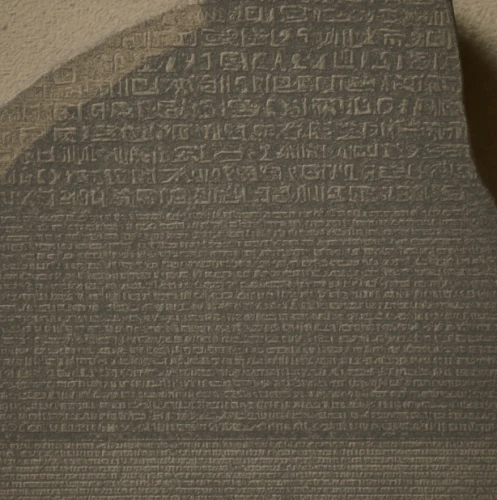
All knowledge of ancient script reading disappeared during the 4th century CE. For more than 1000 years, scholars observed temple walls while struggling to comprehend their meaning.
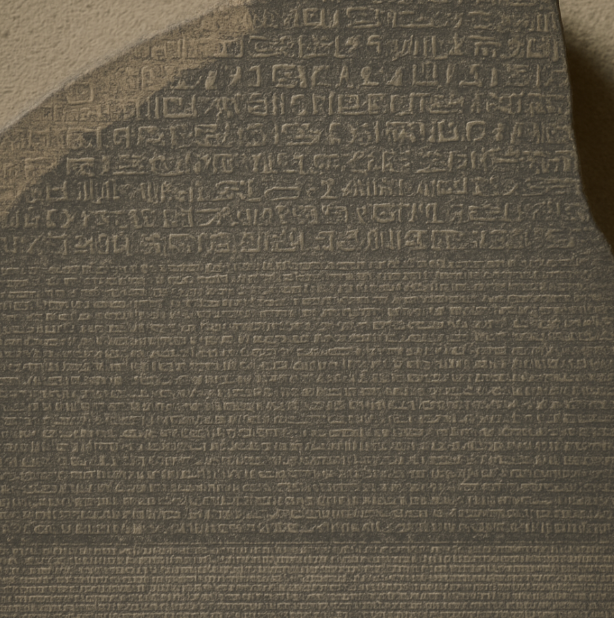
The discovery of a dark granodiorite stele in the Nile Delta marked the beginning of the turning point in 1799. The Rosetta Stone decipherment process represents one of history's most exciting intellectual detective investigations. The stone provided scholars with a bilingual key because it contained the same royal decree written in three scripts which included Hieroglyphic Demotic and Ancient Greek.
The true breakthrough arrived in 1822, driven by the brilliant Jean-François Champollion contributions. Champollion understood that hieroglyphs functioned as two distinct elements because they combined pictorial symbols with spoken word representation. His brilliance unlocked the code which enabled translators to transform papyrus scrolls into modern languages including English and French.
Cracking the Code: How to Read Egyptian Hieroglyphs
All knowledge of ancient script reading disappeared during the 4th century CE. For more than 1000 years, scholars observed temple walls while struggling to comprehend their meaning.
The discovery of a dark granodiorite stele in the Nile Delta marked the beginning of the turning point in 1799. The Rosetta Stone decipherment process represents one of history's most exciting intellectual detective investigations. The stone provided scholars with a bilingual key because it contained the same royal decree written in three scripts which included Hieroglyphic Demotic and Ancient Greek.
The true breakthrough arrived in 1822, driven by the brilliant Jean-François Champollion contributions. Champollion understood that hieroglyphs functioned as two distinct elements because they combined pictorial symbols with spoken word representation. His brilliance unlocked the code which enabled translators to transform papyrus scrolls into modern languages including English and French.
1. Sound Signs (Phonograms)
Unlike English letters, the phonetic symbols in Pharaonic texts represent only consonants; vowels were spoken but rarely written. These sound signs come in three varieties:
-
Uniliterals: Symbols representing a single consonant sound (like an alphabet). For example, a drawing of a mouth represents the "r" sound.
-
Biliterals: Symbols representing two consonants.
-
Triliterals: Symbols representing three consonants.
2. Meaning Signs (Ideograms and Determinatives)
The ancient Egyptians created written forms which lacked vowel sounds, resulting in two distinct words showing identical spellings. To prevent misunderstandings, scribes employed determinatives which functioned as visual elements in their pictorial writing systems. The system included silent symbols which readers could find at the end of words to help them understand the word's meaning. The word "old" would end with a picture showing a man who used a stick for support, which confirmed the context of the word.
3. Grammar and Direction
The structural rules of Middle Egyptian grammar (the classical form of the language) show complete divergence from English. The language uses Verb-Subject-Object (VSO) word order as its main structure. Hieroglyphs can be read in three different ways through left-to-right right-to-left and top-to-bottom reading methods.
Actionable Tip: Want to know which way to read a temple wall? Look at the human and animal figures! The figures always look toward the starting point of the line. You should begin reading from the right side when birds and people look towards that direction.
A Glimpse into Ancient Vocabulary
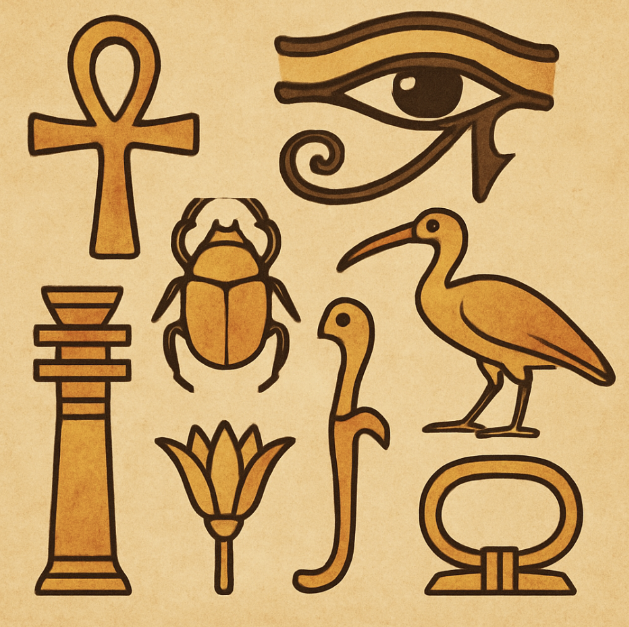
You don't need a degree in Egyptology to recognize some of the most common Egyptian phrases and meanings found on artifacts worldwide:
-
Ankh: The famous cross with a loop at the top, meaning "Life."
-
Djed: A pillar-like symbol representing "Stability."
-
Seneb: Often depicted alongside the Ankh and Djed, meaning "Health."
-
Udjat: The Eye of Horus, symbolizing "Protection" and "Wholeness."
The Master Communicators: Scribes in Ancient Egypt
Every temple inscription and tax record and magical spell exists because a master craftsman created it. Ancient scribes performed essential social functions in their society. The state depended on scribes for administration because only 1 percent of the population could read and write.
Scribes lived an existence that provided them with special advantages. The exempted people from labor and taxes that filled their days while they worked in agriculture. The path to becoming a scribe required students to endure three years of study because they had to memorize hundreds of signs yet this path provided them with the chance to advance their social status. Their tools which included a wooden palette and red and black ink cakes and reed brushes served as markers for intellectual knowledge and high social standing.
Keeping the Gods' Words Alive
The ancient Egyptian language serves as proof that humans possess creative abilities. The original mystical approach for sacred communication with gods developed into an advanced system which could record poetry and mathematics and legal documents and personal correspondence.
The "gods' words" now speak to us because linguists and historians dedicated themselves to their research. The act of translating hieroglyphs enables us to bring back to life the ancient Egyptian pharaohs and scribes and common citizens who achieved eternal life through their written words.





-webp.webp "Hilton")
-webp.webp "dusit")
-webp.webp "Marriott Hotels")
-webp.webp "Azimut Hotel")
-webp.webp "Golden Tulip")
-webp.webp "sheraton")
-webp.webp "westin hotel")
-webp.webp "Movenpick")
