
 English
 Italy
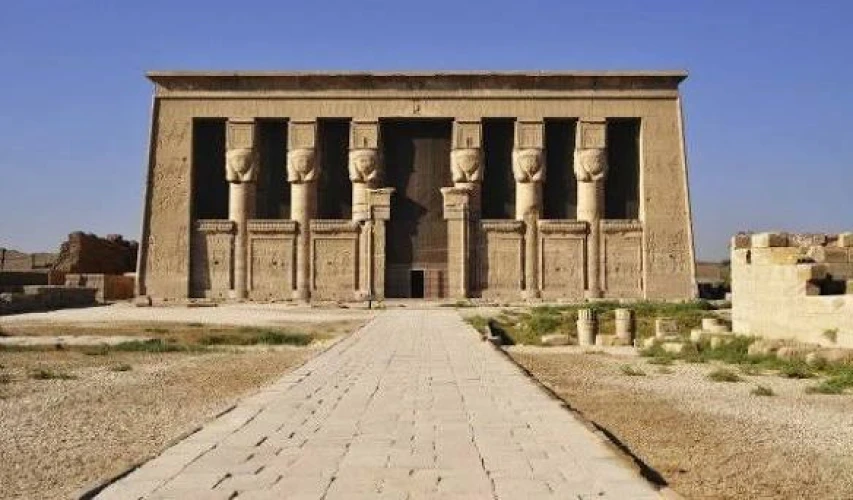
Tuna El Gebel: The Subterranean Necropolis and Desert Oasis of Hermopolis
The Middle Egyptian archaeological landscape is remarkably diverse, providing with the remnants of Pharaonic, Hellenistic, Roman, and Byzantine material culture and history. But the most fascinating and eerie archaeological site of all is Tuna El Gebel, a huge necropolis lying on the periphery of the Western Desert, about seven kilometers west of the ancient Hermopolis Magna (modern city of Al-Ashmonein). Tuna El Gebel was the vast necropolis of Hermopolis, with its incomparable animal catacombs, monumental Graeco-Roman tombs, exquisite Graeco-Roman painted houses, and the historical boundary stelae of Akhenaten. By exploring its geographical location, subterranean marvels, the Greco-Roman tombs, and historical significance, it becomes apparent that Tuna El Gebel offers a fascinating insight into the rich history of Egypt’s Middle Period.
1. The Geographical Setting and Historical Context
Tuna El Gebel is located in a unique location where the green farmlands of the Nile floodplain come to an abrupt end against the sun-scorched desert cliffs of the Western Desert.
A. The Necropolis of Hermopolis Magna
In ancient times, Tuna El Gebel was the major burial ground and sacred landscape for the citizens of the nearby city of Hermopolis Magna. While the city was a vibrant center of daily, administrative, and academic life, devoted to the deity of wisdom – Thoth, the necropolis beyond the desert was the realm of the dead. Here the priests, pilgrims, and animal cult keepers buried millions of sacred animals that were revered and mummified, alongside the wealthy provincial families.
B. Akhenaten and the Boundary Stelae
Tuna El Gebel acquired its peculiar historical significance long before it was a Roman or Graeco-Egyptian necropolis. It was during the reign of the heretic Pharaoh Akhenaten of the Eighteenth Dynasty that a part of the desert plateaus was carved out to inscribe the famous Boundary Stelae. When Akhenaten initiated his radical monotheistic reforms, he founded his new capital city of Akhetaten (modern-day Amarna), further to the north. But before building his new religious center, the heretic Pharaoh had to mark out the territorial boundaries of his soon-to-be capital. Some of the most significant boundary stelae are located at Tuna El Gebel – the southernmost point of the Amarna kingdom, witnessing the king’s promise never to pass beyond the carved lines.
2. The Subterranean Animal Catacombs
The most famous feature of Tuna El Gebel necropolis is the extensive underground animal catacombs, dedicated to the worship of sacred animals.
A. The Cult of Thoth and the Ibis
As it was the necropolis of Hermopolis – the city of Thoth, one of the most revered gods in ancient Egypt, it is not surprising to find that Tuna El Gebel housed one of the largest animal catacomb complexes. Thoth was believed to have taken various animal forms, most commonly the ibis bird and the baboon. Therefore, the pilgrims coming to the Hermopolis had an option to buy a mummified ibis or baboon from their city’s temple’s breeding grounds and present it as a gift to the god.
B. Exploring the Labyrinthine Galleries
It was the modern excavators who stumbled upon the extensive subterranean galleries stretching for miles beneath the desert. The passageways were carved out of limestone, and within them, the researchers found thousands of pottery amphorae, as well as niches, with mummified ibises and baboons. However, the sight of a long underground gallery, dusty and full of animal mummies, is an indescribable experience offering a glimpse into the incredible scale of animal cult worship during the Late Period and the Graeco-Roman period.
3. The Greco-Roman Tombs and Funerary Architecture
The Greco-Roman period was a time of Persian, Greek, and Roman rulers in Egypt, and their provincial elites built numerous distinctive surface tombs, decorated in classical architecture style.
A. The Tomb of Petosiris
One of the famous examples of the Graeco-Roman tombs is the tomb of Petosiris, the Thoth Priest, dating back to the late fourth century BC. Which means that this temple was built on the eve of the Persian period’s end and the Macedonian Greek period’s beginning with the arrival of Alexander the Great.
The Architecture: the tomb is built of limestone rock cut out to form a small-scale temple with a fronted portico. The portico has four fluted Greek-style columns, opening up into the inner offering chamber.
The Art: The interior of the tomb of Petosiris features stunning examples of the wall reliefs, depicting the familiar ancient Egyptian scenes of agricultural labor, winemaking, and the offerings brought to the temple. However, the figures in the reliefs are rendered in a distinctly Hellenistic style, suggesting the presence of Greek influence in the artistic expression of Ptolemaic Egypt.
B. Roman-Era Monumental Tombs
Apart from the temple-style tombs, there are also massive tower tombs and underground burial chambers, dating back to the Roman period. This funerary monument architecture represents the wealth of the provincial families in Roman Egypt, as the Roman rulers allowed considerable local autonomy regarding burial practices.
4. The House of Isadora and the Roman Domestic Funerary Art
One of the most poignant discoveries in the necropolis of Tuna El Gebel is the structure known as the House of Isadora.
A. The Tragedy of Isadora
Built in the second century AD during the Roman period, this house is actually a tomb, dedicated to a young woman named Isadora, a wealthy local of Hermopolis. However, her life was cut short when the unfortunate girl drowned in the Nile River while trying to reach her beloved, who lived on the other side of the riverbank. Her father, overcome with grief, inscribed several elegiac Greek poems on the walls of her tomb, which survive to this day.
B. Frescoes and Preservation
The interior walls of the house of Isadora feature marvelously preserved Roman-era frescoes. The upper register has lovely floral motifs and mythical creatures, while the middle one has a painted portrait of Isadora herself. However, the best part is that the vibrant colors of the frescoes are still present, providing a breathtaking view of Roman antiquity. The house of Isadora has a unique historical value, bearing witness to the domestic Roman funerary art and its cultural significance.
Conclusion
Tuna El Gebel necropolis is a unique archaeological site on the edge of the Western Desert. From the famed boundary stelae of Akhenaten to the sprawling animal catacombs, from the Graeco-Roman tomb art to the tragedy-inscribed house of Isadora, Tuna El Gebel has a rich and peculiar history that modern explorers and locals can witness in the heart of the Middle Egyptian desert.