
 English
 Italy
Italy
-webp.webp)
Top Things to Do in Luxor: Valley of the Kings, Karnak Temple, and Hot Air Balloon Tips
The World's Greatest Open-Air Museum: The Ultimate Guide to Things to Do in Luxor
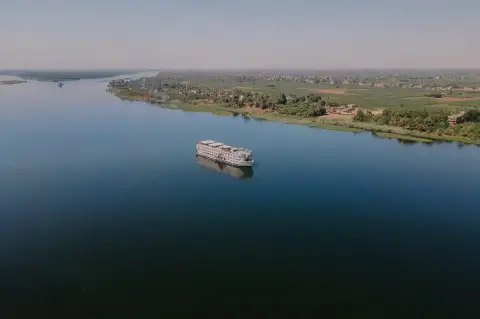
If you catch a train, or even a short flight south, off the packed, chaotic streets of Cairo, and then keep going along that winding green strip of the Nile Valley, deep into Upper Egypt… eventually you step down into a place where time kinda feels like it has paused, like completely, for over three thousand years. Welcome to Luxor. Ancient Egyptian scribes and Greek chroniclers called it Thebes , the legendary city, and today this quiet sun-soaked river town still carries the densest collection of ancient monuments, enormous temples, and royal tombs you can find anywhere on the planet.
Luxor is basically split into two very different spiritual universes, by the Nile’s natural curve and flow. On the east side, where the sun shows up first each morning, is the East Bank—the old settlement of the living, where mind-blowing temples were raised to honor the gods, and to highlight the pharaoh’s almost divine authority. On the west side, where the sun sinks behind jagged limestone cliffs, sits the West Bank—the city of the dead, where tucked-away valleys guard the eternal sleep of Egypt’s top kings, queens, and noble families.
So whether your plan is to wander through a giant maze of upright stone columns, or stare straight into vivid, flawlessly maintained paint inside an underground royal tomb, or just drift silently over the desert scenery in a hot air balloon at dawn… Luxor has that rare way of pulling you into the core of human history. And okay, here’s a thorough, no-skipping details guide to the very best sights, activities, and experiences you should line up in this kind of open air museum.
The East Bank: Temples of the Living and Cosmic Avenues
Your exploration of Luxor should naturally start on the East Bank of the river , where the ancient people put monuments up at a scale that really defies imagination… honestly.
The undisputed crown jewel of this side is the massive Karnak Temple Complex. Karnak is not just one temple; it’s a giant , sprawling religious city built expanded and constantly tweaked by over thirty different pharaohs across nearly two thousand years. Every ruler seemed to think, “I need to outdo the last one” and then they actually did.
The absolute highlight, inside Karnak, is the Great Hypostyle Hall. Walking into this space feels like stepping inside some dense forest made for giants. You end up surrounded by 134 colossal sandstone columns, rising as high as eighty feet into the sky, all of them covered from base right up through the capital with deeply carved hieroglyphic scenes. If you look closely at the upper architraves where the desert sun hasn’t bleached everything away yet, you can still catch traces of the original red, yellow, and blue paint, applied by royal artists millennia ago.
After you spend a morning getting a bit lost in the vast ruins of Karnak, take a short trip along the riverbank to visit Luxor Temple. It sits right in the center of the modern town, and it feels almost intimate, compared to the sprawling, chaotic sprawl of Karnak. Luxor Temple was dedicated not to a single god, but to the rejuvenation of kingship itself.
The best time to go to Luxor Temple is late afternoon , right as the sun starts to slide toward evening. The modern lighting system comes on, and the massive statues of Ramesses II , along with the elegant obelisks, glow in a warm golden tone against the dark night sky. And connecting these two enormous temple complexes is the newly restored Avenue of Sphinxes, that spectacular two-mile-long ancient pathway lined with hundreds of beautifully
The West Bank: Valleys of Eternity and Hidden Tombs
Crossing the Nile to the West Bank feels like stepping into some sort of other dimension, like you blink and suddenly the whole vibe has changed. The modern town kind of disappears , replaced by quiet sugarcane fields, traditional mud-brick villages, and those imposing, sun baked limestone hills that rise up from the Theban mountains .
Your first proper stop over here is at the base of the cliffs, to see the Colossi of Memnon. Two twin, almost heroic-sized stone statues of Pharaoh Amenhotep III sit silently next to the main road, guarding a temple that has long ago vanished into the sand. They’re like the perfect , very dramatic entrance into the old necropolis.
Go deeper and you’ll end up in a hidden, sun scorched canyon where the world-famous Valley of the Kings sits. The Old Kingdom pharaohs already learned that their massive, pointed pyramids became giant targets for grave robbers, so the New Kingdom rulers basically decided to take a different approach. They hid everything by moving the eternal resting places completely underground, carving deep tunnels straight into the limestone rock.
With a standard general ticket you can step into three different royal tombs. Walking down those sloped underground corridors is a breathtaking experience, honestly. The walls are filled with insanely detailed, vibrant reliefs showing magical spells from the Book of the Dead, made to guide the pharaoh safely through the dangers of the underworld. The colors are still vivid, crisp, and so fresh that it almost seems like the ancient artists packed up their brushes just yesterday . And for a truly historic moment you can add an extra ticket to enter the small, famous tomb of King Tutankhamun, where the young king’s actual mummified body still lies in its original stone sarcophagus , right where it was set.
You do a short drive around the mountain, and then suddenly there it is, the stunning Mortuary Temple of Hatshepsut at Deir el-Bahari. Hatshepsut, one of Egypt’s few female pharaohs, had this place commissioned , a temple that felt almost radically modern for its time, not even kidding. Her royal architect designed it, and the structure is made up of three massive and really elegant terraced levels, they kind of sit together so smoothly that the whole thing blends into the sheer vertical limestone cliffs right behind it. Honestly it reads like a masterpiece of architectural harmony, showing the full height of pharaonic ambition and that same refined artistic grace.
Floating with the Winds: The Sunrise Hot Air Balloon
Honestly, walking through those ancient stone places is already incredible, but seeing Luxor from the sky… it is sort of magical, you know, a perspective-shifting moment that you really can’t afford to miss. Luxor is worldwide famous for being one of the best, and also very affordable, spots in the whole world to go on a hot air balloon ride.
The whole thing starts in that pitch-black darkness before dawn. You’ll cross the quiet Nile by motorboat , then you head over to the takeoff field on the West Bank just as the ground crews begin inflating those huge colorful balloons, with little bursts of bright fire.
When your basket finally rises, gently, off the ground and into the cool morning air, everything ancient spreads out beneath you. You glide quietly with the wind as the golden morning sun shows itself over the eastern horizon, lighting up the glittering blue ribbon of the Nile, the bright green farm lands, the massive stone pylons at Karnak, and the rough, mysterious wadis and valleys on the West Bank. It feels serene and profoundly still, a single glance that somehow holds the timeless, eternal beauty of Upper Egypt , all at once.






-webp.webp "Hilton")
-webp.webp "dusit")
-webp.webp "Marriott Hotels")
-webp.webp "Azimut Hotel")
-webp.webp "Golden Tulip")
-webp.webp "sheraton")
-webp.webp "westin hotel")
-webp.webp "Movenpick")