
 English
 Italy
Italy
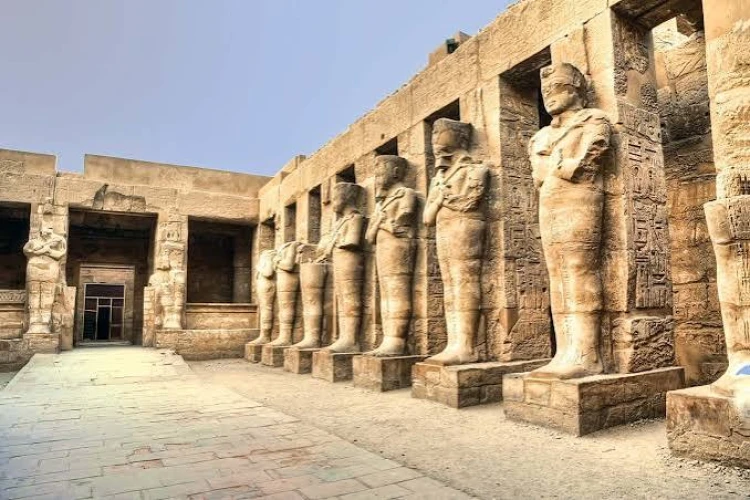
The Temples of Karnak as a Source of Ancient Egyptian History
Situated on the east bank of the Nile at ancient Thebes, the modern day Luxor, stands the largest temple complex built by the ancient world, known as Karnak. Covering more than two hundred acres in size and built upon continuously for over two thousand years from Senusret I of the Middle Kingdom to the Ptolemaic and Roman periods, the temple complex of Karnak was not only a religious site dedicated to Amun, Mut, and Khonsu, but served as a core economic hub and repository for historical archives of the Egyptian empire.
Due to its sheer involvement in the history of the region and the contributions of nearly all Pharaohs to its expansion, renovations and decorations, the temple complex of Karnak stands as a monumental edifice of layered history carved into stone.
This article will explore the significance of Karnak and its relevance to scholars through its physical development as a timeline of Egypt's history, its use as a medium to record the military annals of the New Kingdom, and serve as a reminder of the economic and administrative might of the ancient Egyptian state.
1. Physical Timeline: The Architectural Development of the Ancient Egyptian Temple Complex
Unlike typical architectural developments in history, which are usually defined by a single time period and patron, the development of the temple complex at Karnak represents the chronological history of ancient Egypt carved directly onto stone.
A. Reading Ancient History Through Palimpsests: The Use of Reclaiming Old Materials in Building Karnak
A particularly fascinating feature of the development of Karnak is the use of recycled materials by later Pharaohs to build structures or elements of structures for their temple complex out of the remains of their predecessor's buildings.
Chapelle Rouge of Hatshepsut: After her death, the temple built by the Pharaoh Hatshepsut was dismantled by her successor, Thutmose III, in order to erase all traces of a woman's rule in Egypt. The quartz blocks were repurposed as filler in the Third Pylon built by Amenhotep III. Modern-day archeologists uncovered the entire chapelle rouge when excavating the Pylon, which provided invaluable insight into the reign of Hatshepsut and the details of her joint coregency with Thutmose III.
Talata stones of Akhenaten: After the downfall of Akhenaten and the collapse of his sun temple building projects at Karnak, hundreds of thousands of talata stones, the standard building blocks used in the construction of his capital, Amarna, were repurposed. These blocks were used as fillers in the construction of the Ninth and Tenth Pylons built by Horemheb. The excavation of these blocks provided Egyptologists with a glimpse into the culture, architecture and art of the Amarna period.
B. Axes of Expansion, Political and Religious: The Two Axes of Expansion at Karnak
The complex was expanded along two perpendicular axes.
East-West Axis: The East-West axis, aligned with the rising and setting sun, was expanded primarily by the Middle Kingdom and Eighteenth Dynasty Pharaohs, who sought to associate their rule with the divine authority of Amun-Ra.
North-South Axis: The North-South axis led to the Luxor temple and the territorial borders of the kingdom and was expanded primarily during the New Kingdom to symbolize the power and reach of the pharaohs who ruled during the period, as well as their connection to the southern borders and the women's cults of the region.
2. Chronicles of Conquests: The Military Annals of the New Kingdom Carved Into Stone
During the period of Egypt's ascendancy as a global military power, during the Eighteenth and Nineteenth Dynasties, the Karnak temple complex served as a favored medium used by the Pharaohs of the time to depict and document their military successes and royal achievements.
A. The Annals of Thutmose III
The longest and most detailed account of a Pharaonic military campaign is carved into the sandstone faces surrounding the granite sanctuary of Amun. The Annals of Thutmose III detail the seventeen campaigns of the Pharaoh into Syria-Palestine carried out over the course of twenty years of his reign.
Detailing specific military tactics and engagements, among the most notable of which is the famous battle of Megiddo fought in 1457 BCE and described in detail in the annals, the annals provide historians with concrete numbers of gold, silver, bronze-plated armor, chariots, horses, herds of cattle and harvests of grain and produce taken as war spoils after the siege of the city.
B. Great Hypostyle Hall and Ramesside Military Triumphs
The Great Hypostyle Hall, measuring 134 sandstone columns in height is primarily the work of Seti I and Ramesses II of the Nineteenth Dynasty. Seti I's military campaign scenes are some of the best examples of masterfully carved monumental sculpture in ancient Egypt.
Depicting the Pharaoh's campaigns in the Levant, Nubia and Libya, the scenes carved into the north wall of the hall's exterior provide the most detailed account of ancient Egypt's military equipment, including siege towers, foreign weaponry, landscapes, and naval ships used in battle.
The Kadesh Poem and Bulletin regarding the battle of Kadesh fought between Ramesses II and the Hittite Empire are also found carved into the south wall of the Hall. Together with the hieroglyphic text of the subsequent peace treaty between Egypt and the Hittites, also found in the temple complex, the poem provides scholars and historians with a unique opportunity to compare the surviving ancient Egyptian records with simultaneously existing Akkadian cuneiform records found in the ruins of the Hittite capital, Hattusa.
3. Socio-Economic and Administrative Archives of the Temple Complex
While many of the inscriptions and structures within the temple complex depict and document the military achievements of the Pharaohs and their commanders, many of them contain vital information concerning the socio-economic foundations and administrative capacity of the ancient Egyptian state.
A. The Economic Might of the Temple of Amun
As the foremost religious institution in ancient Egypt, the temple of Karnak amassed great wealth and influence. The temples held vast tracts of land across Egypt, a fleet of river-merchantmen, copper mines in Sinai, gold mines in Nubia, and employed tens of thousands of agricultural workers in its vast estates. Many inscriptions within the complex document the wealth and tributes due to the temple, as well as the distribution of war spoils and other revenues to the state and the private endowments of the Pharaohs.
B. Legal Decrees and Judicial Reforms: Decree of Horemheb and the End of the Amarna Period
Some of the most important inscriptions to be found in the complex are the legal decrees issued by the Pharaohs of Egypt, which detail the social and economic difficulties undergone by the kingdom during the reign of Akhenaten.
The Decree of Horemheb found carved into the Tenth Pylon details the severe punishments due to government corruption, military misappropriation, illegal taxation and bribery. It provides modern historians with valuable insight concerning the social conditions of the time and the measures taken by the government to alleviate some of the burdens suffered by the common people.
4. Foreign Rule and Later Additions to the Temple Complex
The Karnak temple complex was not only significant as a religious and economic institution in ancient Egypt, but served as a medium through which the foreign rulers of Egypt sought to legitimize their rule in Egypt by linking their names and achievements to the revered temple complex of their predecessors.
A. The Third Intermediate Period and the Origins of the Libyans in Egypt
During the reign of the Twenty-Second Dynasty, the rulers of foreign, Libyan origin, sought to strengthen their position in Egypt by associating themselves with the temple complex. The Libyans completed the great work of restoring temples throughout Upper and Lower Egypt. Most notable is the large relief on the outer wall of the Bubastite Portal near the Second Pylon, depicting the ruler Shoshenq I (the biblical King Shishak) celebrating his conquests in Judah and Israel in approximately 925 BCE. The hieroglyphic text inscribed upon the relief details the numerous and diverse possessions and conquests of the Pharaoh, including more than 150 cities and villages incorporated into the territorial holdings of ancient Egypt.
B. The Nubian Renaissance of the Twenty-Fifth Dynasty
Upon conquering Egypt, the Nubian pharaoh Taharqa invested heavily into the restoration and enhancement of the Karnak temple complex. His most notable contribution to the complex's development was the construction of a massive ten-column kiosk within the Great Court. Taharqa and his successors made extensive contributions to the complex, which are a testament to the Nubian Pharaohs' devotion to Amun-Ra and the attempt to recreate the classical artistic and architectural tradition of the Old Kingdom.
Conclusion
The Karnak temple complex is a monumental achievement of the ancient Egyptians, which showcases not only the splendor of the classical Egyptian architecture, but serves as a repository of knowledge and inspiration for modern scholars. Across its many different buildings and monumental structures, the history of the ancient Egyptian empire is preserved in stone.
From the annals of military conquests of the New Kingdom Pharaohs, the economic and administrative might of the Egyptian state, its extensive system of governance and bureaucracy, up to the contributions of foreign rulers in continuing the development of the temple complex long after its initial consecration, the complex at Karnak holds invaluable knowledge for modern historians studying the ancient past.





-webp.webp "Hilton")
-webp.webp "dusit")
-webp.webp "Marriott Hotels")
-webp.webp "Azimut Hotel")
-webp.webp "Golden Tulip")
-webp.webp "sheraton")
-webp.webp "westin hotel")
-webp.webp "Movenpick")
