
 EN
 IT
 ES
 FR
 ZH
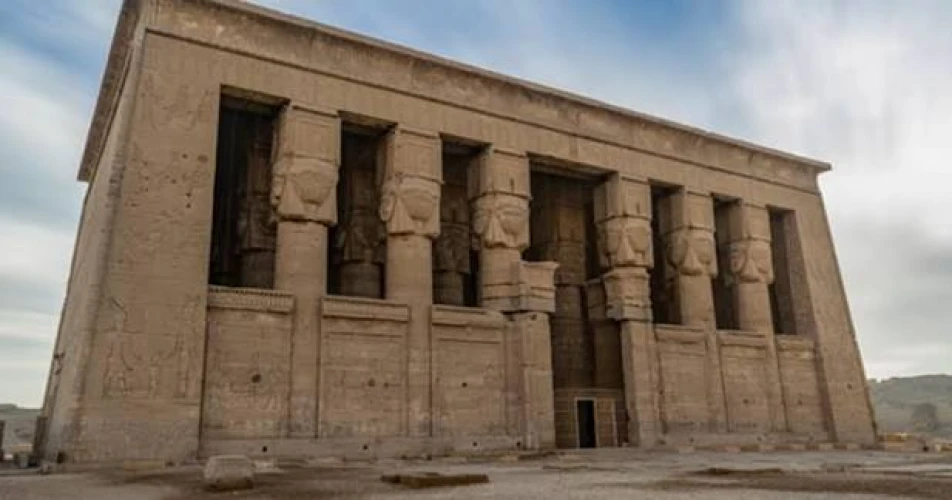
The Temple of Dendera: Discovering the Sanctuary of Hathor
On the west bank of the Nile River in Upper Egypt, lies one of the most well-preserved, beautiful and complex religious sanctuary complexes from the ancient world. The Temple of Dendera, was anciently known as Iunet/Tentyris. The Temple was the main place of worship to the goddess of joy, love, music, motherhood, harmony and the sky, Hathor. Although there has been religious activity here since the Old Kingdom in the time of King Pepi I and the Middle Kingdom Pharaohs, the stone structure we see today was mainly created during the late Ptolemaic and Roman periods. This includes the reigns of Cleopatra VII, Trajan and Hadrian. As one of the few temples to remain intact with its roof, celestial ceilings, crypts and stunning reliefs, the Temple provides us with a unique insight into the religious beliefs, practices and architectural brilliance of the Graeco-Roman era of Egypt. We will explore the religious aspects of the temple, architecture, celestial ceilings, crypts and cultural importance of the temple.
1. Religious Themes: Hathor and the Temple
To understand the layout and decoration of the temple we need to know about the complex religious nature of the goddess Hathor and her family.
A. The Goddess of Joy and Harmony
One of the oldest, most popular and complex goddesses in the Egyptian pantheon. Hathor is commonly shown in art as a beautiful lady with cow horns surrounding her head. In some cases she could be shown with a sun disc, cow or regal lady with a sistrum crown. She was the goddess of music, dancing, drunkenness, fertility, beauty and motherhood. However she also had a more fierce aspect as the Eye of Ra. She could cause destruction using the power of the sun on those who opposed Ma’at.
B. The Sacred Marriage
Hathor was worshipped here with her husband Horus of Edfu and their child named Ihy, the god of music and playing of the sistrum. Every year the temple statue of Hathor would be placed in a sacred boat and sailed down the Nile towards the Temple of Edfu to meet up with her husband to celebrate their sacred marriage. This would last for several weeks and is known as the ‘Festival of the Beautiful Reunion’.
2. Architecture
The Temple of Hathor is contained within a huge mudbrick enclosure wall measuring almost three hundred metres in length. There are two huge stone gateways leading into the temple built during the times of Roman Emperors Domitian and Trajan.
A. Great Hypostyle Hall (Praonos)
When entering the temple through the northern gate you are faced with the massive Great Hypostyle Hall (Praonos). This was built during first century CE under the rule of Roman Emperor Tiberius. The Great Hypostyle Hall has six massive walls covered in carved cavetto cornices and tall columns.
Columns of Hathor
Within the Great Hypostyle Hall there are twenty-four tall columns. These columns are over fifteen metres tall and have huge four sided capitals showing the face of the goddess Hathor with cow ears. On top of these capitals sits a miniature shrine (naos). During late antiquity these columns were targeted by iconoclasts however they still give off a magical feel as the calm looking cows can be seen.
Light
There are small rectangular openings in the roof of the temple. This would create beams of light shining into the dark hall. This would illuminate the thick clouds of incense that would have been present during ceremonies.
B. Interior
Behind the Great Hypostyle Hall is the inner part of the temple. This section of the temple was built during the Ptolemaic period under Ptolemy XII Auletes and Queen Cleopatra VII. This area contains an inner appearance hall, offering rooms, incense and perfume room, treasury and centre most area which is the Sanctuary of the Naos. This is the final chamber of the temple and was pitch black. Within this chamber the priests would keep the sacred bark made of wood and the small golden statue of Hathor. This would only be taken out on high festival days.
3. Celestial Ceilings
One of the greatest pieces of art ever created can be found in the Temple of Dendera. The ceilings contain amazing artwork.
A. Praonos Ceiling
The Great Hypostyle Hall has a ceiling containing seven sections of beautifully carved and painted artwork. The artwork shows many images in bright colours including Egyptian blue, turquoise, yellow and red.
The goddess of the sky Nut with her arms stretched out. She swallows the sun during the night and gives birth to it during the morning.
Symbols of the sun, moon, constellations, decans (groups of stars used to tell the time during the night) and barques of the planets. This includes Saturn, Jupiter, Mars, Venus and Mercury.
B. The Dendera Zodiac
In the ceiling above there is a famous room containing the Dendera Zodiac. This is a circular carving on a huge sandstone block. This is the only complete circle of the ancient sky. This combines the traditional Egyptian decans and constellations with classical Babylonian and Greek astrological signs. These include the twelve familiar signs of the zodiac. For example Taurus, Aries, Scorpio, Leo.
During 1821 with permission from the ruler of the area, French antiquarians took the original Zodiac stone block. They transported it to Paris. The original is now located in the Musée du Louvre. There is a accurate replica of the Dendera Zodiac located in the rooftop room.
4. Crypts
One of the few temples to have crypts. There are twelve crypts inside the thick stone base of the temple. These crypts are very narrow.
A. Purpose
These crypts have been carved into the stone. They are completely dark and can only be accessed through small sliding stones in the walls. The high priest would use these to store the most precious items in the temple. This includes golden statues of Hathor, ancient scrolls of papyrus, sacred sistrums and sacred emblems.
B. The Mysterious Dendera Lights
Within Crypt No.4 there is artwork on the walls. The artwork shows priests holding large lotus shaped jars containing snakes. They are supported by the djed pillars which symbolised stability. Many people have tried to explain what these strange reliefs are. Some believe they are ancient electric bulbs however Egyptologists and Historians know they are just traditional religious symbols. The lotus flower grows from Nun (the chaos) and gives birth to the sacred snake which represents the sun during the morning and the creation of the universe during the Egyptian New Year.
5. Cleopatra VII
This temple has major historical importance as it is one of the few monuments to show huge statues of the famous Cleopatra VII.
A. Back Wall
On the large back wall of the temple there is a huge multi level relief. This shows Cleopatra VII wearing the traditional regalia of a female Pharaoh. Behind her stands her young son Ptolemy XV Caesarion (son of Julius Caesar). He is shown in the relief as a co-Pharaoh offering incense and gifts to Hathor and her family.
B. Justification
Cleopatra has created an amazing campaign by showing herself and Caesarion with Hathor on the outside of the sanctuary. This shows to everyone that her son was the divine child of the gods, rightful ruler of Egypt and heir to the Ptolemaic Kingdom and Roman world.
Conclusion
The Temple of Dendera is a sanctuary of joy, harmony and architectural brilliance. The temple contains massive Hathor headed columns, complex crypts, incredible celestial ceilings and incredible reliefs of the royal family of Cleopatra VII. This temple in Upper Egypt will provide you with an unforgettable experience of ancient Egyptian religion. The sanctuary has survived for thousands of years covered in sand. However modern conservators have cleaned the temple to reveal the true colours of the temple. The sanctuary still amazes the world with the beautiful, glowing and musical goddess.