
 English
 Italy
Italy
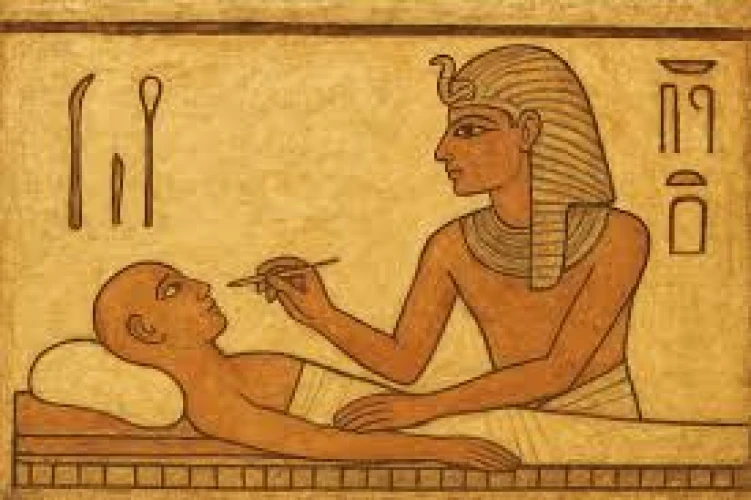
The Rite of Purity: The Surprising History of Circumcision in Ancient Egypt
Introduction: A Tradition Carved in Stone
While many associate the practice of circumcision with later religious traditions, its origins are deeply rooted in the scorching sands of the Nile Valley. For the Ancient Egyptians, "purity" (uab) was not just a suggestion—it was a requirement for social standing and spiritual salvation. Long before modern medicine, the Pharaohs had already codified the rules of male hygiene into a ritual that lasted for millennia.
Not at Birth: The Egyptian Timing The Ancient Egyptians had a different timeline than we do now, when the procedure often happens within days of birth. Evidence suggests that circumcision was a rite of passage into manhood. It usually took place between the ages of 10 and 14.
This transition was symbolic; it marked the moment a boy left the world of childhood and entered the world of the "initiated." It was often done in groups, which suggests that it was a shared experience that brought young men together before they became adults or became priests.
The "Physician’s Tomb": The Smoking Gun
How do we know so much about a 4,000-year-old procedure? We have the "photographic" evidence of the ancient world. In the Tomb of Ankhmahor at Saqqara (often called the "Physician’s Tomb"), there is a vivid relief depicting the surgery in progress.
The scene is strikingly clinical:
The Surgeon: A specialist (possibly a priest) performs the cut.
The Assistant: One man holds the boy’s hands to keep him still.
The Dialogue: The hieroglyphs even capture the conversation! The surgeon says, "Hold him fast, do not let him fall," while the assistant replies, "I will do as you praise." It is a rare, raw glimpse into a medical reality from 2400 BCE.
The Tools: Flint vs. Metal
In a fascinating nod to tradition, the Egyptians often used flint (stone) knives for circumcision long after they had invented copper and bronze tools. Why? Because flint can be flaked to an edge much sharper than metal, and it held a ritualistic "purity" that modern materials lacked. These "ritual knives" were the precursors to the sterile scalpels we use today.
Hygiene or Holiness?
Why did they do it? The reasons were twofold:
Practical Hygiene: In the hot, dusty climate of Egypt, cleanliness was a matter of survival. The Greek historian Herodotus noted that Egyptians "practiced circumcision for the sake of cleanliness, considering it better to be cleanly than comely."
Ritual Purity: To enter a temple or serve as a priest, one had to be uab (pure). Circumcision was a physical mark of this purity. It was so important that in some eras, it was a prerequisite for being considered a "true" Egyptian noble.
The Aftercare: Ancient Antiseptics
The Egyptians were really good at taking care of people after surgery. They used their "sacred" medical kit, which included honey and grease to keep the skin soft and prevent infection.
Linen Bandages: The area was wrapped in clean, white linen to keep desert dust from getting in.
Conclusion: A Legacy of Cleanliness The Egyptian practice of circumcision shows us that what we think of as "modern" or "religious" often has practical, ancient roots. It was a mix of surgery, society, and spirituality.
Traveler’s Tip for 2026
When you visit the Saqqara Necropolis on your next trip to Egypt, don't just look at the Step Pyramid. Ask your guide to take you to the Tomb of Ankhmahor. Standing in front of the "Medical Wall" and seeing these surgical scenes in person is a chilling and humbling reminder of how little human nature—and our quest for health—has changed over 4,000 years.





-webp.webp "Hilton")
-webp.webp "dusit")
-webp.webp "Marriott Hotels")
-webp.webp "Azimut Hotel")
-webp.webp "Golden Tulip")
-webp.webp "sheraton")
-webp.webp "westin hotel")
-webp.webp "Movenpick")