
 English
 Italy
Italy
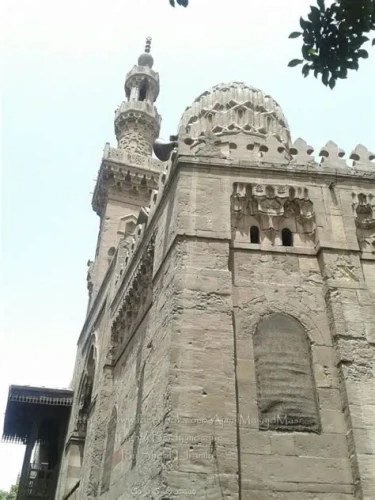
The Stone Poet of Saliba Street: The Madrasa of Taghri Bardi
The historic streets of Old Cairo function as the city's veins while Saliba Street serves as its primary street. The ancient path offers a thousand years of architectural history, yet the Madrasa of Taghri Bardi remains one of the most personal and sophisticated places. The mosque and school of the madrasa which was established in 1440 AD presents an exemplary display of Late Mamluk architectural design.
People in 2026 create buildings to be useful yet they make the mistake of neglecting their aesthetic value. Taghri Bardi functions as a complete human space because the building displays both study environments and prayer areas which create visual appeal. The building creates a welcoming atmosphere for human beings through its stone carvings and the light that moves through its wooden screens. The narrative describes a soldier's enduring influence, an architect's artistic accuracy, and a street that has witnessed everything.
1. The Man Behind the Stone: Taghri Bardi
The building requires understanding of the man who built it. Taghri Bardi was a high-ranking military official who held the title of Amir under Sultan Jaqmaq because he was neither a philosopher nor a poet.
Mamluk elites constructed buildings to achieve eternal remembrance rather than for their personal glory. Taghri Bardi understood that his military achievements would become minor historical details. He dedicated his financial resources to create a permanent establishment in Cairo which would benefit the people through its three functions: religious worship, legal education, and his burial site.
The Transition from War to Wisdom: A commander who leaves the battlefield to teach in a classroom demonstrates essential human qualities. The madrasa functions as a center to develop future scholars while providing a safe space for residents of his hometown. The exterior's detailed carvings show more than decorative design elements to viewers. The viewer observes an accomplishment which the man intends to provide as a present to his hometown.
2. Architectural Brilliance: The "Crisscross" Jewel
The word Saliba means "cross," and the street gets its name from the way it intersects with other major medieval roads. The Madrasa of Taghri Bardi sits perfectly within this urban fabric, acting as a sophisticated anchor for the neighborhood.
The Lace Minaret: Taghri Bardi's minaret serves as the most impressive building among the city's many minarets. The structure features a slender design which displays elegant design elements through its geometric patterns that enable viewers to perceive the heavy limestone materials as though they possess the delicate quality of lace. The year 2026 sees us operating machines that produce laser-cut patterns while people in 600 BC created every pattern through manual calculations and hand-carved grooves.
The Interior Courtyard (Sahn): Saliba Street noise disappears completely when you pass through the heavy wooden doors. You are greeted by a beautiful open courtyard surrounded by four iwans (vaulted halls). The symmetrical design of the space establishes an instant mental clarity. The original design purpose helped students concentrate their studies, but now it serves as a peaceful space for travelers to unwind.
The Mihrab’s Secret: The prayer niche (mihrab) is a wonder of marble inlay. The colors create a pattern which combines creams blacks and reds to produce a design that appears both modern and timeless. The piece demonstrates that authentic craftsmanship maintains its value throughout time without losing its worth.
3. The Pulse of Saliba Street: A Good Neighbor
The most human part of Taghri Bardi shows its connection to the local community. The site functions as a "good neighbor" who has supported Saliba Street residents throughout its history whereas it lacks any boundaries that would create a museum space.
The madrasa construction project required no streetblocks because it developed through existing urban areas which remained untouched by its construction process. The building connects with adjacent commercial and residential properties to create a unified space which combines religious elements with common street life.
The building has withstand multiple earthquakes and ongoing city expansion and the transition from horse-drawn carriages to present-day traffic systems. The stones of the building show every scratch which represents the complete human history of all people who passed by the building to reach their work and prayer and school destinations.
The visitor at Taghri Bardi gains a complete sensory experience of Cairo. The stone halls create a drop in temperature which allows visitors to feel coolness while the ancient fragrance of dust and history exists together with the sunlight that turns the minaret's limestone into golden light.
4. Why Taghri Bardi Matters Today
The designer Taghri Bardi created a space which invites people to experience time at its natural pace through its entirely human design.
The continuing existence of this school building which maintains its original 1440 appearance shows that our modern society has created a culture of disposable things. The process of building with intention and care can produce lasting creations which will continue to help people after we die.
People at Taghri Bardi experience a human scale which prevents them from feeling "small" because their size makes them seem unimportant. People experience "small" because they become part of a beautiful human history which stretches across time. The space shows you that multiple people have used its protection throughout its existence.
The Heartbeat of the Crossroad
The Madrasa of Taghri Bardi exists as a historical site which serves as the "Stone Poet" of Saliba Street. The building shows how a commander believed in his faith while an architect created his design skills and the city residents built their everlasting admiration of beauty. The statement shows that educational process involves more than book-based learning since people acquire knowledge through educational environments.
People who walk past its solid wooden entrance must take time to observe the minaret which stands against the clear Cairo sky. The world surrounding Saliba Street has undergone complete transformation yet the essence of Taghri Bardi continues to exist in its calm and noble and balanced state. The building stands as a perfect combination of strength and elegance which has maintained its original purpose as a human refuge throughout history.





-webp.webp "Hilton")
-webp.webp "dusit")
-webp.webp "Marriott Hotels")
-webp.webp "Azimut Hotel")
-webp.webp "Golden Tulip")
-webp.webp "sheraton")
-webp.webp "westin hotel")
-webp.webp "Movenpick")
