
 English
 Italy
Italy
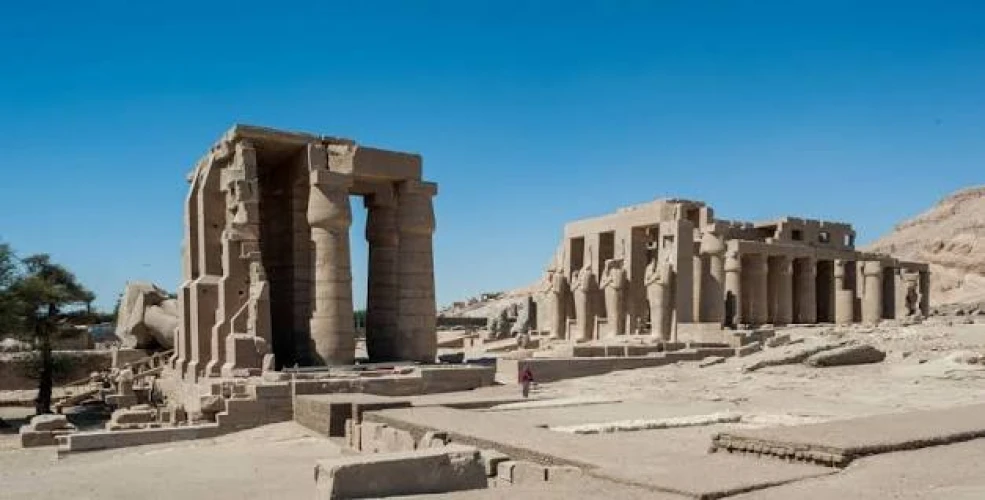
The Ramesseum and Its Historical Records
Deep in Nubia, just south of Egypt’s border, the twin rock-cut temples of Abu Simbel stand as some of the most awe-inspiring monuments of the ancient world. Excavated from the sandstone cliffs of the Nile’s western bank in the thirteenth century BCE, they were constructed under the reign of Pharaoh Ramses II (c. 1279-1213 BCE). The larger of the two, the Great Temple, is dominated by four colossal seven-storey seated statues of the pharaoh and was dedicated to the state gods Amun-Ra, Ra-Horakhty, and Ptah, as well as the deified king himself. In contrast, the Small Temple is a smaller structure dedicated to the goddess Hathor and Queen Nefertari, the beloved wife of Ramses II.
Despite the temples’ grandeur, their significance goes far beyond the sheer scale of their architecture. Inside the Great Temple’s hypostyle hall and sanctum, hundreds of meters of intricate hieroglyphs and relief sculptures adorn the walls, pillars, and even the cliff faces. Modern historians consider these inscriptions and drawings invaluable for tracing the military and diplomatic history of the ancient Egypt’s Bronze Age. Namely, the Abu Simbel inscriptions reveal the details of the king’s life, military campaigns, and religious beliefs. Specifically, the temples’ messages include:
• The territorial claims of the ancient Egypt and its political relationship with the neighboring states;
• The descriptions of the ancient battles and military strategies used by the Egypt’s generals and soldiers;
• The evolution of the ancient Egyptian religion and the king’s role in it.
1. Abu Simbel’s Geographical Setting: Border Defense and Divine Claims
The location of the temples, far south in Nubia, has served a strategic purpose for the ancient Egyptian rulers. It is noteworthy that Ramses II’s capital cities were located in the northern part of Egypt – Memphis, Pi-Ramesses, and Thebes. The rationale behind the construction of the temples far from the capital cities was the defense of the southern border from attacks by the Nubian tribes and people from foreign countries. In addition, the carving of the monuments directly from the rock demonstrated the king’s power and might.
The location helped send a message to the Nubian merchants and allied countries about the extent of Egyptian power – the border of the empire was set in a remote southern part of the country. The inscriptions on the inner walls of the temple further illustrate this point. They narrate about the power of the ruler and demonstrate his might as an emperor and a god. Moreover, when the ancient Egyptian religion allowed a living person to be deified, Ramses II declared himself not only an equal to gods but the son of the sun gods Amun-Ra, Ptah, and Ra-Horakhty.
2. The War with the Hittites: The Battle of Kadesh
Out of all the inscriptions adorning the temple walls, the most prominent ones narrate about the ancient Egypt’s war with the Hittites. The conflict started after Hittite King Muwatalli II invaded Egypt with a vast army of 2,500 chariots, aiming to capture Damascus and install a puppet king in the city. Although the war resulted in a stalemate, with both sides suffering heavy losses, it significantly impacted the further international relationships between the Egypt and the Hittite Empire.
The description of the battle can be found on the inner walls of the Great Temple’s hypostyle hall. It is worth mentioning that the narration is divided into two literary traditions – the Bulletin and the Poem – both of which have been carved with exquisite precision. The Bulletin is a military report, specifying the exact events, dates, and even mistakes of the ancient commanders. It tells about the trickery committed by the Hittites, who captured two spies and disguised themselves as servants of the pharaoh. As a result, the Amun division, which set out to attack the Hittites, was led into an ambush near the fortress of Kadesh. Meanwhile, the Poem narrates the story behind the battle, emphasizing the deeds and valor of the pharaoh.
The military confrontation between the Egypt and the Hittites is further illustrated by the bas-reliefs that adorn the inner walls of the temple. They tell a vivid story about the ancient times:
• The soldiers and horses are preparing to fight while the queen’s attendants are busy braiding the horses’ manes, adjusting the reins, and cleaning the bronze horse bits;
• The soldiers take their stand within a circle of acacia trees and shields, as the Hittites are approaching;
• The Hittites throw a surprise attack – the three-man teams of the Hittite chariots break through the ranks of the Egypt’s two-man chariots;
• The Egypt’s reserves arrive to battle the Hittites;
• After pushing the Hittites back, Pharaoh Ramses II orders his men to count the enemy dead and severed hands as spoils of war.
3. The Peace Treaty with the Hittites: Queen’s Blessing and the Power of Ptah
Although the early part of the inscriptions narrates about the military campaigns and battles of the young Pharaoh, the latter part of the inscriptions documents his age. The later text found on the Great Temple’s walls tell about the peace treaty between Egypt and the Hittites Empire and the royal love story between Pharaoh and Nefertari, his favorite wife. Noteworthy, the marriage between Ramses II and Nefertari’s daughter was a part of the peace treaty, a diplomatic move to signify the end of hostilities between Egypt and Hittite Kingdom.
The marriage is mentioned on the so-called Marriage Stela, a piece of information found on the south wall of the Great Temple. This text tells about the Nubian princess’s journey from the Hittite homeland, traversing stormy mountains and endless sands. The princess was escorted by a retinue of Hittite and Egyptian soldiers, who had to put aside their differences for the sake of peace. Her path was fraught with difficulties, but Pharaoh Ramses II assured the reader that the god Ptah smoothed the way for her journey. The stela also mentions the wealth and prosperity the king’s reign brought to the land of the Nile, making it a center of power throughout the Near East.
Further, the Stela of the Blessing of Ptah, an inscription found on the rock face that separates the two temples, narrates another story. In it, the creator god Ptah praises Ramses II’s architectural achievements. Moreover, the inscription tells about how the Pharaoh expanded the borders of his empire, bringing the wealth of the foreign lands, from the Aegean Sea to the Upper Egypt, to his treasury.
4. The Small Temple: Dedicated to Love and Queen’s Beauty
The Small Temple of Abu Simbel, in contrast to the Great Temple, is dedicated to Nefertari, the queen of Egypt, and the goddess of love and beauty, Hathor. Notably, the Small Temple’s facade features six statues, four of which depict Ramses II and two of which belong to Queen Nefertari. Interestingly enough, the statues of the queen are carved on the same scale as the pharaoh’s, which was unusual in ancient Egyptian art. Typically, the queen’s depiction was smaller than that of the king’s, usually only reaching the height of his knee.
The inscriptions adorning the Small Temple further illustrate the deep devotion of Ramses II to his queen. Namely, the hieroglyphs on the walls tell about the love between Pharaoh and his beloved queen, describing her as the light of the king’s life. Notably, the dedication of the monument was made at the bottom of the temple’s entrance. When examining the hieroglyphs, the reader gets a sense of the personal and intimate nature of this monument. In addition, the stories narrated by the inscriptions at the Small Temple also reflect the queens’ growing role in ancient Egyptian society. For instance, the queen is depicted as an active participant in the rituals alongside the gods. She is shown playing sistrums and receiving blessings from Hathor and other gods.





-webp.webp "Hilton")
-webp.webp "dusit")
-webp.webp "Marriott Hotels")
-webp.webp "Azimut Hotel")
-webp.webp "Golden Tulip")
-webp.webp "sheraton")
-webp.webp "westin hotel")
-webp.webp "Movenpick")
