
 English
 Italy
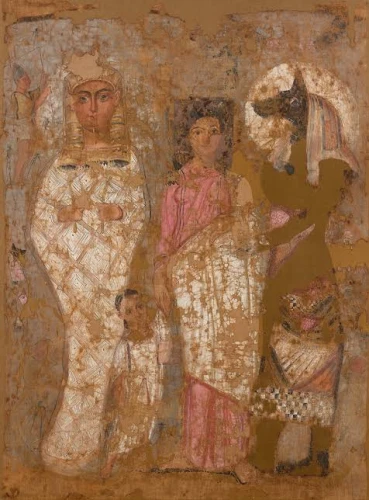
The Painted Mummy Shrouds of Roman Egypt: Canvas of the Soul
The study of Roman Egypt has been rewarding the archaeological field with discoveries of exceptional organic material preservation. While the famous wooden Fayum mummy portraits have captured the public's imagination with their psychological accuracy, a different, equally enthralling painting tradition has accompanied them in Roman Egypt: the painted mummy shroud. Woven from fine linen in the first through the third centuries AD, decorated with the motifs of both classical and Pharaonic traditions, painted mummy shrouds are a stunning example of the provincial beliefs and artistic tastes that developed around the periphery of the Roman empire.
1. Materials and the Process of Shroud Painting
The production of a painted mummy shroud involved multiple skilled laborers. The process began with textile workers that prepared a high-quality linen fabric, which was subsequently processed by master painters.
A. The Linen Canvas Preparation
Linen was Egypt's favorite weaving material for textiles, sails, and especially burial wrappings; it was used in antiquity and remained popular throughout the Roman period. When the weaver produced a large enough rectangular piece of fabric, its surface needed to be specially treated in order to accept paint. The surface of the fabric was treated with a thin layer of ground, usually white, substance such as gesso, gypsum, or animal glue mixed with chalk. This process smoothed the surface of the wove fabric and made it possible to paint bright pictures on the shroud.
B. Painting the Mummy Shroud
The master painters that worked in provincial Egypt used an extensive range of natural pigment powders mixed with various binders such as egg yolk, animal glue, or hot wax. Depending on the individual school of the painter, the figures on linen shrouds were painted in tempera or encaustic. The colors of the mummy shrouds are remarkably vivid, as the artisans used shading techniques, line drawing, and contrasting colors to depict towering figures that seemed to jump out of the textiles.
2. Iconographic Content: Pharaonic Theology and Classical Aesthetics
The most interesting part about the mummy shrouds is that they represent the unique synthesis of Pharaonic and classical cultural traditions, specifically the religious beliefs of Roman period Egypt.
A. Traditions of Ancient Egyptian Afterlife Beliefs
The mummy shroud paintings are filled with traditional motifs linked to the ancient Egyptian beliefs about the afterlife:
Osiris, the God of the Underworld, depicted as a mummified ancestor wearing an atef crown and carrying a crook and a flail.
Anubis, the Jackal-headed God of Burials, stands over the mummy on the funerary couch or carries the key to eternal life.
Four Sons of Horus carry the canopic jars with the mummy's internal organs.
Winged Nut or Isis hover above the mummy, offering their protection with outspread wings.
B. Classical Redefinition of Traditional Gods
Even though the mummy shroud artists depicted a vast array of familiar gods and mythical creatures, the approach to image-making was distinctly different from that of the Pharaonic Egyptian painting. The figures of gods and mythical animals painted in a three-dimensional fashion, similar to classical sculptures. Gods and mythological creatures had distinctly Hellenistic facial features and were clothed in the folds of real fabric, following the canons of the classical painting. Thus, the mummy shroud tradition combined the familiar spiritual values of the ancient Egyptian religion with the aesthetic appeal of the classical world.
3. Compositional Organization: Hierarchical Arrangement of Imagery
The mummy shroud images had a distinct compositional organization that reflected the artists' vision of the afterworld.
A. Central Human Portrait
The most important element of the mummy shroud painting was the human portrait at the top of the funerary textile. Similar to the wooden Fayum portraits, the mummy shroud images depicted a living person staring out at the viewer with big bright eyes. The person in the image had to have a fashionable Roman haircut, gold leaf jewelry, and be dressed in the contemporary clothing.
B. Gods and the Life After Death
The human portrait was framed by the depictions of gods and goddesses that played an important role in the ancient Egyptian beliefs about the life after death. Usually, the body of the deceased was depicted lying on the lion-head funerary couch with Anubis preparing their bandages. Below the image of the dead, the Gods of the Osirian afterlife judged the worthiness of the deceased person, and at the very bottom of the shroud, protective symbols such as the djed pillar and the tyet knot assured the viewer in the power of ancient Egyptian beliefs.
4. Discoveries and Cultural Importance of the Mummy Shrouds
Unlike the wooden Fayum panels, the large linen mummy shrouds were fragile and difficult to preserve. Hence, the fact that mummy shrouds have been discovered at all is noteworthy.
A. Discoveries of Mummy Shrouds in the Egyptian Deserts
Mummy shrouds were most commonly discovered in the deserts of Middle and Upper Egypt, near such cities as Akhmim, Antinoopolis, Hawara, and Saqqara. It is not surprising that the mummy shrouds survived the passage of time buried in the sand; the hot dry climate of the Nile valley was perfectly suited to preserve organic material like linen fabric.
B. Insights into the Cultural Values of the Past
The mummy shrouds provide precious insights into the cultural values and traditions of the people that lived in Roman Egypt. Whether paid for by the local landowners, provincial government officials, or wealthy native Egyptians, the mummy shrouds reflected the beliefs of a diverse multi-ethnic society about the afterlife and the role of the ancestors in the life of the community.
Conclusion
The mummy shrouds of Roman Egypt are a wonderful demonstration of the creativity of the ancient material culture. The tradition of mummy shroud painting combined the archaic beliefs in the power of Osiris and Anubis with the aesthetic appeal of the classical sculpture and painting. Ultimately, the vivid colors and intricate details of the mummy shroud provided the viewer with a powerful emotional experience while introducing the viewer to the fascinating world of Roman period Egypt.