
 English
 Italy
Italy
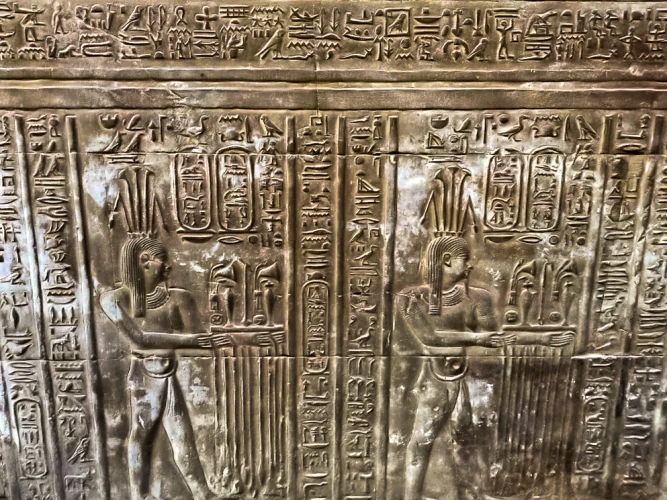
The Legend of the Crocodile God at Kom Ombo Temple
The Nile is a river of dualities—light and shadow, life-giving silt and deadly currents. Nowhere is this tension more physically palpable than at the Temple of Kom Ombo. For travelers on a Nile cruise in the 2026/2027 season, this temple often becomes a favorite, not just for its unique "double" architecture, but for the haunting and fascinating legend of the Crocodile God, Sobek.
As your boat docks at the foot of the temple’s stone steps, you are standing on what was once the most dangerous bend of the river. Here, the legend of Sobek isn't just a myth; it is a story of how ancient humans made peace with their greatest fears.
The Dual Nature: A Temple Divided
The first thing you’ll notice about Kom Ombo is that it is perfectly symmetrical. Unlike every other temple in Egypt, it has two entrances, two halls, and two sanctuaries. This is because it was dedicated to two opposing deities: Horus the Elder (the falcon-headed god of light and order) and Sobek (the crocodile-headed god of chaos, fertility, and the primal river).
In the ancient mind, you couldn't have one without the other. Horus represented the protection of the Pharaoh and the clear skies, while Sobek represented the raw, unpredictable power of the Nile. To ignore Sobek was to invite disaster—floods that destroyed crops or crocodiles that snatched livestock from the banks.
Who was Sobek? The God of the Dark Water
Sobek was a complex figure. He wasn't "evil" in the way we think of modern villains; he was primal. He was the "Lord of the Waters" and the "Rager." Legend says that the Nile was formed from Sobek’s sweat, and the rising of the river each year was a sign of his fertility and strength.
He was the patron of the military, admired for his speed and ferocity. However, for the common people of Kom Ombo, he was a god to be appeased. The area around the temple was once a natural basking spot for thousands of Nile crocodiles. The ancient inhabitants didn't just see them as predators; they saw them as the living incarnations of the god himself.
The Sacred Crocodiles: Life Inside the Temple
One of the most "human" secrets of Kom Ombo is how the priests interacted with these creatures. Historical accounts and archaeological evidence suggest that a single, "sacred" crocodile was chosen to live within the temple complex.
-
The Gilded Predator: This specific crocodile, representing Sobek on earth, lived a life of unimaginable luxury. It was kept in a sacred pool (which you can still see at the site today), adorned with gold jewelry and earrings, and hand-fed the finest meats and honey cakes by the priests.
-
The Living Oracle: When the sacred crocodile died, it was mummified with the same reverence as a Pharaoh and buried in a dedicated necropolis. A new "successor" was then chosen, and the cycle continued.
-
The Crocodile Museum: In 2026, the Crocodile Museum adjacent to the temple is a "must-visit." It houses dozens of these mummified crocodiles, ranging from tiny hatchlings to massive, five-meter-long giants. Seeing them up close in the dim light of the museum is a chilling reminder of the power Sobek held over the ancient imagination.
The Surgeon’s Wall: A Human Connection
While Sobek ruled the water, the temple was also a place of healing. On the back wall of the outer corridor, you will find one of the most famous reliefs in Egypt: The Surgical Instruments.
This carving depicts a collection of medical tools—forceps, scalpels, bone saws, and dental tools—that look shockingly modern. Legend tells us that people traveled from all over Upper Egypt to Kom Ombo to seek cures. They would sleep in the temple courtyards, hoping for a "healing dream" sent by the gods.
The duality of Kom Ombo is on full display here: in one wing, you have the primal terror of the crocodile, and in the other, the sophisticated, scientific pursuit of human health. It suggests that the ancient Egyptians believed that to be "whole," one had to respect both the wildness of nature and the precision of the mind.
The Legend of the "Evil Eye"
There is a darker side to the Sobek legend that locals in the nearby villages still whisper about. It was believed that Sobek’s gaze could be "heavy"—a precursor to the Mediterranean concept of the Evil Eye.
Because Sobek was associated with Seth (the god of chaos), he was sometimes viewed with suspicion. At Kom Ombo, the priests developed complex rituals to "tame" the god. They believed that by feeding and worshipping him, they could harness his protective power to turn the "Evil Eye" away from the community and toward its enemies.
3 Reasons Kom Ombo is Different in 2026
-
The Illuminated Experience: In the 2026/2027 season, the Ministry of Antiquities has completed a new "Low-Heat LED" lighting project. Visiting Kom Ombo at night is now the preferred way to see it. The shadows cast by the columns make the crocodile reliefs seem to ripple as you walk past, adding a layer of atmosphere that is lost in the flat midday sun.
-
The New "Nilometer" Walk: You can now descend into the newly restored Nilometer—a deep, circular well used by the priests to measure the river’s height and predict the taxes for the year. Standing at the bottom, looking up at the stars, you feel the literal weight of the Nile’s history.
-
Boutique Docking: In 2026, the dock at Kom Ombo has been redesigned to favor smaller Dahabiyas and boutique ships. This means you can often step off your boat and be at the temple gates in under two minutes, avoiding the long walks through souvenir stalls that characterize the larger ports.
The Calendar Wall: Ancient Timekeeping
Another secret of Kom Ombo is the Sacred Calendar. Carved into the stone is a record of the ancient Egyptian year, divided into three seasons: Akhet (Inundation), Peret (Emergence), and Shemu (Harvest).
This calendar was Sobek’s domain. The priests would use it to track when the crocodiles would lay their eggs, which was a vital indicator of when the Nile would flood. For the boutique traveler in 2026, this wall is a reminder that the "legend" of Sobek was actually a very practical way for ancient people to understand the biology of their environment.
The Sobek Experience
| Feature | What to Look For | The "Human" Significance |
| Double Sanctuary | Two identical "Holy of Holies." | Balancing our "Light" and "Dark" sides. |
| Surgical Reliefs | Scalpels, scissors, and scales. | The birth of modern medicine. |
| The Nilometer | A deep stone well with steps. | How the river controlled the economy. |
| Crocodile Mummies | The museum next door. | The bridge between animal and divine. |
| The Sacred Pool | A stone basin near the entrance. | Where the "God on Earth" lived. |
The Verdict for the 2026 Traveler
Kom Ombo is more than just a photo stop on your way to Aswan; it is a psychological map of the ancient world. It shows us a people who didn't try to "conquer" the dangerous crocodile, but instead invited him into their home, fed him gold, and called him a god.
When you stand on the deck of your boat as it pulls away from the Kom Ombo dock, look down at the dark water. The Nile crocodiles are gone from this stretch of the river now (they are all south of the High Dam in Lake Nasser), but the legend of Sobek remains. It is the reminder that the Nile is a giver of life, but only to those who respect its teeth.






-webp.webp "Hilton")
-webp.webp "dusit")
-webp.webp "Marriott Hotels")
-webp.webp "Azimut Hotel")
-webp.webp "Golden Tulip")
-webp.webp "sheraton")
-webp.webp "westin hotel")
-webp.webp "Movenpick")
