
 English
 Italy
Italy
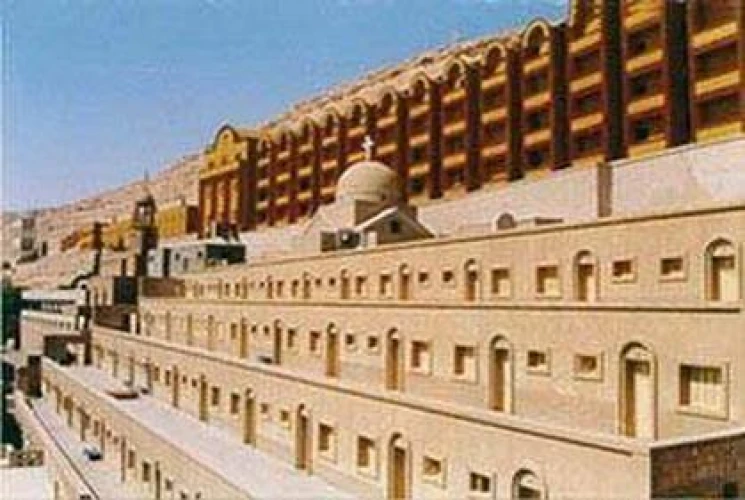
The Holy Family Route in Sohag and Upper Egypt
The flight of the Holy Family of Jesus into Egypt is undoubtedly one of the most spiritually rich, historically inspiring, and culturally significant stories of the ancient world. As narrated in the Gospel of Matthew, Mary and Joseph were forced to flee Bethlehem with the infant Jesus to avoid the wrath of King Herod. After crossing the desert borders, the family of three spent nearly 3 and a half years in Egypt, covering more than 3,500 km – from coastal ports to the fertile Nile Delta, the urban quarters of Old Cairo, and the limestone cliffs of Upper Egypt.
Despite Lower Egypt offering initial protection and Coptic Cairo shelter, it was the Upper Egypt stretching from Minya through Assiut to Sohag that provided permanent sanctuary for the Holy Family. Hidden in limestone mountains, inside ancient rock-cut tombs, and in monastic riverbanks, the upper stretch of the Nile shielded the family from Roman authorities and local hostility. Here you will find everything you need to know for a pilgrimage along the Holy Family route through Sohag and Upper Egypt — from ancient history and churches to practical visiting tips.
1. The Historical Context and Geography
To understand the significance of Upper Egypt (Sa'id Misr) in the Holy Family Trail, one must first be acquainted with the region’s dramatic landscape and rich ancient history. Hundreds of kilometers from the Mediterranean, Upper Egypt is characterized by the narrow ribbon of the Nile flanked by deserts and limestone cliffs on either side.
During the 1st century AD, heading south and deeper into the interior was the best way to escape the Roman authorities’ gaze centered in Alexandria and Memphis. The rugged terrain and caves offered natural protection from the summer heat, seasonal Nile floods, and enemy pursuit.
As the Holy Family traveled through Minya and Assiut towards Sohag, they encountered local agricultural communities, blessed natural springs, and found quiet monastic retreats. With the advent of Christianity in the 4th century AD – when the faith was declared the state religion of the Roman Empire – many of these ancient stopping points transformed into thriving monastic centers, rock-hewn churches, and fortified desert sanctuaries. This region has been a melting pot of diverse Christian traditions and their ancient traditions for two millennia.
2. Sohag and the Monastic Tradition of Upper Egypt
Situated some 470 km south of Cairo on the western banks of the Nile, the Sohag Governorate is known today as an epicenter of medieval Coptic traditions. While it is said that the Holy Family reached their southernmost turning point at Mount Qosqam (Deir El-Muharraq in Assiut), Sohag is the region which provided the monastic tradition by which the Holy Family’s legacy in Upper Egypt became perpetuated.
It was in Sohag that the origins of modern cenobitic monasticism (communal life of monks) trace their origins – the tradition of Saint Pachomius and Saint Shenouda the Archimandrite. The monastic communities in Sohag were strongly inspired by the Holy Family’s journey and established numerous massive stone sanctuaries, safeguarding ancient Christian relics and traditions.
The White Monastery (Deir Anba Shenouda)
Approximately 12 km coupon southwest of Sohag city lies the White Monastery, an architectural gem of the ancient world.
Pharaohs’ Construction: This 5th century AD masterpiece has been constructed from repurposed white limestone blocks of ancient pharaonic temples, giving the building the appearance of a grand temple complex. The sloping walls, heavy cornices, and monumental gateways are characteristic of the ancient Egyptian style.
Magnificent Interior Hall: The interior of the White Monastery consists of a massive basilican hall decorated with sculpted marble columns, granite pillar, and apse frescoes. These depict the image of Christ in Majesty, the Apostles, and Virgin Mary.
Ancient Library: The White Monastery was home to one of the largest libraries of ancient Coptic manuscripts in Egypt. The collection of scrolls contained numerous theological texts, Gospel narratives, and records of the journey of the Holy Family through Upper Egypt.
The Red Monastery (Deir Anba Bishoy)
Located 3 km north of the White Monastery, the Red Monastery (Deir Anba Bishoy) derives its name from the burnt red bricks that typify its construction. This late 5th century AD monument is famous for possessing the most complete collection of Late Antique / Early Byzantine wall paintings in the Mediterranean region.
Vibrant Frescoes: The tri-conch sanctuary of the Red Monastery is decorated with remarkable multi-layered frescoes, considered internationally to be among the most colorful and best-preserved murals of the Late Antiquity period. Painted depictions of saints, prophets, angels, and the Virgin Mary nursing the infant Jesus recall the Holy Family’s time in Upper Egypt.
3. The Main Stops Along The Holy Family Trail In Upper Egypt
When following the Holy Family route through Upper Egypt, one would pass through several ancient landmarks that mark the journey:
1. Gabal El-Teir (Minya)
Perched on a sheer limestone cliff above the Nile, this mountain sanctuary is where it is said that the infant Jesus stopped a falling boulder with his palm (Kaff El-Adra). The 4th century AD church hewn directly out of the rock by Empress Helena makes for an impressive sight.
2. El-Ashmunein (Minya)
It is said that in ancient Hermopolis Magna, colossal pharaonic idols fell from their pedestal as the child Jesus passed by in a processional. Close to this miracle spot there is an ancient tree that bent its boughs to offer shade to the Holy Family.
3. Deir El-Muharraq (Assiut)
Located at the foot of Mount Qosqam, this convent marks the site where the family of Jesus spent the longest time in Egypt - 6 months and 10 days. It was in this humble mudbrick chamber that the Angel of the Lord appeared to Joseph in a dream, instructing him to return to Israel. The stonealtar built over their dwelling is said to be the oldest Christian altar in the world.
4. Mount Dronka (Assiut)
Nestled in a massive cave high above the Nile basin, Mount Dronka is where the Holy Family sought shelter from the seasonal Nile floods on their return journey. Every August, this mountaintop draws over a million pilgrims for the Feast of the Assumption.
4. Practical Travel Advice for Exploring Upper Egypt
For those looking to experience the rich history, monastic tradition, and natural beauty of the region of Sohag and Upper Egypt, here are a few pieces of practical advice.
Location & Access: Sohag is located in Upper Egypt, some 470 km south of Cairo. The city is well connected via the Eastern Desert Highway, the Western Desert Road, or the main line of the Nile Valley Railway. The Sohag International Airport (HMB) provides direct domestic and regional flights.
How to Travel: The simplest way to reach Sohag is to hire a car with a local driver or to book an organized Upper Egypt pilgrimage tour from either Cairo or Luxor. The Sohag’s Red and White Monasteries, as well as Assiut’s holy sites, are most easily explored with a personal guide.
When to Go: For pleasant weather temperatures and good walking conditions, the best time to visit Sohag is October to April. Summer months can be extremely hot.
Dress Code & Etiquette: The monasteries of Sohag and Upper Egypt are active religious centers, home to various monastic brotherhoods. Please dress modestly and ensure that your shoulders and knees are covered. Likewise, it is best to be respectful within monastic enclosures and ask permission before taking photos of the monks.





-webp.webp "Hilton")
-webp.webp "dusit")
-webp.webp "Marriott Hotels")
-webp.webp "Azimut Hotel")
-webp.webp "Golden Tulip")
-webp.webp "sheraton")
-webp.webp "westin hotel")
-webp.webp "Movenpick")
